Introduction
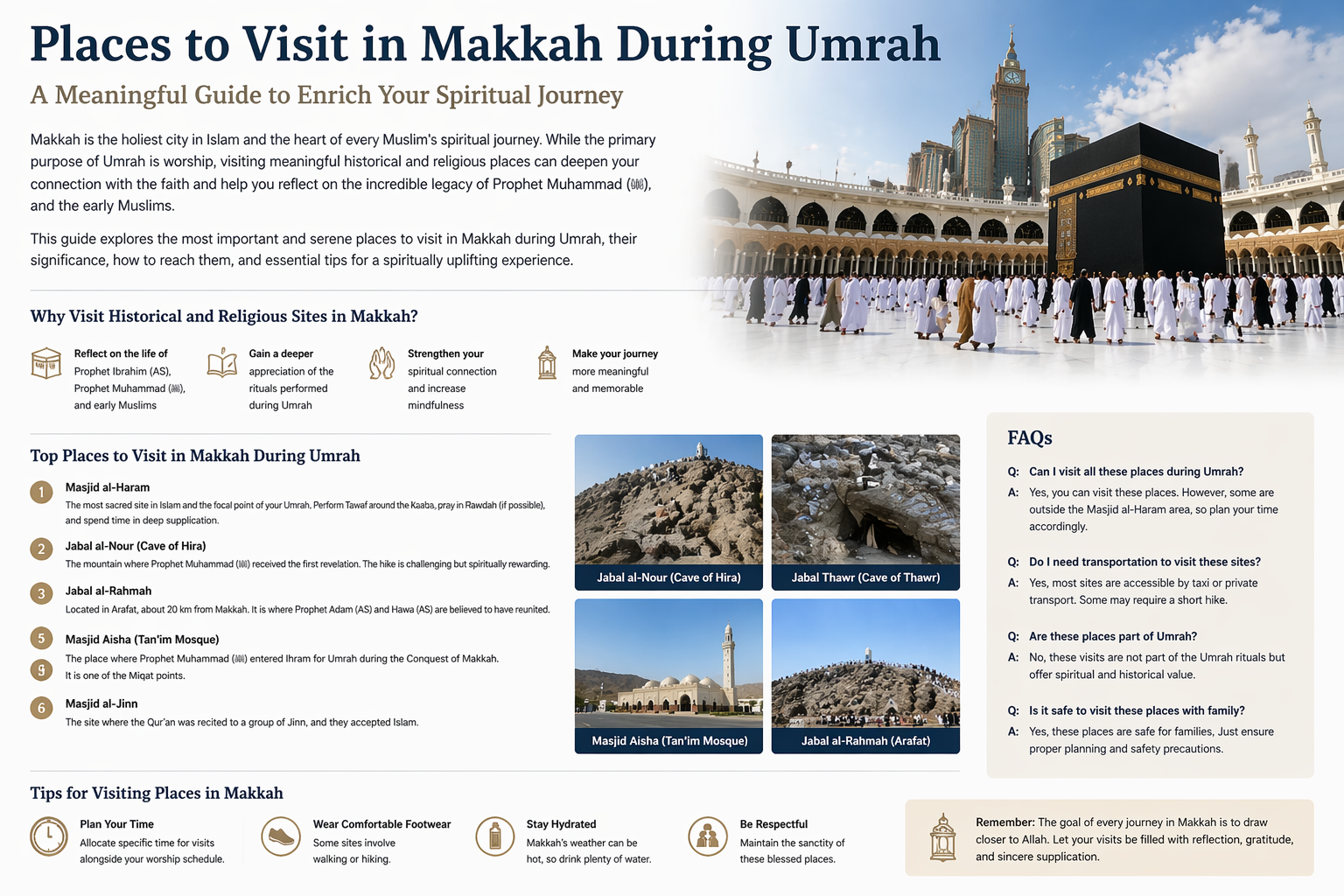
Undertaking Umrah is one of the most profound spiritual journeys a Muslim can experience. The pilgrimage to Makkah provides a unique opportunity for reflection, prayer, and connection with Allah (SWT). This guide aims to take you through the most sacred and significant places to visit in Makkah during Umrah, helping you make the most of your spiritual journey. Each location carries its own historical and spiritual significance, enriching your pilgrimage beyond the rituals of Tawaf and Sa'i.
1. Masjid al-Haram: The Heart of Makkah
Masjid al-Haram is the largest mosque in the world and the holiest place in Islam. This mosque is home to the Kaaba, the focal point of the Muslim faith. Every year, millions of Muslims come to perform Umrah and Hajj, converging at this sacred site to engage in prayers and rituals.
Significance of Masjid al-Haram:
Masjid al-Haram surrounds the Kaaba, which is believed to have been built by Prophet Ibrahim (AS) and his son, Prophet Ismail (AS). This sacred structure symbolizes the oneness of Allah and serves as a central point where Muslims from all around the world unite in their worship.
Tips for Visiting:
- Prayer Times: The mosque is busiest during the five daily prayers, particularly during Fajr and Isha. To make your experience more meaningful, try to arrive early for prayers to secure a spot closer to the Kaaba.
- Spiritual Benefits: The reward for praying in Masjid al-Haram is magnified, as it is said that one prayer here is equivalent to 100,000 prayers elsewhere.
2. The Kaaba: The Sacred House
The Kaaba is the most revered structure in Islam. It is the direction (Qibla) towards which Muslims face when they pray. The Kaaba's black stone and its spiritual connection with Allah make it a key symbol of unity among Muslims worldwide.
The Kaaba's Historical Significance:
The Kaaba is believed to have been built by Prophet Ibrahim (AS) and his son Ismail (AS) as a place of worship to the One God. It has been rebuilt and renovated several times throughout history, but its significance remains the same.
Rituals at the Kaaba:
The primary ritual at the Kaaba during Umrah is Tawaf. Pilgrims walk around the Kaaba seven times in a counterclockwise direction, starting from the Black Stone. If possible, pilgrims should try to kiss or touch the Black Stone, though it is not mandatory if there are crowds.
3. Safa and Marwah: The Symbol of Perseverance
Safa and Marwah are two small hills located within the Masjid al-Haram complex. The act of walking between these hills is a crucial part of Umrah and commemorates the search for water by Hagar (Hajar), the wife of Prophet Ibrahim (AS), and the mother of Prophet Ismail (AS).
Spiritual Significance:
The Sa'i ritual, where pilgrims walk seven times between Safa and Marwah, symbolizes Hagar’s faith and trust in Allah's mercy. It teaches perseverance, patience, and the reward of enduring hardships in the way of Allah.
Tips for Performing Sa'i:
- Timing: Perform Sa’i at a time when the mosque is less crowded to avoid fatigue and have a more spiritual experience.
- Spiritual Connection: Reflect on the patience of Hagar and pray for Allah’s mercy and guidance during the ritual.
4. Mount Arafat: The Day of Forgiveness
Mount Arafat is one of the most spiritually significant places for Muslims. On the Day of Arafat, pilgrims pray, seek forgiveness, and stand in contemplation. It is the location where Prophet Muhammad (PBUH) delivered his Farewell Sermon.
Importance During Hajj and Umrah:
Though Arafat is primarily known for its role in Hajj, it holds spiritual significance for all pilgrims. It is a place where sins are forgiven, and Allah’s mercy is abundant. Pilgrims are encouraged to pray and ask for forgiveness.
Tips for Visiting Arafat:
- Reflect and Pray: Spend time asking for forgiveness, guidance, and strength to fulfill your spiritual goals.
- Wear Comfortable Clothing: The weather can be very hot, so make sure to wear comfortable clothes and drink plenty of water.
5. Jabal al-Noor: The Mountain of Light
Jabal al-Noor is a mountain located a few kilometers from Makkah. It is most famous for the Cave of Hira, where Prophet Muhammad (PBUH) received the first revelation from Angel Jibril (Gabriel).
Spiritual Significance:
Jabal al-Noor symbolizes the beginning of the Quranic revelations that transformed the world. Visiting this mountain connects pilgrims to the beginning of the Islamic message.
Tips for Visiting:
- Climbing the Mountain: The hike is steep and challenging, so make sure you are physically prepared.
- Reflect on the Revelation: As you stand near the cave, reflect on the power of revelation and its impact on humanity.
6. Jabal al-Rahmah: The Mountain of Mercy
Jabal al-Rahmah is the mountain where Prophet Adam (AS) and Eve (AS) are believed to have reunited after being separated on Earth. It is located in the Arafat area, and pilgrims visit it during Hajj, but it can also be a meaningful stop during Umrah.
Spiritual Significance:
The mountain represents Allah's mercy and the reconciliation of mankind’s first parents. Standing at Jabal al-Rahmah reminds pilgrims of Allah’s immense mercy and the importance of forgiveness.
Tips for Visiting:
- Prayers for Mercy: As you visit Jabal al-Rahmah, ask for Allah’s mercy and forgiveness for yourself and your loved ones.
7. The Black Stone (Hajr al-Aswad): A Piece of Heaven
The Black Stone, located in the Kaaba, is one of the most iconic objects in Islam. It is believed to have been sent from Heaven to Earth, and touching or kissing the Black Stone is considered a blessed act.
Spiritual Meaning:
The Black Stone is a symbol of Allah's covenant with mankind. It represents the divine connection between the Creator and His creation.
Tips for Touching the Black Stone:
- Be Patient: During busy times, the area around the Black Stone can be crowded. Try to wait patiently for an opportunity to touch or kiss the stone.
- Make Du’a: After touching the Black Stone, make a prayer to Allah for your personal needs and the needs of others.
8. Mina: The Site of Sacrifice
Mina, located about five kilometers from Makkah, is where pilgrims perform the symbolic act of throwing stones at three pillars, known as the Jamarat. This ritual represents the rejection of Satan’s temptation.
Spiritual Significance:
Mina symbolizes the test of faith and the willingness to sacrifice in obedience to Allah. Pilgrims commemorate the willingness of Prophet Ibrahim (AS) to sacrifice his son Ismail (AS) in obedience to Allah’s command.
Tips for Visiting:
- Prepare for Crowds: Mina can get crowded, especially during the Hajj season, so be mentally prepared for the hustle and bustle.
- Reflect on Sacrifice: Use the opportunity to reflect on the sacrifices you’re willing to make for the sake of Allah.
9. The Cave of Thawr: A Place of Refuge
The Cave of Thawr is located on the outskirts of Makkah, where Prophet Muhammad (PBUH) and his companion Abu Bakr (RA) took refuge during the migration from Makkah to Madinah.
Significance:
The cave represents perseverance, trust in Allah, and protection under His care. It is a reminder of the trials faced by Prophet Muhammad (PBUH) and the trust he placed in Allah’s plan.
Tips for Visiting:
- Climb with Caution: The climb to the cave can be steep and physically demanding, so take it slow and be cautious.
- Reflect on Trust in Allah: Reflect on the lessons of perseverance and faith during your visit.
10. Masjid al-Jinn: The Mosque of the Jinn
Masjid al-Jinn is a mosque located in Makkah, near the Cave of Hira. It holds historical significance due to its association with the jinn who listened to Prophet Muhammad (PBUH) reciting the Qur’an.
Spiritual Meaning:
This mosque signifies the universality of the Qur’an's message. The jinn, who are creatures created from smokeless fire, are believed to have responded to the Prophet's message and embraced Islam.
Tips for Visiting:
- Quiet Reflection: Spend time reflecting on the Qur'an's power and the universality of Islam’s message.
11. Historical Sites: Exploring the Past
Makkah is steeped in history, and several significant sites offer a glimpse into the roots of Islam.
Notable Historical Sites:
- The House of Prophet Muhammad (PBUH)
- The Well of Zamzam
- The Masjid al-Quba
These sites offer deep spiritual connections to the early days of Islam.
12. Shopping and Souvenir Spots in Makkah
Makkah’s markets are filled with souvenirs that hold spiritual significance. From prayer rugs to Qur’anic calligraphy, these items serve as reminders of your journey.
13. Tips for Making the Most of Your Visit
To ensure a meaningful and fulfilling experience:
- Take Time for Reflection: Makkah is not just about visiting places but connecting spiritually.
- Plan Your Time: Balance your rituals with rest and exploration.
- Stay Hydrated: The heat can be intense, so drink plenty of water.
FAQ - Frequently Asked Questions
1. What is the best time to visit these sites in Makkah during Umrah?
The best time to visit Makkah for Umrah is during off-peak hours (early mornings or late evenings) when the crowds are smaller. It also allows for a more peaceful and reflective experience.
2. Can I visit these places during Ramadan?
Yes, these places are open to pilgrims throughout the year, including during Ramadan. However, be prepared for larger crowds, especially during the last ten days of Ramadan.
3. Are there any restrictions for women visiting these sites?
There are no specific restrictions for women visiting these sites in Makkah. Women can perform Umrah and visit the holy sites just as men do, though some areas may have designated sections for women.
4. How can I get to these sites from Masjid al-Haram?
Many of these sites are within walking distance from Masjid al-Haram. For further sites like Mount Arafat or Jabal al-Noor, pilgrims may take taxis or arrange group transport.
5. How can I prepare spiritually for my visit to these sites?
Make du’a (supplication) before and during your visit. Reflect on the significance of each site and how it relates to your own spiritual journey. Make a plan to pray and seek forgiveness at each site.
Conclusion
Makkah offers an array of spiritually enriching sites that deepen the connection between a pilgrim and Allah (SWT). Each site has its own unique history and significance, providing valuable opportunities for reflection, prayer, and spiritual growth. By visiting these places, pilgrims can make their Umrah journey a deeply personal and meaningful experience.
This structure provides a comprehensive guide that combines spiritual insights with practical tips, helping pilgrims navigate Makkah during Umrah while reflecting on the deep significance of each location.
Written by
Admin
Sharing insights about pilgrimage, spiritual journeys, and sacred travel experiences.