Top Ziyarat Places in Makkah with Historical and Islamic Significance
Table of Contents
- What Does Ziyarat Mean in Makkah?
- Why Visiting Ziyarat Places Can Be Meaningful
- Top Ziyarat Places in Makkah
- Jabal al-Nour and Cave of Hira
- Jabal Thawr and Cave of Thawr
- Jannat al-Mu'alla
- Masjid al-Jinn
- Masjid al-Bayah
- Arafat and Jabal al-Rahmah
- Mina
- Muzdalifah
- Masjid al-Khayf
- Best Ziyarat Places by Visitor Type
- Common Mistakes People Make During Ziyarat
- The Correct Islamic Etiquette for Ziyarat
- Practical Tips for Visiting Ziyarat Places in 2025–2026
- A Simple Ziyarat Plan for First-Time Visitors
- Why This Topic Matters More Than Many People Realize
- Final Thoughts
Makkah is not only the home of the Kaaba and the center of Umrah and Hajj. It is also filled with places that carry deep historical and emotional meaning for Muslims. These are the places where revelation began, where sacrifice was shown, where the Prophet Muhammad ﷺ faced hardship, and where some of the most important moments in Islamic history took place.
For many pilgrims, visiting these places adds depth to their journey. It helps them move beyond simply knowing the names of events in seerah and begin to feel their reality. You are no longer only reading about the Cave of Hira or the Hijrah. You are standing near the places where those moments happened.
At the same time, it is important to understand one key point clearly: Ziyarat is not a pillar of Umrah or Hajj. These visits are not required acts of worship like Tawaf, Sa’i, or standing in Arafah. They are optional visits that can increase reflection, understanding, and love for the history of Islam, as long as they are approached with the correct intention and without innovation.
This guide will help you understand the most important Ziyarat places in Makkah in a simple, human, and practical way. It is designed for first-time pilgrims, Islamic history lovers, and anyone who wants to make their journey more meaningful without falling into confusion or exaggeration.
What Does Ziyarat Mean in Makkah?
In the context of Makkah, Ziyarat means visiting important Islamic historical places connected to the life of the Prophet Muhammad ﷺ, early Islam, and major events in the seerah.
These visits are usually done for:
- reflection
- learning
- remembering Islamic history
- strengthening one’s connection to the Prophet ﷺ and the message of Islam
But Ziyarat is different from Umrah itself.
Umrah includes specific acts of worship:
- Ihram
- Tawaf
- Sa’i
- Halq or Taqsir
Ziyarat includes optional visits to historical places such as:
- Jabal al-Nour
- Cave of Hira
- Jabal Thawr
- Jannat al-Mu'alla
- Masjid al-Jinn
- Mina and Arafat
So visiting these places can be beneficial, but it should never be treated as an obligation or as something equal to the rituals of Umrah.
Why Visiting Ziyarat Places Can Be Meaningful
A good Ziyarat visit is not about collecting photos or rushing through tourist stops. It is about remembering what happened in these places and what those events teach us.
When you visit Jabal al-Nour, you remember the loneliness and sincerity of the Prophet ﷺ before revelation.
When you visit Jabal Thawr, you remember trust in Allah during fear.
When you visit Jannat al-Mu'alla, you remember the sacrifices of the Prophet’s family and the early believers.
This is what makes Ziyarat powerful. It turns Islamic history from something you read into something you reflect on with your heart.
Top Ziyarat Places in Makkah
Below are the most important and commonly visited Ziyarat places in and around Makkah, explained in a simple and user-friendly way.
1. Jabal al-Nour and Cave of Hira
This is one of the most well-known Ziyarat places in Makkah, and for many people, it is the most emotionally powerful.
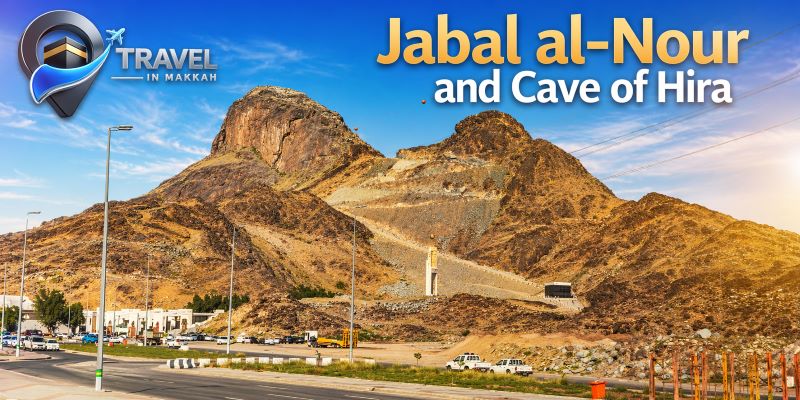
Jabal al-Nour is the mountain that contains Cave of Hira, the place where the Prophet Muhammad ﷺ used to retreat for reflection and worship before prophethood. It was here that Angel Jibril first came to him with the opening revelation of the Qur’an.
Allah says:
اقْرَأْ بِاسْمِ رَبِّكَ الَّذِي خَلَقَ
خَلَقَ الْإِنسَانَ مِنْ عَلَقٍ
اقْرَأْ وَرَبُّكَ الْأَكْرَمُ
الَّذِي عَلَّمَ بِالْقَلَمِ
عَلَّمَ الْإِنسَانَ مَا لَمْ يَعْلَمْ
Translation:
“Read in the name of your Lord who created.
Created man from a clinging substance.
Read, and your Lord is the Most Generous.
Who taught by the pen.
Taught man that which he knew not.”
— Surah Al-‘Alaq 96:1–5
Standing near this mountain reminds pilgrims where the mission of Islam began.
Why it is important
This is the place connected to the very first revelation. It marks the beginning of prophethood and the beginning of Qur’anic guidance for mankind.
Visitor experience
Jabal al-Nour is around 3 kilometers from Masjid al-Haram. Reaching the cave requires a steep climb, and it can be physically demanding.
Best for
- Islamic history lovers
- fit pilgrims
- people who want a strong spiritual reflection
Important note
Visiting the cave is not required. There is no authentic evidence that touching the cave walls, praying inside it for special reward, or seeking blessings from the rocks has any Islamic basis.
2. Jabal Thawr and Cave of Thawr
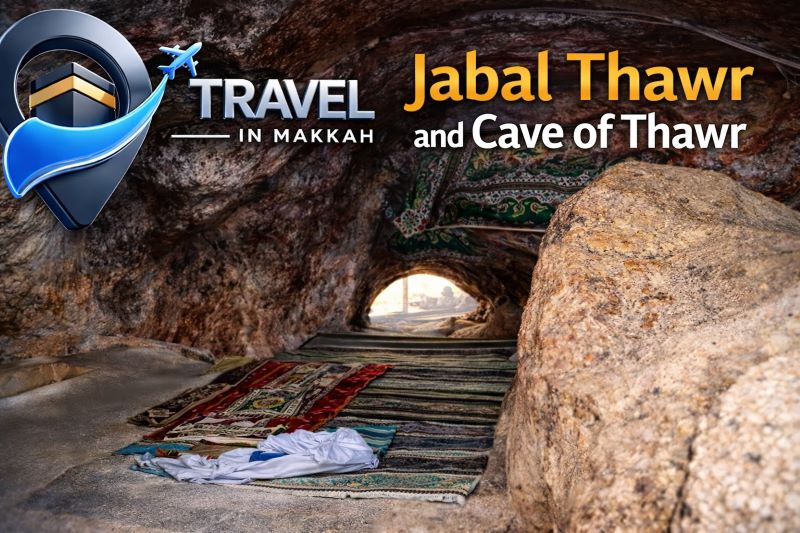
Jabal Thawr is another mountain deeply connected to the seerah. During the Hijrah, when the Prophet ﷺ and Abu Bakr رضي الله عنه were leaving Makkah for Madinah, they hid in the Cave of Thawr for three days while Quraysh searched for them.
This moment reflects one of the strongest lessons in tawakkul, trust in Allah.
Allah says:
إِذْ يَقُولُ لِصَاحِبِهِ لَا تَحْزَنْ إِنَّ اللَّهَ مَعَنَا
Translation:
“Do not grieve; indeed Allah is with us.”
— Surah At-Tawbah 9:40
That single verse makes this place unforgettable.
Why it is important
It is linked to the Hijrah, one of the turning points in Islamic history. It shows courage, patience, planning, and complete reliance on Allah.
Visitor experience
Jabal Thawr is south of Makkah and is around 4 kilometers from the Haram area. The climb is difficult, though many pilgrims still visit it.
Best for
- those interested in Hijrah history
- pilgrims who enjoy seerah-based reflection
- physically able visitors
Important note
Some popular stories about the cave are repeated widely, but not every detail people mention is equally strong in authenticity. A pilgrim should focus on the confirmed lesson: Allah protected His Messenger ﷺ.
3. Jannat al-Mu'alla
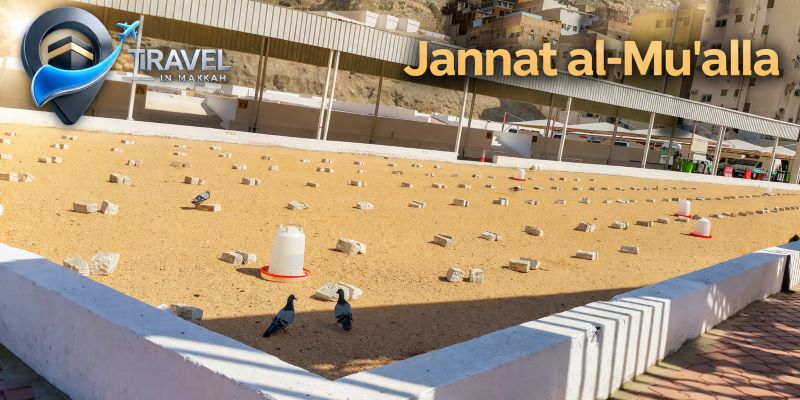
Jannat al-Mu'alla is one of the oldest and most important cemeteries in Makkah. It is the burial place of several important figures from the Prophet’s family and early Islamic history.
Most famously, it is associated with the burial of Khadijah رضي الله عنها, the beloved wife of the Prophet ﷺ, as well as other relatives including Qasim and عبد المطلب according to historical accounts.
Why it is important
This cemetery reminds visitors of the people who supported Islam in its earliest days. It is a quiet and humbling place that brings thoughts of sacrifice, loss, loyalty, and akhirah.
Visitor experience
It is relatively close to Masjid al-Haram and easier to access than the mountain sites. That makes it a good option for families, elderly pilgrims, and first-time visitors.
Best for
- first-time pilgrims
- families
- those seeking easy-access Ziyarat sites
- people who want a calm and reflective visit
Important note
Visiting graves in Islam should be done with humility and remembrance of death. It should not turn into asking the dead for help or believing in special unproven virtues attached to the site.
4. Masjid al-Jinn
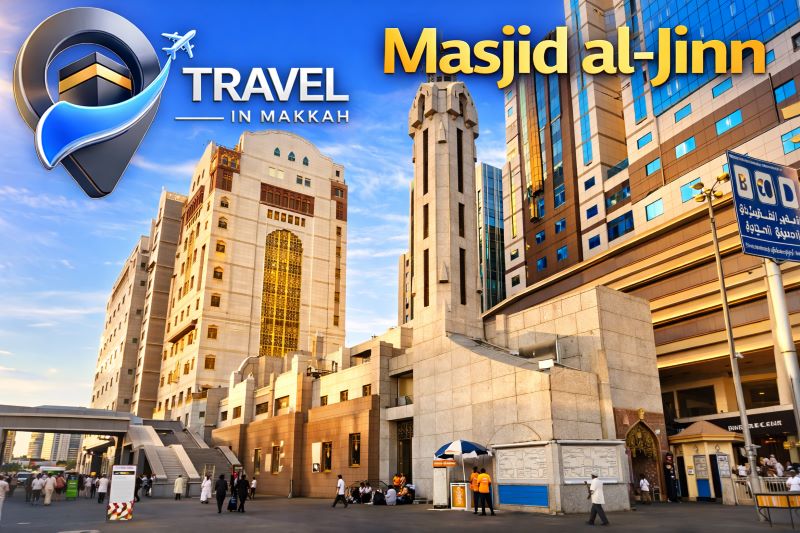
Masjid al-Jinn is one of the more well-known historical mosques in Makkah. It is associated with the event in which a group of jinn listened to the Qur’an and accepted its message.
This event is rooted in authentic Islamic tradition and reflects the universal power of the Qur’an. The message of Islam was not sent only to humans in one place or one time. It is a message for all creation.
Why it is important
It connects the visitor to a remarkable moment in the Prophet’s mission and highlights the reach of revelation.
Visitor experience
Masjid al-Jinn is relatively close to the Haram and is easier to visit than the mountain locations. Many pilgrims include it in a short Ziyarat trip.
Best for
- first-time pilgrims
- families
- easy-access history visits
- those staying near Haram
Important note
Some strange stories and exaggerated claims are attached to this mosque by popular culture. These should be avoided. The value of the site lies in its historical reminder, not in superstition.
5. Masjid al-Bayah
Masjid al-Bayah, also called the Bay'ah Mosque, is connected to one of the most important pre-Hijrah moments in Islamic history: the pledge of allegiance by the Ansar of Madinah to the Prophet ﷺ.
This pledge paved the way for the Hijrah and the establishment of the first Islamic society in Madinah.
Why it is important
It symbolizes commitment, support, and the beginning of a major turning point in Islam. Without that pledge, Islamic history would have taken a very different path.
Visitor experience
It is located in Mina and is usually more relevant in the context of Hajj routes and seerah tours rather than a casual short walk from Haram.
Best for
- serious seerah readers
- history-focused pilgrims
- those doing a full guided Ziyarat tour
Important note
It is historically important, but it should not be treated as a ritual stop that every pilgrim must make.
6. Arafat and Jabal al-Rahmah
Although Arafat is mainly known as one of the central sites of Hajj, it also carries enormous Islamic and emotional significance outside of Hajj discussions. It is the place where the Prophet ﷺ delivered the Farewell Sermon, a message that remains one of the most powerful public declarations in Islamic history.
Why it is important
Arafat stands for mercy, repentance, equality, and the completion of the religion in the context of the Farewell Pilgrimage.
Visitor experience
It is farther from Haram and usually reached by bus, taxi, or organized transport. Visits outside the Hajj season are generally for historical reflection, not ritual performance.
Best for
- pilgrims who want a broader understanding of Hajj history
- first-time visitors doing a guided city tour
- those interested in the Farewell Sermon
Important note
Arafat is a pillar of Hajj during Hajj. Visiting it at other times does not carry the same ritual status. That difference should be understood clearly.
7. Mina
Mina is one of the most recognized places in the Hajj journey. It is tied to the rites of stoning the Jamarat and the story of Prophet Ibrahim عليه السلام and his rejection of Shaytan.
Why it is important
Mina reflects sacrifice, obedience, and rejection of evil. It is deeply symbolic in the Hajj experience.
Visitor experience
Outside the Hajj season, Mina may feel very different from the crowded scenes people usually imagine. Many visitors still like to see the area to better understand the flow of Hajj.
Best for
- pilgrims preparing for future Hajj
- those interested in understanding the geography of the pilgrimage
- guided Ziyarat groups
8. Muzdalifah
Muzdalifah is another major Hajj site. Pilgrims know it as the place where they stay after leaving Arafat and where many collect pebbles for the stoning ritual in Mina.
Why it is important
It teaches simplicity, patience, and submission. In the Hajj journey, Muzdalifah is not about comfort. It is about humility before Allah.
Visitor experience
Like Mina and Arafat, it is usually visited as part of a larger Ziyarat or Hajj-focused historical tour rather than a short stop from the Haram.
Best for
- those studying Hajj deeply
- pilgrims who want to understand the sequence of Hajj sites
9. Masjid al-Khayf
Masjid al-Khayf in Mina is a historic mosque with deep roots in Islamic tradition. It is associated with prophetic prayer and early sacred history.
Why it is important
It is linked to the broader spiritual landscape of Mina and remains one of the well-known sites for pilgrims and students of Islamic history.
Visitor experience
It is most naturally visited while exploring Mina and the surrounding Hajj areas.
Important note
Some claims often repeated about graves of prophets in the area are not firmly established and should not be presented as certain facts.
Best Ziyarat Places by Visitor Type
Not every site suits every pilgrim. Some are easy and close. Others are physically demanding. Here is a simple way to think about them.
Best for first-time pilgrims
If someone is visiting Makkah for the first time and wants simple, meaningful Ziyarat stops, the best choices are:
- Jannat al-Mu'alla
- Masjid al-Jinn
These are easier to access and less physically exhausting.
Best for Islamic history lovers
For those who love seerah and want stronger historical connection:
- Jabal al-Nour
- Cave of Hira
- Jabal Thawr
- Masjid al-Bayah
These places carry some of the most powerful stories in Islamic history.
Best easy-access sites
If convenience matters most:
- Jannat al-Mu'alla
- Masjid al-Jinn
These are good for families, elderly visitors, and shorter tours.
Best physically challenging but rewarding sites
For fit pilgrims who do not mind a climb:
- Jabal al-Nour
- Jabal Thawr
These visits can be memorable, but they are not for everyone.
Best sites near Haram
If you want something close after Umrah:
- Masjid al-Jinn
- Jannat al-Mu'alla
Common Mistakes People Make During Ziyarat
This part is very important. Ziyarat can be beneficial, but many people unintentionally turn it into something it was never meant to be.
1. Treating Ziyarat like an obligation
Some people act as if Umrah is incomplete without visiting every famous site. That is not correct. Umrah is complete through its known rituals.
2. Believing in unverified rewards
A site may be historically important, but that does not mean every popular story about its virtue is authentic.
3. Seeking blessings from stones, walls, or land
Touching cave walls, rubbing surfaces, or believing that physical contact brings barakah has no sound basis here.
4. Performing invented acts of worship
Some people recite specific duas for specific sites without authentic proof. Ziyarat should be based on reflection, general dua, and learning.
5. Turning sacred visits into tourism only
Taking a few photos is one thing, but the real purpose should be understanding, humility, and remembrance.
The Correct Islamic Etiquette for Ziyarat
A balanced Muslim visits these places with respect and clarity.
Go there to learn.
Go there to remember.
Go there to reflect.
But do not exaggerate.
A good mindset for Ziyarat includes:
- sincerity
- humility
- remembrance of Allah
- respect for Islamic history
- avoiding bid'ah
- not disturbing others
- dressing modestly
- staying patient in crowds
That is the best way to benefit spiritually without crossing the limits.
Practical Tips for Visiting Ziyarat Places in 2025–2026
Modern pilgrim travel in Makkah is easier in some ways, but it still requires planning. Heat, crowds, transport timing, and personal energy all matter.
Go early in the morning
This is especially important for mountain sites like Jabal al-Nour and Jabal Thawr. Early morning is cooler and safer.
Do not underestimate the climbs
Photos often make these mountains look simple. In reality, they can be tiring, especially for elderly pilgrims or those with health issues.
Use reliable transport
Taxi services and transport apps can make Ziyarat much easier, especially for sites outside walking distance.
Stay hydrated
This matters more than many first-time pilgrims realize. Carry water and avoid visiting difficult sites during peak afternoon heat.
Know your limits
Not every meaningful site requires a difficult climb. Some of the most reflective visits are also the simplest.
Check local access conditions
Sometimes crowd control, road conditions, or seasonal restrictions can affect your visit, especially around Hajj areas.
A Simple Ziyarat Plan for First-Time Visitors
If you are new to Makkah and want a realistic and meaningful plan, you do not need to visit everything.
A balanced route could be:
Day 1 or after Umrah:
- Rest and focus on Haram worship
Short easy Ziyarat day:
- Jannat al-Mu'alla
- Masjid al-Jinn
For those wanting deeper seerah experience:
- Jabal al-Nour
- Jabal Thawr
For broader Hajj history understanding:
- Mina
- Muzdalifah
- Arafat
This kind of structure keeps your journey spiritual instead of exhausting.
Why This Topic Matters More Than Many People Realize
Many online articles about Ziyarat places in Makkah simply list names and repeat the same stories. But pilgrims need more than a list. They need clarity.
They need to know:
- which sites are truly important
- which stories are authentic
- what is history and what is assumption
- what is beneficial and what should be avoided
That is what makes a strong Ziyarat guide valuable. It protects the pilgrim from confusion and helps them gain real benefit from the journey.
Final Thoughts
The beauty of Ziyarat in Makkah is that it lets you walk through the memory of Islam.
You see the mountain where revelation began.
You remember the cave where trust in Allah was tested.
You stand near the cemetery that holds some of the earliest sacrifices of this Ummah.
You look at the places connected to Hijrah, patience, struggle, and mercy.
And in doing so, your journey becomes more than movement. It becomes reflection.
But the most important thing is balance.
Visit these places to remember Allah, to increase your love for the Prophet ﷺ, and to understand Islamic history more deeply. Do not treat them as obligations. Do not attach to them invented rituals. Do not let the historical side distract you from the real purpose of being in Makkah: worship, sincerity, and closeness to Allah.
A good Ziyarat softens the heart, teaches the soul, and makes the seerah feel alive.
Read More: Explore everything you need for your sacred journey at Travel in Makkah. Start from our homepage to get a complete overview, then visit our Shop page to find essential travel items for Hajj and Umrah. Learn more about our mission and services on the About page, and read helpful guides and updates on our Blog to prepare yourself better. When you're ready, you can easily book your journey through our booking page and begin your spiritual experience with confidence.
Written by
junaid
Sharing insights about pilgrimage, spiritual journeys, and sacred travel experiences.