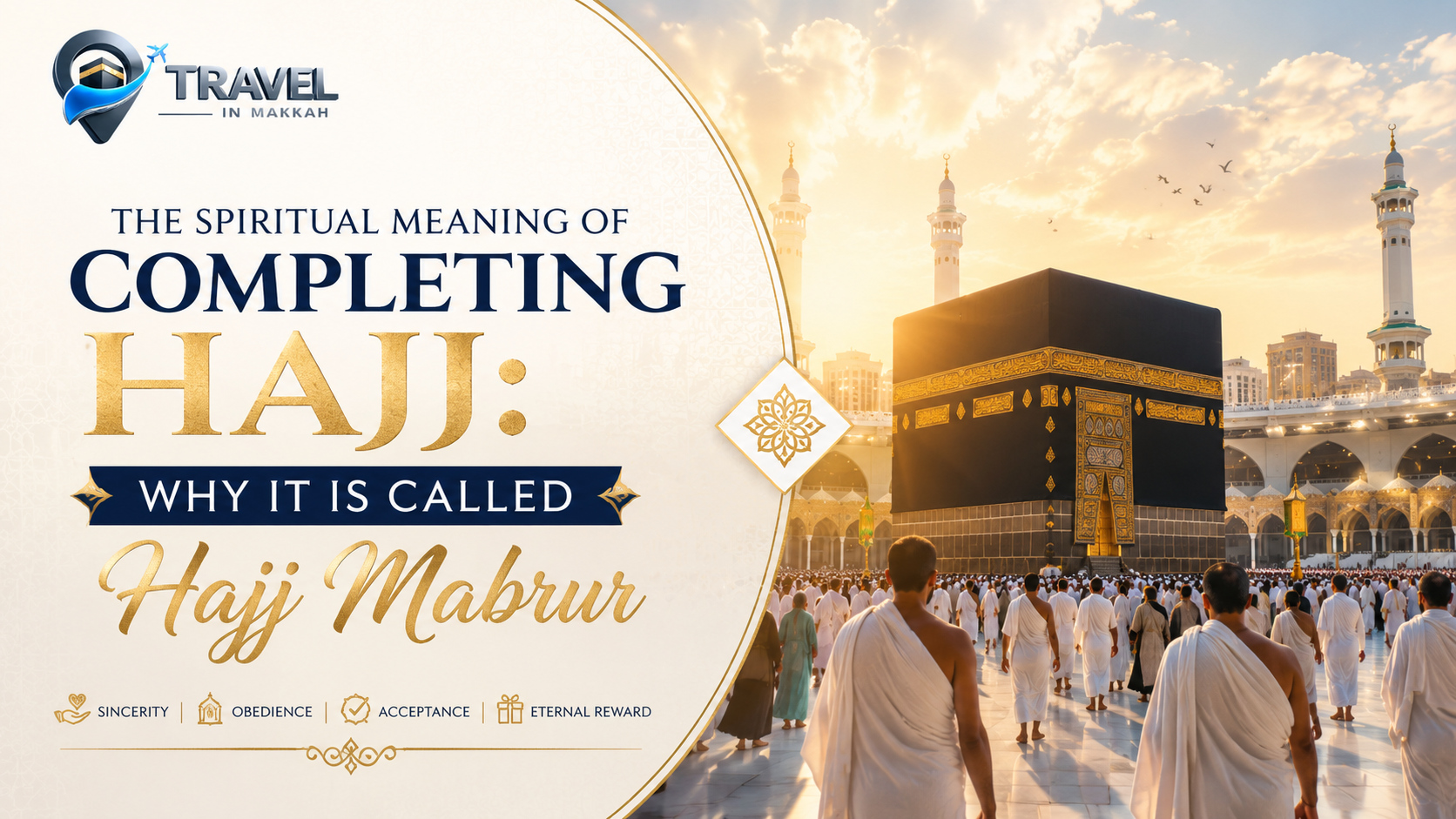
Introduction: The Journey Beyond Rituals
Hajj is one of the most profound acts of worship in Islam. As the fifth pillar, it is an obligation upon every Muslim who is physically and financially able to perform it at least once in their lifetime. Every year, millions of believers travel to Makkah, leaving behind their homes, families, and worldly comforts in response to the call of Allah.
However, Hajj is far more than a physical journey or a set of rituals. It is a deeply spiritual experience designed to transform the heart, purify the soul, and reconnect a believer with their Creator. Among the many terms associated with Hajj, one stands out above all: Hajj Mabrur.
Not every Hajj automatically reaches this level. So what makes a Hajj “Mabrur”? Why is it considered the ultimate goal for every pilgrim? This article explores the spiritual meaning behind completing Hajj and why achieving Hajj Mabrur is the true success of this sacred journey.
What Is Hajj Mabrur? (Definition & Meaning)
The word “Mabrur” comes from the Arabic root “birr,” which refers to righteousness, goodness, and piety. Linguistically, Hajj Mabrur means an accepted Hajj—one that is performed sincerely, correctly, and with purity of intention.
In Islamic teachings, Hajj Mabrur is not defined by outward performance alone. Rather, it is judged by Allah based on sincerity (ikhlas), adherence to the Sunnah, and the spiritual state of the pilgrim.
The Prophet Muhammad (peace be upon him) said:
“The reward for Hajj Mabrur is nothing but Paradise.”
This powerful statement highlights the immense value of an accepted Hajj. It is not just a completed obligation—it is a gateway to Jannah.
The difference between performing Hajj and achieving Hajj Mabrur is similar to the difference between completing a task and truly excelling in it. Many may perform the rituals, but only those whose hearts are transformed achieve Hajj Mabrur.
The Spiritual Purpose of Hajj
Submission to Allah (Tawheed)
At its core, Hajj is an act of complete submission to Allah. Every ritual—from wearing Ihram to performing Tawaf—symbolizes obedience and surrender. Pilgrims follow the footsteps of Prophet Ibrahim (AS), who demonstrated unwavering faith and obedience.
Hajj reminds believers that true success lies in submitting to Allah without hesitation.
Detachment from Worldly Life
When pilgrims enter the state of Ihram, they leave behind their worldly identities. Rich and poor, powerful and weak—all stand equal before Allah. There are no distinctions of status, race, or nationality.
This powerful symbolism teaches humility and reminds believers that worldly possessions and titles hold no value in the sight of Allah.
Purification of the Soul
Hajj is often described as a spiritual rebirth. Through sincere repentance (Tawbah), constant remembrance of Allah, and intense worship, pilgrims seek forgiveness for their past sins.
The Prophet (peace be upon him) said that a person who performs Hajj properly returns “like the day they were born”—free from sin.
This purification is at the heart of Hajj Mabrur.
Key Signs of an Accepted Hajj (Hajj Mabrur)
While only Allah knows whether a Hajj is accepted, scholars have identified signs that indicate a Hajj may be Mabrur:
- A noticeable increase in piety (Taqwa)
- A lasting change in character and behavior
- Stronger commitment to prayer and worship
- Avoidance of sins and harmful habits
- A softer, more humble heart
- Increased kindness and generosity toward others
The real test of Hajj begins after returning home. If the transformation continues, it is a hopeful sign of acceptance.
Essential Conditions for Hajj Mabrur
Sincere Intention (Ikhlas)
Hajj must be performed solely for the sake of Allah. Any desire for recognition, praise, or status can reduce its value.
Halal Earnings
The journey must be funded through lawful (halal) income. Using unlawful wealth can prevent acceptance.
Following the Sunnah Properly
Performing Hajj according to the teachings of the Prophet (peace be upon him) ensures that the rituals are valid and complete.
Avoiding Sin During Hajj
Allah commands pilgrims to avoid arguments, foul language, and disobedience during Hajj. Maintaining good conduct is essential.
Patience and Good Character
Hajj involves physical hardship, large crowds, and emotional challenges. Patience (Sabr) and kindness are key qualities of a successful pilgrim.
Common Mistakes That Prevent Hajj from Being Mabrur
Many pilgrims unintentionally reduce the spiritual value of their Hajj due to avoidable mistakes:
- Showing off worship (Riya)
- Engaging in arguments or disputes
- Focusing only on rituals without understanding their meaning
- Neglecting obligatory acts
- Returning to sinful habits after Hajj
Hajj is not just about completing actions—it is about internal transformation.
The Inner Transformation After Hajj
Becoming a Better Muslim
A pilgrim who achieves Hajj Mabrur returns with a renewed commitment to Islam. Their relationship with Allah becomes stronger and more consistent.
Renewed Life Perspective
Hajj changes how a person views the world. Material success becomes less important, while spiritual success becomes the primary goal.
Commitment to Good Deeds
Acts of charity, kindness, and service to others become a regular part of life. The pilgrim strives to maintain the purity gained during Hajj.
Rewards of Hajj Mabrur
The rewards of Hajj Mabrur are immense and life-changing:
- Entry into Jannah (Paradise)
- Complete forgiveness of past sins
- A fresh spiritual beginning
- Increased blessings (Barakah) in life
- Elevated status in the sight of Allah
These rewards make Hajj Mabrur one of the greatest achievements a Muslim can strive for.
How to Maintain the Spirit of Hajj After Returning
The challenge is not just achieving Hajj Mabrur, but preserving its impact:
- Perform Salah consistently and on time
- Engage in daily Dhikr (remembrance of Allah)
- Read and reflect on the Qur’an regularly
- Surround yourself with righteous company
- Avoid environments that lead to sin
- Continuously renew your intention and faith
Hajj should mark the beginning of a lifelong journey of spiritual growth.
Practical Tips to Achieve Hajj Mabrur
To increase the chances of attaining Hajj Mabrur:
- Make sincere Tawbah before departure
- Learn the rituals and their meanings
- Control anger and ego
- Make constant dua during Hajj
- Help and support fellow pilgrims
- Stay mindful of Allah at all times
Preparation is both spiritual and practical.
Frequently Asked Questions (FAQs)
What makes Hajj accepted by Allah?
Sincerity, correct performance, and good character during Hajj.
Can someone know if their Hajj is Mabrur?
No one can be certain, but positive life changes are a strong sign.
Is Hajj Mabrur achievable for everyone?
Yes, anyone who performs Hajj with sincerity and righteousness can achieve it.
Does committing sins after Hajj invalidate it?
It does not cancel the Hajj, but it may reduce its spiritual impact.
Conclusion: The True Success of Hajj
Hajj is not simply a journey to Makkah—it is a journey to Allah. The ultimate goal is not just to complete the rituals, but to return as a transformed person.
Hajj Mabrur represents the highest level of acceptance, where the pilgrim’s heart is purified, their sins are forgiven, and their life takes a new direction.
In the end, the success of Hajj is not measured by the number of rituals performed, but by the depth of change it brings. A true Hajj Mabrur is a new beginning—a life lived with sincerity, humility, and unwavering devotion to Allah.
Written by
Admin
Sharing insights about pilgrimage, spiritual journeys, and sacred travel experiences.