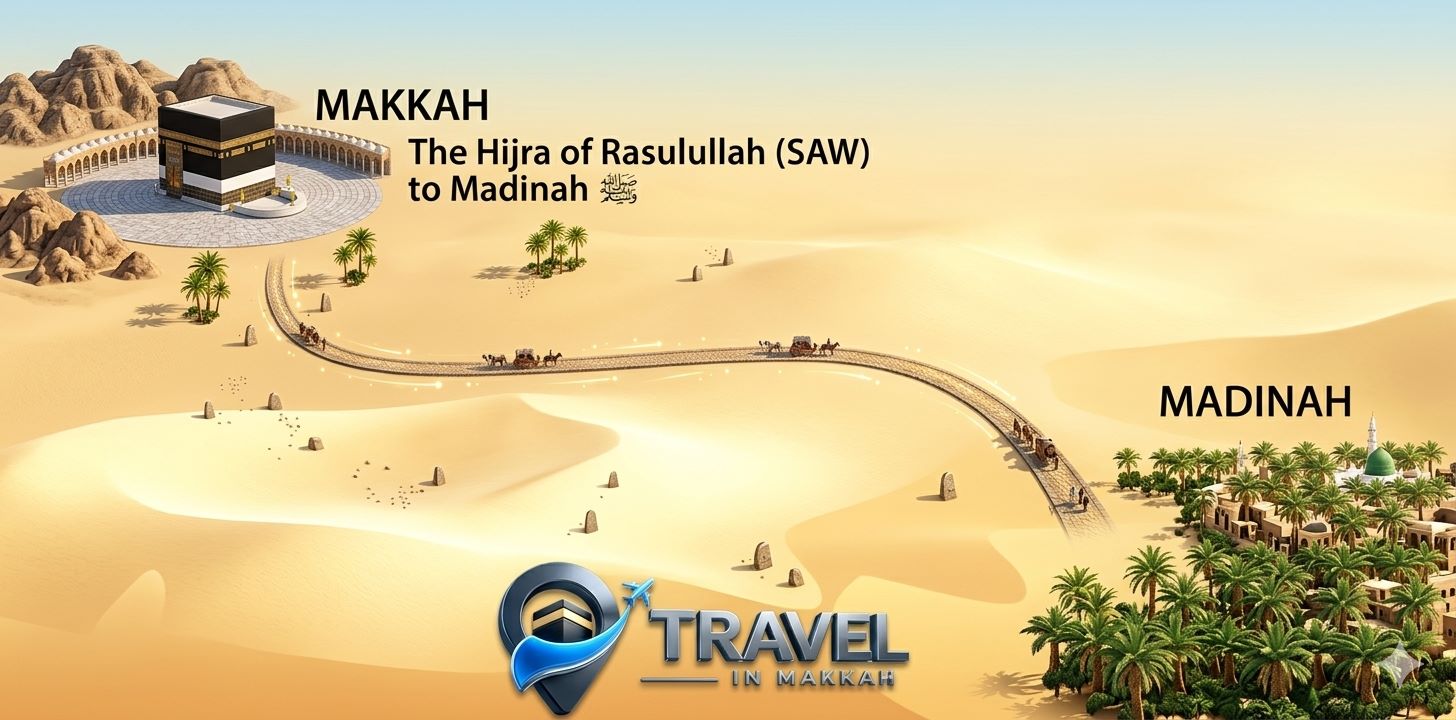
The Hijrah of Rasulullah (SAW) to Madinah: The Foundation of the Islamic State
The Hijrah of Prophet Muhammad ﷺ from Makkah to Madinah marks one of the most pivotal events in Islamic history. This migration, which took place in 622 CE, was not just a physical journey but a turning point that shaped the future of Islam.
The Hijrah marks the beginning of the Islamic calendar and is considered a foundation stone for the establishment of the first Islamic state. This article explores the significance of the Hijrah, the circumstances surrounding it, and its lasting impact on the growth of Islam.
Table of Contents
- The Hijrah of Rasulullah (SAW) to Madinah: The Foundation of the Islamic State
- What Was the Reason for the Hijrah?
- The Divine Revelation and Preparation for Migration
- The Journey from Makkah to Madinah
- The Role of Divine Protection
- The Arrival in Madinah: The Birth of the First Islamic StateEstablishing the First Mosque
- The Constitution of Madinah
- The Legacy of the Hijrah: Unity, Justice, and Community
- Key Battles and Growth of Islam in Madinah
- The Spiritual and Practical Lessons of the Hijrah
- Conclusion
What Was the Reason for the Hijrah?
The Prophet Muhammad ﷺ faced severe persecution from the Quraysh tribe in Makkah, who were determined to suppress the message of Islam. The Muslims were subjected to physical and emotional torture, and eventually, the Quraysh leaders decided to assassinate the Prophet ﷺ. This led to a divine command for the Prophet ﷺ to migrate to Madinah, where he would find a safe place to establish the Muslim community.
The Divine Revelation and Preparation for Migration
The Prophet ﷺ received a divine revelation from Jibra'il (AS), informing him that it was time to leave Makkah. This was a moment of both fear and hope, as the Prophet ﷺ prepared for a journey that would not only safeguard the lives of his companions but also establish the foundations for a new society based on justice and faith. He entrusted Hazrat Ali (RA) to sleep in his bed, wearing his cloak to deceive the Quraysh, and with the guidance of Allah, began his journey under the cover of night.
The Journey from Makkah to Madinah
The Hijrah was not an ordinary journey but one filled with challenges and divine intervention. The Prophet ﷺ and his companion Abu Bakr (RA) sought refuge in the Cave of Thawr for three days to escape the Quraysh’s search party, which had been dispatched to find and kill them. The Quraysh's relentless search proved futile, and Allah’s divine protection was evident in every step of their journey.
The Role of Divine Protection
A famous incident during the Hijrah was when Abu Bakr (RA) expressed his concern that the Quraysh were about to discover their hiding place. The Prophet ﷺ reassured him with the words:
"Do not worry, Allah is with us." (Sahih al-Bukhari)
This moment exemplified the trust and reliance on Allah that guided the Prophet Muhammad ﷺ and his companions throughout the journey. Their arrival in Madinah was a significant victory not just for the Muslims, but for the entire Islamic mission.
The Arrival in Madinah: The Birth of the First Islamic State
After days of travel, the Prophet ﷺ and Abu Bakr (RA) arrived in Quba, a village near Madinah, on the 8th of Rabi’ al-Awwal. The Ansar, the people of Madinah, eagerly awaited the Prophet ﷺ's arrival. His entry into Madinah, which was previously known as Yathrib, was met with overwhelming joy and celebration. The city was renamed Al-Madinah Al-Munawwarah (The Enlightened City), and the Prophet ﷺ began laying the foundations for an Islamic society.
Establishing the First Mosque
One of the Prophet’s ﷺ first actions was to build the Masjid an-Nabawi, the Prophet's Mosque. This mosque became not only a place of worship but also a center for community gatherings, political decisions, and social activities. It was here that the foundations of the first Islamic community were laid.
The Constitution of Madinah
Another crucial step in the establishment of an Islamic state was the drafting of the Constitution of Madinah, which outlined the rights and duties of the various communities within the city, including Muslims, Jews, and other tribes. This document established principles of justice, religious freedom, and cooperation, laying the groundwork for a peaceful and harmonious society. The Constitution of Madinah is regarded as one of the earliest forms of written governance that guaranteed rights for all citizens, regardless of their faith.
The Legacy of the Hijrah: Unity, Justice, and Community
The Hijrah was more than a migration; it was the beginning of a new era for the Muslim Ummah. It symbolizes sacrifice, perseverance, and trust in Allah. The Prophet Muhammad ﷺ’s migration from Makkah to Madinah transformed the city into the heart of the growing Islamic civilization. It was in Madinah that the Prophet ﷺ united the Ansar and Muhajirun (the migrants from Makkah) and built a society based on justice, equality, and brotherhood.
Key Battles and Growth of Islam in Madinah
In the years following the Hijrah, the early Muslim community in Madinah faced numerous challenges, including battles such as Badr, Uhud, and the Trench. These events solidified the leadership of the Prophet ﷺ and affirmed the divine support for Islam. The Treaty of Hudaybiyyah in 628 CE and the Conquest of Makkah in 630 CE further cemented the Prophet’s ﷺ leadership and facilitated the spread of Islam across the Arabian Peninsula.
The Spiritual and Practical Lessons of the Hijrah
The Hijrah holds profound spiritual lessons for every Muslim. It reminds believers that migration is not just a physical act but a journey of the soul — leaving behind sin, injustice, and oppression to seek a place where one can worship Allah freely. It teaches the importance of sacrifice, reliance on Allah, and community building. The Prophet’s ﷺ life serves as a model for all Muslims in how to face trials and hardships with faith and perseverance.
Conclusion
The Hijrah of Prophet Muhammad ﷺ to Madinah is a defining moment in the history of Islam. It was a journey of faith, trust in Allah, and the beginning of the first Islamic state. The legacy of the Hijrah continues to inspire Muslims today as they strive to build just, peaceful, and unified communities. The story of the Hijrah is a reminder that no matter how difficult the path may seem, with faith in Allah and perseverance, victory and success are within reach.
Visit our home page
Written by
Travel in Makkah
Sharing insights about pilgrimage, spiritual journeys, and sacred travel experiences.