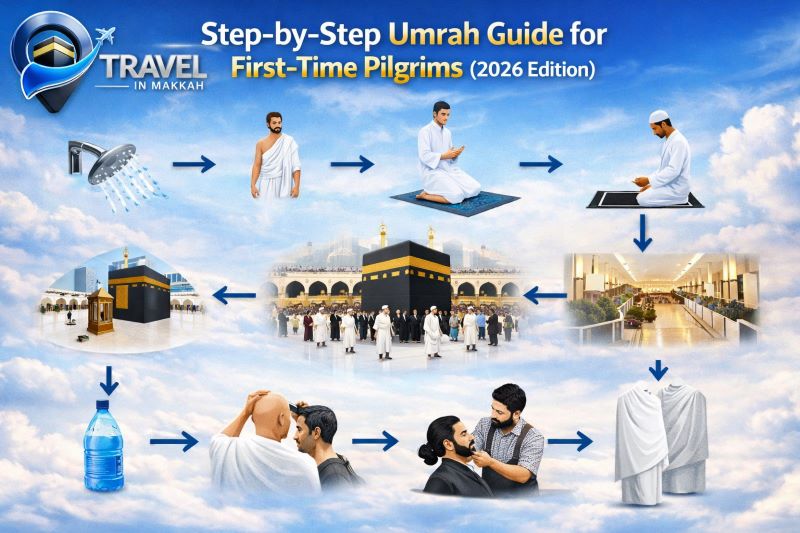
Step-by-Step Umrah Guide for First-Time Pilgrims (2026 Edition)
Table of Contents
- What Is Umrah?
- Why This Guide Matters for First-Time Pilgrims
- Step 1: Make Your Intention for Umrah
- Step 2: Enter the State of Ihram
- Step 3: Know the Important Rules of Ihram
- Step 4: Arrive in Makkah and Prepare for Tawaf
- Step 5: Perform Tawaf Around the Kaaba
- Step 6: Perform Sa’i Between Safa and Marwah
- Step 7: Shave or Trim Your Hair
- What to Recite During Umrah
- 2026 Umrah Updates Every First-Time Pilgrim Should Know
- Common Mistakes First-Time Pilgrims Should Avoid
- Practical Tips to Make Your Umrah Easier
- Simple Packing Checklist for First-Time Umrah Pilgrims
- How Long Does Umrah Take?
- Can You Perform Umrah Without a Guide?
- Final Words
Performing Umrah for the first time is one of the most emotional and life-changing experiences a Muslim can have. It is not only a journey to Makkah—it is a journey back to Allah. For many first-time pilgrims, Umrah brings a mix of excitement, nervousness, and deep spiritual hope.
If you are preparing for Umrah in 2026, this guide will help you understand the process in a simple and practical way. From making your intention and entering Ihram to completing Tawaf, Sa’i, and cutting your hair, this article explains each step clearly so you can feel more confident before you arrive at Masjid al-Haram.
The Prophet ﷺ said that one Umrah to the next expiates the sins between them. That alone shows how special this act of worship is. But to perform it properly, especially as a beginner, it is important to know both the spiritual meaning and the practical steps.
In 2026, Saudi Arabia’s Umrah system is more organized than before, with digital tools like the Nusuk app helping pilgrims manage permits, entry times, and navigation. So preparation now is not only spiritual—it is also practical.
What Is Umrah?
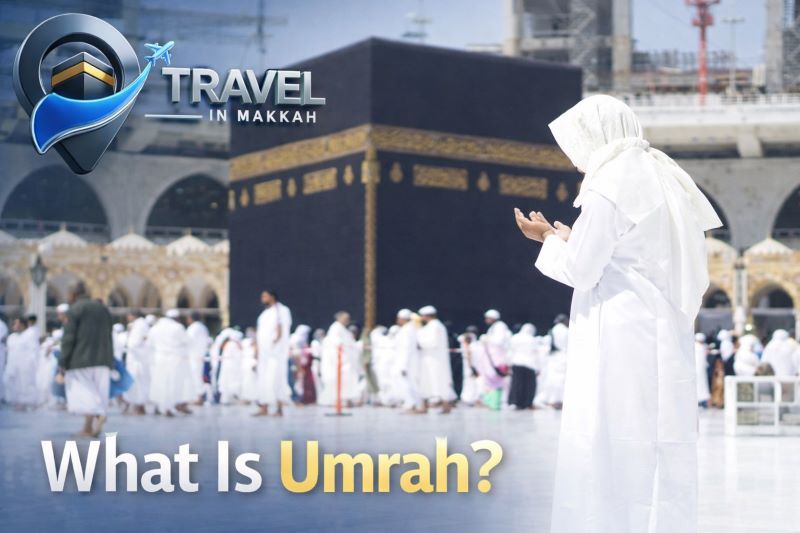
Umrah is often called the “minor pilgrimage,” but its reward and spiritual impact are immense. It is a voluntary act of worship that can be performed at almost any time of the year, unlike Hajj, which takes place on specific dates.
Umrah includes four main parts:
- Entering Ihram
- Performing Tawaf around the Kaaba
- Performing Sa’i between Safa and Marwah
- Shaving or trimming the hair
Although Umrah is not obligatory like Hajj, it is a highly recommended act of worship. Many Muslims perform it to seek forgiveness, spiritual renewal, and closeness to Allah.
Why This Guide Matters for First-Time Pilgrims
If this is your first Umrah, you may have many questions in your mind.
When should I wear Ihram?
What do I say during Tawaf?
What if I make a mistake?
Do I need a permit?
How long does Umrah take?
These are normal concerns. The good news is that Umrah is simple when you understand the order and purpose of each step. This guide is written especially for first-time pilgrims, so the goal is to explain everything in a calm, clear, and realistic way.
Step 1: Make Your Intention for Umrah
Every act of worship begins with intention. Before starting Umrah, you should make the intention in your heart that you are performing Umrah sincerely for Allah.
You do not need a long speech or complicated wording. The intention is mainly in the heart. Once you reach the Miqat, this is where your Umrah officially begins.
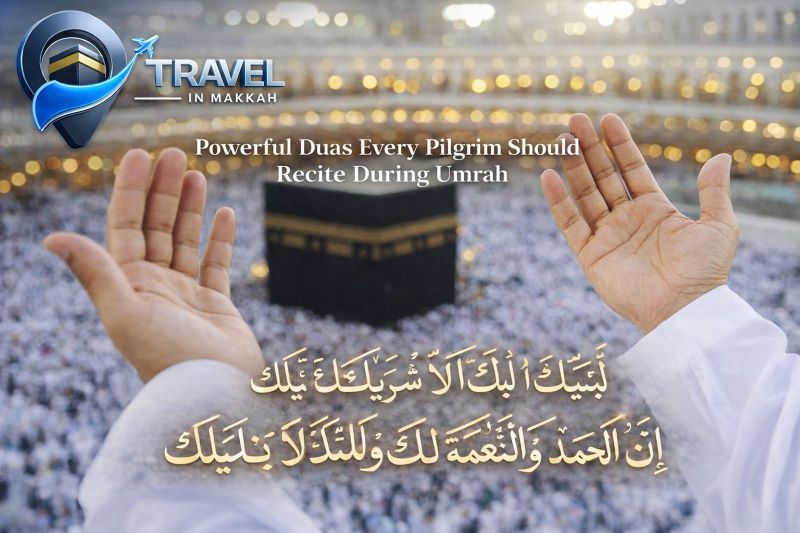
After making your intention, you start reciting the Talbiyah:
لَبَّيْكَ اللَّهُمَّ لَبَّيْكَ، لَبَّيْكَ لاَ شَرِيكَ لَكَ لَبَّيْكَ، إِنَّ الْحَمْدَ وَالنِّعْمَةَ لَكَ وَالْمُلْكَ، لاَ شَرِيكَ لَكَ
Translation:
“Here I am, O Allah, here I am. Here I am, You have no partner, here I am. Surely all praise, blessings, and dominion belong to You. You have no partner.”
This beautiful statement is a response to Allah’s call. It reminds the pilgrim that this journey is only for Him.
Step 2: Enter the State of Ihram
Ihram is the sacred state you enter before beginning Umrah. It includes both special clothing and certain rules that you must follow.
For men:
Men wear two clean white unstitched cloths. One cloth is wrapped around the lower body, and the other is draped over the upper body.
For women:
Women do not have a special color or style of Ihram. They simply wear modest Islamic clothing that covers the body properly.
Before entering Ihram, it is recommended to:
- Perform ghusl if possible
- Trim nails if needed
- Remove unwanted hair before Ihram
- Apply perfume before making intention, not after
Once you enter Ihram, you begin reciting the Talbiyah regularly until you start Tawaf.
Step 3: Know the Important Rules of Ihram
This part is very important for first-time pilgrims. Once you are in Ihram, some normal actions become prohibited until your Umrah is complete.
While in Ihram, avoid:
- Cutting hair or nails
- Using perfume after intention
- Men wearing stitched clothing
- Men covering the head
- Marital relations
- Arguing, foul speech, or sinful behavior
These restrictions are there to create a state of humility, focus, and submission before Allah.
For many beginners, the main thing is to stay calm and be careful. Do not panic over small worries. Learn the rules before your journey so you feel prepared.
Step 4: Arrive in Makkah and Prepare for Tawaf
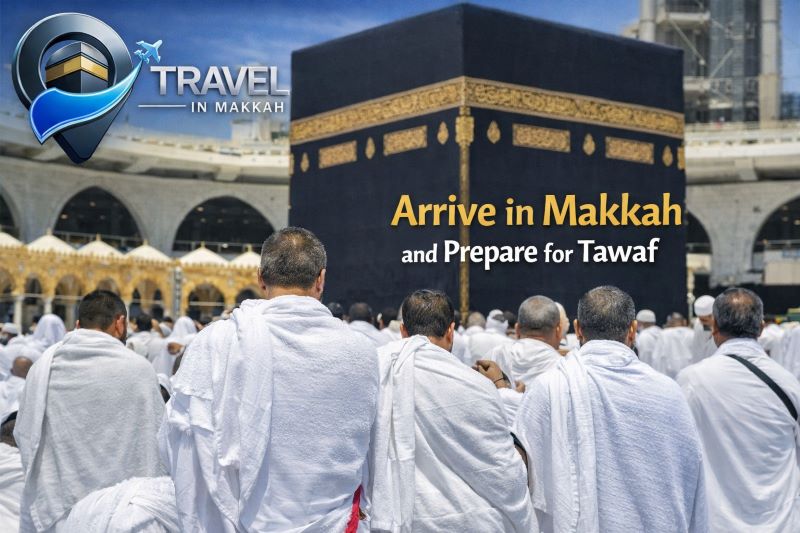
Once you reach Makkah and enter Masjid al-Haram, your heart will likely feel something words cannot fully describe. For many pilgrims, seeing the Kaaba for the first time is a deeply emotional moment.
Take your time. Slow down. Remember why you came.
At this moment, make sincere dua from your heart. Ask Allah for forgiveness, guidance, ease, and acceptance. This is a special moment, and many pilgrims remember it for the rest of their lives.
Before beginning Tawaf, make sure you are in a state of wudu if possible, and then move toward the area of the Kaaba carefully.
Step 5: Perform Tawaf Around the Kaaba
Tawaf means circling the Kaaba seven times in an anti-clockwise direction. This is one of the main pillars of Umrah.
You begin from the area of Hajar al-Aswad, the Black Stone. If you can reach it without harming others, you may touch or kiss it. But in most cases, especially during busy times, it is enough to point toward it and say:
بِسْمِ اللَّهِ، اللَّهُ أَكْبَرُ
As you perform Tawaf:
- Keep the Kaaba on your left side
- Complete seven full rounds
- Move with calmness and patience
- Avoid pushing, shouting, or hurting others
There is no single required dua for every round. You can make your own duas in your own language. This makes Tawaf more personal and heartfelt.
One famous supplication often recited between the Yemeni Corner and Hajar al-Aswad is:
رَبَّنَا آتِنَا فِي الدُّنْيَا حَسَنَةً وَفِي الْآخِرَةِ حَسَنَةً وَقِنَا عَذَابَ النَّارِ
Translation:
“Our Lord, give us good in this world and good in the Hereafter, and protect us from the punishment of the Fire.”
For men, there is also a Sunnah practice in Umrah Tawaf called Idtiba’, where the right shoulder is uncovered during Tawaf.
After completing all seven rounds, if possible, pray two rak’ahs near Maqam Ibrahim. If the area is crowded, you can pray elsewhere in the mosque.
Then drink Zamzam water and make dua.
Step 6: Perform Sa’i Between Safa and Marwah
After Tawaf, you go to Safa to begin Sa’i. Sa’i means walking between the two hills of Safa and Marwah seven times.
This act remembers the struggle of Hajar, the wife of Prophet Ibrahim عليه السلام, when she searched for water for her son Ismail عليه السلام. It is one of the most moving parts of Umrah because it reflects trust in Allah during hardship.
Allah says:
إِنَّ الصَّفَا وَالْمَرْوَةَ مِن شَعَائِرِ اللَّهِ
Translation:
“Indeed, Safa and Marwah are among the symbols of Allah.”
How to perform Sa’i:
- Start at Safa
- Walk toward Marwah
- This counts as one trip
- Then walk back from Marwah to Safa
- Continue until you complete seven trips
- The seventh trip ends at Marwah
During Sa’i, make dua, do dhikr, and reflect on Allah’s mercy.
In the marked green-light area, men should walk briskly. Women continue walking normally.
Sa’i is not meant to be rushed. Go steadily and stay focused.
Step 7: Shave or Trim Your Hair
After completing Sa’i, the final step of Umrah is to remove some of your hair.
For men:
- Shaving the head completely is better
- Trimming the hair is also allowed
For women:
- They should trim a small portion from the end of their hair
Once this is done, your Umrah is complete and you come out of Ihram.
That means the restrictions of Ihram are lifted, and your pilgrimage is finished.
What to Recite During Umrah
Many first-time pilgrims worry about what exactly they must say during Umrah. The good news is that Islam gives ease here.
There are some authentic recitations, such as the Talbiyah and certain supplications from the Qur’an, but outside of those, you may speak to Allah in your own language. You can ask for forgiveness, guidance, health, provision, a righteous family, peace in your heart, or anything good.
This makes Umrah deeply personal. You are not just following movements—you are standing before Allah with your needs, sins, hopes, and prayers.
2026 Umrah Updates Every First-Time Pilgrim Should Know
In 2026, Umrah is more digitally organized than before. Saudi Arabia now relies heavily on digital systems to help manage crowds and improve pilgrim safety.
The most important tool is the Nusuk app. Pilgrims may need it for permit-related access, travel organization, and service coordination. Because rules can be updated, it is important to check the latest information before departure.
Practical 2026 advice:
- Download and set up the Nusuk app before travel
- Keep digital and printed copies of your documents
- Check entry requirements and permit rules in advance
- Follow official instructions from Saudi authorities
For first-time pilgrims, this digital preparation can make the journey much easier.
Common Mistakes First-Time Pilgrims Should Avoid
Many first-time pilgrims make simple mistakes, not because they are careless, but because they are nervous or uninformed.
Here are some of the most common ones:
1. Entering Ihram too late
You must enter Ihram before crossing the Miqat. Do not delay this step until after passing it.
2. Getting overwhelmed in Tawaf
Some pilgrims panic because of crowds. Stay calm, protect others, and do not think you must reach the Black Stone physically.
3. Forgetting the order of rituals
The order matters: Ihram, Tawaf, Sa’i, then hair cutting.
4. Starting Sa’i from the wrong side
Sa’i begins at Safa and ends at Marwah.
5. Focusing too much on perfection
Umrah is an act of worship, not a performance. Do your best with sincerity and humility.
Practical Tips to Make Your Umrah Easier
A few simple tips can make a big difference, especially for beginners.
- Try to perform Tawaf during less crowded times if possible
- Stay hydrated, especially after walking
- Wear comfortable sandals or footwear that are easy to remove
- Keep a small bag for essentials
- Save your hotel location and important app details on your phone
- Do not exhaust yourself before the main rituals
- Be patient with crowds, delays, and waiting times
Remember, part of Umrah is learning patience, gentleness, and reliance on Allah.
Simple Packing Checklist for First-Time Umrah Pilgrims
Here is a basic list to help you prepare:
Documents
- Passport
- Visa
- Nusuk-related documents or app access
- Hotel booking details
- Flight details
- ID copies
- Travel insurance if needed
Ihram and clothing
- Two Ihram cloths for men
- Modest loose clothing for women
- Comfortable slippers or sandals
- Extra undergarments
- Small bag for personal items
Personal essentials
- Unscented soap if needed
- Toothbrush and basic toiletries
- Medicines
- Water bottle
- Phone charger or power bank
- Light snacks
- Prayer mat if desired
How Long Does Umrah Take?
The rituals of Umrah usually take around 2 to 4 hours, depending on crowd levels, your pace, and prayer times.
For some pilgrims, it may take longer if the Haram is busy. That is completely normal. Do not rush. The goal is not speed. The goal is acceptance.
Can You Perform Umrah Without a Guide?
Yes, you can. Many people perform Umrah on their own successfully.
As long as you understand the steps, follow the correct order, and prepare properly, Umrah can be done without a group leader. That said, if having a guide helps you stay calm and confident, there is no harm in that either.
The most important thing is that you perform it correctly and sincerely.
Final Words
Your first Umrah may begin as a journey on the road, but in reality, it begins in the heart.
You may arrive feeling nervous, unsure, and emotional. But once you stand before the Kaaba, everything changes. The crowds fade, the noise fades, and your heart begins to understand why Allah invited you there.
So prepare well. Learn the steps. Keep your intentions pure. And remember that Umrah is not about performing every moment perfectly—it is about turning to Allah with sincerity.
May Allah accept your Umrah, forgive your sins, ease your journey, and bring you back better than before.
Read More: Explore everything you need for your sacred journey at Travel in Makkah. Start from our homepage to get a complete overview, then visit our Shop page to find essential travel items for Hajj and Umrah. Learn more about our mission and services on the About page, and read helpful guides and updates on our Blog to prepare yourself better. When you're ready, you can easily book your journey through our booking page and begin your spiritual experience with confidence.
Written by
junaid
Sharing insights about pilgrimage, spiritual journeys, and sacred travel experiences.