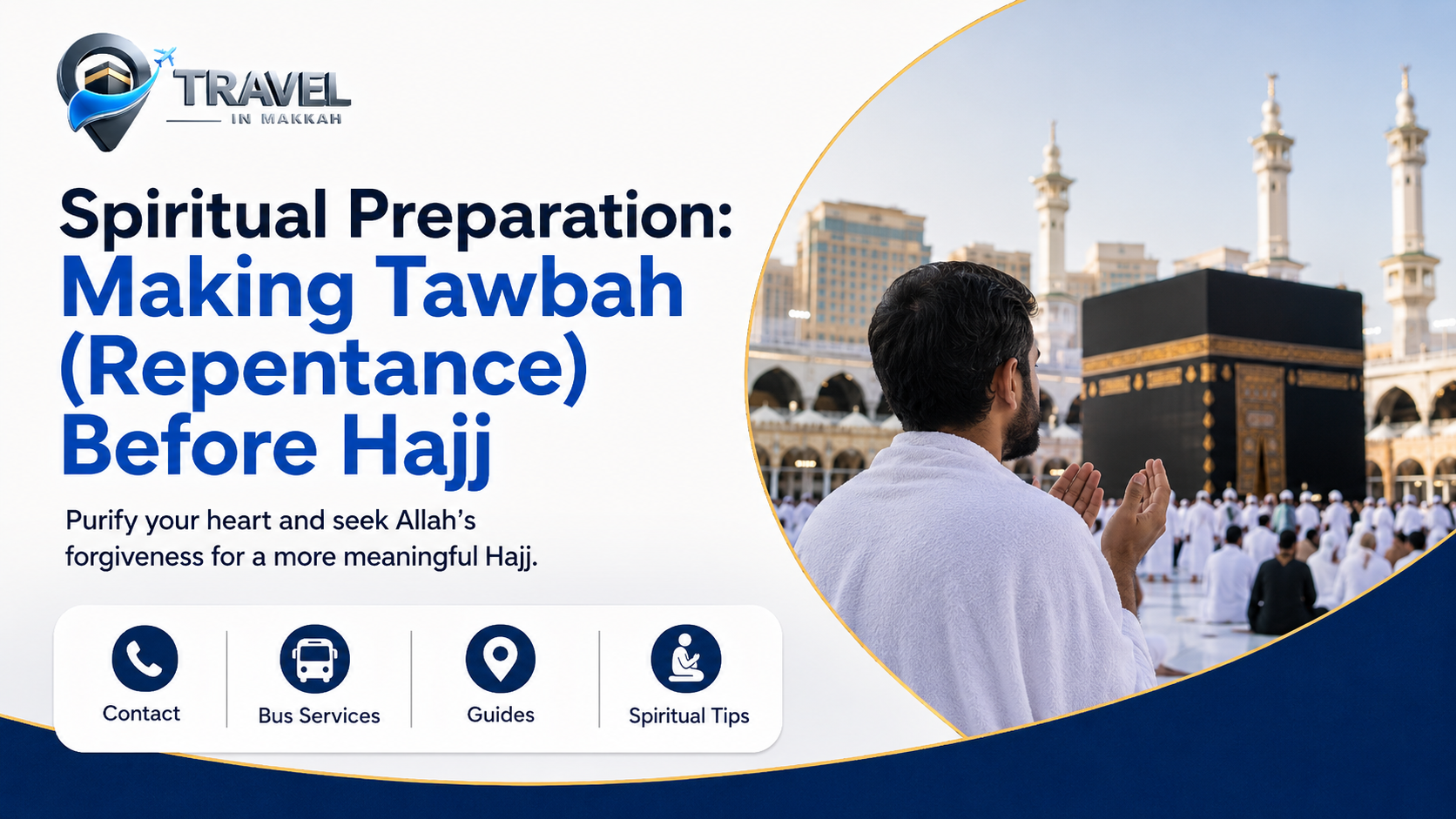
Introduction: Why Spiritual Preparation Matters Before Hajj
Hajj is not just a physical journey—it is one of the most profound spiritual transformations a المسلم can experience. Every year, millions of pilgrims travel to Makkah with the hope of returning purified, as if free from all sins. However, achieving this level of spiritual renewal requires more than simply performing rituals. It demands sincere preparation of the heart.
Among the most important aspects of this preparation is Tawbah (repentance). Before standing on the plains of Arafah, before wearing the Ihram, and before uttering the Talbiyah, a believer must turn back to Allah with sincerity and humility.
Making Tawbah before Hajj ensures that you begin your sacred journey with a clean heart, free from the burden of past sins. It sets the foundation for an accepted Hajj—one that brings you closer to Allah and transforms your life permanently.
What is Tawbah (Repentance) in Islam?
Tawbah literally means “to return.” In Islam, it refers to returning to Allah after committing sins, seeking His forgiveness, and resolving to live a righteous life.
It is not just about saying “Astaghfirullah.” True Tawbah involves:
- A deep awareness of wrongdoing
- Genuine remorse in the heart
- A firm commitment to change
The Quran repeatedly emphasizes Allah’s mercy and His willingness to forgive:
“Indeed, Allah loves those who are constantly repentant.”
The Prophet Muhammad (peace be upon him) also taught that Allah’s mercy is vast and that He accepts repentance from His servants as long as they turn back sincerely.
Why Tawbah is Essential Before Hajj
Hajj is a once-in-a-lifetime opportunity for many المسلمين. It is a journey that symbolizes submission, sacrifice, and renewal. The Prophet (peace be upon him) said that an accepted Hajj (Hajj Mabroor) has no reward except Paradise.
But how can one expect such a reward while carrying the burden of unresolved sins?
Making Tawbah before Hajj is essential because:
- It purifies the soul before entering sacred rituals
- It allows you to focus entirely on عبادات without guilt
- It prepares you for the forgiveness of the Day of Arafah
- It increases the chances of your Hajj being accepted
When you stand in Arafah, you want to stand as someone who has already begun the process of returning to Allah—not someone delaying repentance.
The Conditions of Sincere Tawbah
For Tawbah to be accepted, Islamic scholars outline several essential conditions:
1. Feeling Genuine Remorse (Nadam)
You must truly regret your sins. Without remorse, repentance becomes empty words.
2. Immediately Stopping the Sin
Continuing a sin while asking for forgiveness contradicts sincerity.
3. Firm Intention Not to Return
A believer must resolve not to repeat the sin, even if they later fall into it again out of weakness.
4. Seeking Forgiveness (Istighfar)
Consistently asking Allah for forgiveness through duas and supplications.
5. Returning the Rights of Others
If your sin involves harming another person, you must correct it—whether by returning money, apologizing, or seeking forgiveness.
Types of Sins That Require Tawbah Before Hajj
Sins Against Allah (Huqooq Allah)
These include:
- Missing obligatory prayers
- Not fasting in Ramadan without valid reasons
- Neglecting religious duties
Such sins require sincere repentance directly to Allah.
Sins Against People (Huqooq al-Ibad)
These are more serious because they involve the rights of others:
- Backbiting or slander
- Cheating in business
- Breaking trust
- Hurting someone emotionally
These sins require both repentance to Allah and reconciliation with people.
Step-by-Step Guide to Making Tawbah Before Hajj
Here is a practical method to help you make sincere Tawbah:
1. Self-Reflection (Muhasabah)
Take time to reflect on your past actions. Identify your mistakes honestly.
2. Acknowledge Your Sins
Admit your wrongdoing without excuses.
3. Perform Istighfar
Recite “Astaghfirullah” regularly and with presence of heart.
4. Pray Two Rak’ah of Tawbah
Offer voluntary prayer and ask Allah for forgiveness sincerely.
5. Make Heartfelt Dua
Speak to Allah openly—He knows your struggles and intentions.
6. Seek Forgiveness from Others
Apologize to those you have wronged and mend relationships.
7. Commit to Change
Create a plan to avoid repeating past sins.
Powerful Duas for Tawbah Before Hajj
Incorporating specific duas can strengthen your repentance:
- Sayyidul Istighfar (the best dua for forgiveness)
- “Astaghfirullah wa atubu ilayh”
- Personal duas in your own language
The best times to make these duas include:
- During Tahajjud (last third of the night)
- After obligatory prayers
- On Fridays
- While fasting
Consistency in dua softens the heart and strengthens your connection with Allah.
Clearing the Rights of Others Before Hajj
One of the most overlooked aspects of Tawbah is resolving issues with others.
Before Hajj, make it a priority to:
- Repay debts
- Return borrowed items
- Apologize sincerely
- Forgive others as well
Hajj does not erase the حقوق العباد unless those rights are settled. This step is essential for complete spiritual purification.
Signs That Your Tawbah is Accepted
While only Allah knows whose repentance is accepted, there are hopeful signs:
- You feel closer to Allah
- You develop hatred for past sins
- You become consistent in عبادات
- You experience inner peace
These signs indicate that your heart is transforming.
Common Mistakes to Avoid When Making Tawbah
Many people make errors that weaken their repentance:
- Delaying Tawbah until just before Hajj
- Saying Istighfar without sincerity
- Repeating sins carelessly
- Ignoring the rights of others
Avoiding these mistakes ensures your repentance is meaningful and effective.
Building a Pure Heart Before Entering Ihram
Ihram is not just a physical state—it represents spiritual purity.
To prepare:
- Let go of grudges
- Practice forgiveness
- Increase dhikr (remembrance of Allah)
- Recite Quran regularly
- Develop humility and patience
A clean heart enhances every moment of your Hajj experience.
Preparing Spiritually for the Day of Arafah
The Day of Arafah is the pinnacle of Hajj. It is the day when Allah forgives countless sins and accepts duas.
To maximize this day:
- Enter it with sincere Tawbah already made
- Spend time in continuous dua
- Reflect deeply on your relationship with Allah
- Ask for forgiveness repeatedly
This is your moment to reset your life completely.
Practical Daily Routine for Tawbah Before Hajj
Creating a routine helps maintain consistency:
Morning
- Recite Istighfar 100 times
- Make intention to avoid sins
Evening
- Reflect on your actions
- Seek forgiveness for mistakes
Weekly
- Review your behavior
- Set improvement goals
Consistency builds a strong spiritual foundation before Hajj.
How Tawbah Transforms Your Hajj Experience
When you make sincere Tawbah:
- Your heart becomes lighter
- عبادات feel more meaningful
- You experience deeper spiritual presence
- Your connection with Allah strengthens
Instead of performing rituals mechanically, you experience Hajj with sincerity and awareness.
Conclusion: Returning to Allah Before Visiting His House
Hajj is an invitation from Allah—but entering His house requires preparation. Tawbah is your way of answering that invitation with sincerity.
Do not delay repentance. Start today. Cleanse your heart, seek forgiveness, and resolve to become a better Muslim.
When you finally stand in Arafah, let it be as someone who has already turned back to Allah—ready to be forgiven, renewed, and transformed.
FAQs
Q1: Can Allah forgive all sins before Hajj?
Yes, Allah can forgive all sins if Tawbah is sincere—even major sins.
Q2: Is Tawbah required before performing Hajj?
While not a formal requirement, it is essential for spiritual readiness and acceptance.
Q3: What if I forget some sins?
General repentance covers all sins, including those you may not remember.
Q4: Do I need to ask forgiveness from everyone I wronged?
Yes, especially if your actions harmed others. Their rights must be fulfilled.
Q5: How many times should I make Tawbah before Hajj?
As often as possible. Tawbah should be continuous, not limited to a specific number.
Written by
Admin
Sharing insights about pilgrimage, spiritual journeys, and sacred travel experiences.