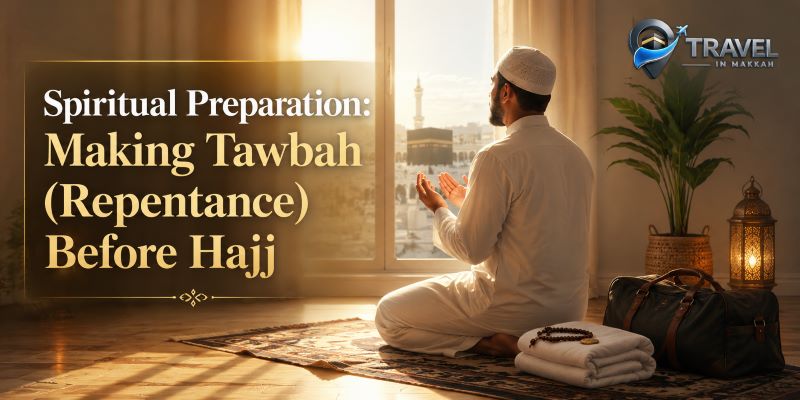
Spiritual Preparation: Making Tawbah (Repentance) Before Hajj
Learn how to make sincere tawbah before Hajj with Qur’an and Sahih Hadith evidence. A practical spiritual preparation guide for pilgrims before the journey of a lifetime.
Introduction
Hajj is not only a journey of the body. It is also a journey of the heart. A pilgrim travels to Makkah, wears simple Ihram, stands in Arafat, makes du’a, performs Tawaf, and asks Allah for forgiveness. But before this sacred journey begins, one of the most important steps is spiritual preparation: making tawbah before Hajj.
Tawbah means returning to Allah with sincere repentance. It is not just saying “Astaghfirullah” with the tongue. True tawbah means feeling regret for sins, leaving those sins, asking Allah for forgiveness, and making a serious intention not to return to them again.
This is very important before Hajj because Hajj is a major act of عبادة. It is a chance to return to Allah with a clean heart, correct intention, and a new life. Nusuk Hajj also describes Hajj as a profound journey that offers the opportunity for forgiveness and spiritual transformation, while also encouraging pilgrims to prepare with the right information, including spiritual and religious preparation.
Why Tawbah Before Hajj Matters
Many people prepare for Hajj by buying Ihram clothes, booking flights, checking hotel distance, arranging transport, and learning the rituals. These are necessary. But if the heart is careless, proud, angry, full of grudges, or attached to sins, the journey can lose its deeper meaning.
Hajj is not a normal trip. It is a journey to answer the call of Allah. A pilgrim should not only ask, “Is my passport ready?” but also ask, “Is my heart ready?”
Allah says in the Qur’an:
Arabic:
يَـٰٓأَيُّهَا ٱلَّذِينَ ءَامَنُوا۟ تُوبُوٓا۟ إِلَى ٱللَّهِ تَوْبَةًۭ نَّصُوحًا
Meaning:
“O believers! Turn to Allah in sincere repentance...”
This ayah shows that tawbah is not only for people who feel they are very sinful. Allah calls the believers themselves to make sincere repentance. So before Hajj, every pilgrim should renew tawbah, even if they already pray, fast, and try to live a good life.
Allah’s Mercy Is Greater Than Your Sins
Some pilgrims feel afraid before Hajj. They think, “I have committed many sins. Will Allah forgive me?” Islam teaches hope, not despair. Tawbah is a door Allah has opened for His servants.
Allah says:
Arabic:
قُلْ يَـٰعِبَادِىَ ٱلَّذِينَ أَسْرَفُوا۟ عَلَىٰٓ أَنفُسِهِمْ لَا تَقْنَطُوا۟ مِن رَّحْمَةِ ٱللَّهِ ۚ إِنَّ ٱللَّهَ يَغْفِرُ ٱلذُّنُوبَ جَمِيعًا
Meaning:
“Say, ˹O Prophet, that Allah says,˺ ‘O My servants who have exceeded the limits against their souls! Do not lose hope in Allah’s mercy, for Allah certainly forgives all sins.’”
This ayah is one of the strongest reminders of Allah’s mercy. No pilgrim should begin Hajj with hopelessness. Instead, begin with humility, fear of Allah, hope in His mercy, and sincere tawbah.
The Door of Tawbah Is Open
The Prophet Muhammad ﷺ taught that Allah accepts repentance day and night. In Sahih Muslim, the Prophet ﷺ said:
Arabic:
إِنَّ اللَّهَ عَزَّ وَجَلَّ يَبْسُطُ يَدَهُ بِاللَّيْلِ لِيَتُوبَ مُسِيءُ النَّهَارِ وَيَبْسُطُ يَدَهُ بِالنَّهَارِ لِيَتُوبَ مُسِيءُ اللَّيْلِ حَتَّى تَطْلُعَ الشَّمْسُ مِنْ مَغْرِبِهَا
Meaning:
“Allah, the Exalted and Glorious, stretches out His Hand during the night so that the people may repent for the fault committed from dawn till dusk, and He stretches out His Hand during the day so that the people may repent for the fault committed from dusk to dawn, until the sun rises from the west.”
This hadith gives great hope. If someone is preparing for Hajj, they should not delay tawbah. They should repent before leaving home, during the journey, at the Miqat, in Makkah, in Mina, in Arafat, in Muzdalifah, and after returning home.
Hajj and Forgiveness: A Powerful Hadith
One of the greatest hopes of Hajj is forgiveness. The Prophet ﷺ said:
Arabic:
مَنْ حَجَّ لِلَّهِ فَلَمْ يَرْفُثْ وَلَمْ يَفْسُقْ رَجَعَ كَيَوْمِ وَلَدَتْهُ أُمُّهُ
Meaning:
“Whoever performs Hajj for Allah’s pleasure and does not have sexual relations with his wife, and does not do evil or sins, then he will return as if he were born anew.”
This hadith is very strong. But notice the condition: the pilgrim avoids rafath and fusooq. That means Hajj is not only a ritual. It also requires self-control, good character, patience, modesty, and avoiding sins.
Another hadith says:
Arabic:
وَالْحَجُّ الْمَبْرُورُ لَيْسَ لَهُ جَزَاءٌ إِلاَّ الْجَنَّةُ
Meaning:
“And the reward of Hajj Mabrur is nothing except Paradise.”
A pilgrim who wants Hajj Mabrur should start with tawbah before Hajj.
What Is True Tawbah?
True tawbah is not only emotional. It has clear conditions.
First, stop the sin. If someone is involved in haram income, lying, cheating, backbiting, missing prayers, watching haram content, cutting family ties, or hurting others, they must try to stop.
Second, feel regret. A believer should not be proud of sins. Regret is a sign that the heart is still alive.
Third, make a firm intention not to return to the sin. A person may become weak later, but at the time of tawbah, the intention must be sincere.
Fourth, if the sin involves another person, fix their right. For example, if you took money, return it. If you harmed someone, seek forgiveness. If you spread false words, correct them as much as possible.
This is very important before Hajj. A pilgrim should not go to Makkah while intentionally carrying the rights of people on their shoulders.
Practical Steps to Make Tawbah Before Hajj
Before leaving for Hajj, sit alone and make an honest self-accounting. Think about your relationship with Allah, your prayers, your income, your family, your speech, your online habits, and your dealings with people.
Pray two rak’ahs of nafl salah if possible, then raise your hands and ask Allah sincerely. Say:
أَسْتَغْفِرُ اللهَ وَأَتُوبُ إِلَيْهِ
Meaning: “I seek forgiveness from Allah and repent to Him.”
You can also make du’a in your own language. Say: “O Allah, forgive my past sins, clean my heart, accept my Hajj, and make me return as a better Muslim.”
Make a list of people whose rights you may have affected. Call them, message them, return what belongs to them, or ask forgiveness with humility. This may feel difficult, but it is part of spiritual preparation.
Tawbah Before Hajj Also Means Fixing Your Intention
Hajj must be for Allah, not for showing people. Before Hajj, ask yourself: “Am I going for Allah, or for social status, photos, praise, and people calling me Haji?”
A pure intention changes the whole journey. You may still take necessary photos for memories, but your heart should not travel for attention. The real goal is Allah’s pleasure.
Before Hajj, repeat this intention in your heart: “O Allah, I am going only for You. Accept it from me.”
Control the Tongue Before and During Hajj
Many sins happen through the tongue. Backbiting, arguing, insulting, complaining too much, lying, and mocking others can damage the spirit of Hajj.
Before Hajj, train your tongue. Speak less. Say more dhikr. Avoid unnecessary arguments. During Hajj, crowds, heat, waiting, and tiredness can test your patience. If you do not train before traveling, you may lose control easily.
A pilgrim should remember that Hajj is a journey of humility. Your group may be late. Your room may be crowded. Transport may take time. Food may not match your taste. But patience is part of the journey.
Make Tawbah From Neglecting Salah
One of the most important areas of tawbah is salah. A person preparing for Hajj should fix the five daily prayers before traveling. Hajj is not a replacement for regular obedience. It is a major pillar, but daily salah remains essential.
If you have been careless with salah, make tawbah today. Start praying on time. Learn the basic rules of purification, wudu, ghusl, and prayer during travel. This will make your Hajj more peaceful and correct.
Spiritual Preparation and Official Preparation Should Go Together
Islam teaches us to rely on Allah, but also to take the correct means. Spiritual preparation does not mean ignoring practical preparation.
Nusuk Hajj explains that the platform is overseen by the Saudi Ministry of Hajj and Umrah and provides packages through authorized service providers for pilgrims from serviced countries. It also lists steps such as creating an account, uploading documents, filling out the application, verification, selecting a package, booking, and reviewing the itinerary.
Saudi Ministry of Health guidance also reminds pilgrims to complete necessary vaccinations, restore physical fitness before Hajj, prepare enough medication if they have a chronic illness, carry medical reports, avoid heavy walking in high temperatures, drink enough water, wear masks in crowded rituals, wash hands, and consult a doctor before travel.
So a balanced pilgrim prepares both ways: the heart with tawbah, and the body with health, documents, and official guidance.
Travel in Makkah: Helping Pilgrims Prepare With Knowledge and Peace
Travel in Makkah is focused on helping pilgrims understand Hajj, Umrah, Makkah, Madinah, and the sacred journey simply and reliably. For many first-time pilgrims, the biggest challenge is not only booking the trip. It is knowing what to do, what to avoid, how to prepare spiritually, and how to follow official guidance.
This is why Travel in Makkah articles aim to combine practical travel advice with Islamic reminders. A pilgrim needs both. You need to know your documents, route, hotel, transport, health requirements, and official platform. But you also need tawbah, patience, sincerity, du’a, and correct knowledge of the rituals.
Before Hajj, use reliable guidance, learn step by step, and prepare your heart before you prepare your suitcase.
A Simple Tawbah Checklist Before Hajj
Before leaving for Hajj, ask yourself:
Have I sincerely repented to Allah?
Am I praying five times daily?
Have I returned people’s rights?
Have I asked forgiveness from those I hurt?
Is my income halal?
Have I stopped public and private sins as much as possible?
Is my Hajj intention only for Allah?
Have I learned the basic Hajj rituals?
Have I checked the official Hajj instructions and health guidance?
Am I ready to be patient with crowds, heat, delays, and tiredness?
This checklist can help you enter Hajj with a cleaner heart and a clearer mind.
Common Mistakes to Avoid
Do not think Hajj automatically fixes everything while you continue sins intentionally. Hajj is a great opportunity for forgiveness, but a pilgrim must avoid sins and perform Hajj sincerely.
Do not delay tawbah until Arafat. Arafat is a powerful day for du’a, but tawbah should begin before leaving home.
Do not ignore the rights of people. If you hurt someone, try to fix it before Hajj.
Do not focus only on shopping, hotels, and photos. These may be part of the trip, but they are not the purpose of Hajj.
Do not use unofficial or unsafe routes for Hajj. Follow official channels and instructions. Practical obedience and legal compliance help protect the sanctity and safety of the journey.
FAQ: Tawbah Before Hajj
Is tawbah required before Hajj?
A Muslim should always make tawbah, and before Hajj it becomes especially important because Hajj is a major act of worship and a chance for forgiveness. Tawbah prepares the heart for sincerity, humility, and acceptance.
Can Allah forgive all my sins before Hajj?
Yes, Allah’s mercy is vast. The Qur’an says Allah forgives all sins for those who turn back to Him sincerely. A person should never lose hope in Allah’s mercy.
What should I say when making tawbah?
You can say: أَسْتَغْفِرُ اللهَ وَأَتُوبُ إِلَيْهِ. You can also make du’a in your own language, asking Allah to forgive you, purify your heart, accept your Hajj, and keep you firm after returning.
What if I sin again after making tawbah?
Make tawbah again. The door of repentance remains open until the time Allah has decreed. The hadith in Sahih Muslim shows that Allah accepts repentance day and night.
Should I ask people for forgiveness before Hajj?
Yes, especially if you harmed someone, took someone’s right, spoke badly about them, or caused damage. If the sin is connected to another person, you should try to restore their right or ask for forgiveness.
Conclusion
Spiritual preparation before Hajj begins with tawbah. A pilgrim should not only prepare documents, luggage, hotel bookings, and transport. The heart also needs preparation.
Make sincere tawbah. Leave sins. Return people’s rights. Fix your intention. Control your tongue. Pray on time. Learn the rituals. Follow official guidance. Then begin your journey with hope in Allah’s mercy.
Hajj is a journey of forgiveness, humility, and transformation. The pilgrim who returns from Hajj should not only return with a new title, but with a new heart.
Written by
admin
Sharing insights about pilgrimage, spiritual journeys, and sacred travel experiences.