Physical Fitness Plan for Hajj: 8-Week Preparation Training
Introduction
Hajj is one of the most beautiful journeys a Muslim can make, but it is also physically demanding. Pilgrims may walk long distances, stand in crowds, move between Mina, Arafat, Muzdalifah, and Jamarat, wait in queues, sleep less than usual, and face hot weather.
That is why physical preparation matters.
A good Physical Fitness Plan for Hajj does not mean you need to become an athlete. It means you prepare your body gradually so you can walk, stand, carry a small bag, manage heat better, and focus more on عبادة instead of constant tiredness.
This 8-week Hajj preparation training plan is designed for ordinary pilgrims, first-time pilgrims, elderly pilgrims, and people who want a simple, safe, and practical routine before travel.
Before starting, remember this important safety point: if you have heart disease, diabetes, high blood pressure, asthma, joint pain, obesity, pregnancy, or any chronic condition, speak to your doctor before beginning a training plan. Saudi health guidance also advises pilgrims to see a doctor before travel to make sure their health is stable, and they can perform Hajj.
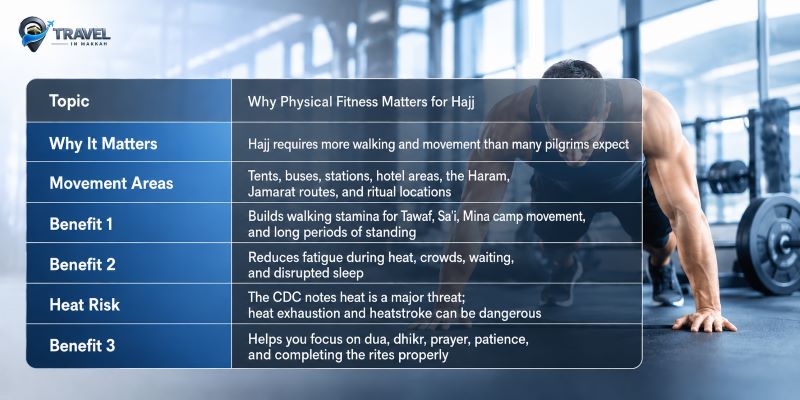
Why Physical Fitness Matters for Hajj
Hajj requires more movement than many pilgrims expect. Even if your package includes transport, you may still need to walk between tents, buses, stations, hotel areas, the Haram, Jamarat routes, and ritual locations.
Fitness helps in three major ways.
First, it builds walking stamina. Tawaf, Sa’i, Mina camp movement, and Jamarat routes can require long periods of walking and standing.
Second, it reduces fatigue. Hajj can involve heat, crowds, waiting, and disrupted sleep. The CDC notes that heat is a major threat to Hajj travelers, especially when Hajj falls during hot months, and heat exhaustion and heatstroke can be dangerous.
Third, fitness helps you focus on worship. When your body is better prepared, you can spend more energy on dua, dhikr, prayer, patience, and completing the rites properly.
What This 8-Week Hajj Fitness Plan Will Improve
This plan focuses on five areas that matter most for Hajj:
Walking endurance
Leg strength
Balance and stability
Flexibility and mobility
Hydration and recovery habits
You do not need expensive equipment. Most exercises can be done at home, in a park, on a quiet road, or inside a room.
The goal is simple: start slowly, increase gradually, avoid injury, and arrive for Hajj with a body that is more ready for walking, standing, and heat.
Before You Start: Important Health and Safety Steps
Get a Basic Health Checkup
Before training, check your general health. This is especially important if you are older or have diabetes, blood pressure problems, heart disease, asthma, kidney disease, knee pain, or back pain.
Ask your doctor whether walking training is safe for you. Also, ask about your medicine schedule, hydration needs, and whether any medication may increase dehydration risk. WHO advises older pilgrims and those taking medications that may worsen dehydration, such as diuretics, to consult their doctors before traveling for Hajj.
Choose the Right Walking Shoes
Do not wait until Hajj to test your shoes. Buy or choose comfortable walking shoes early and start training in them.
Your shoes should be comfortable, supportive, breathable, and already tested. New shoes during Hajj can cause blisters, foot pain, and walking problems.
Start Slowly
Do not begin with long walks immediately. Sudden heavy training can cause knee pain, shin pain, foot pain, or back strain.
The best Hajj fitness plan is gradual. Consistency is more important than intensity.
Train at a Safe Time of Day
If you live in a hot country, walk in the early morning or evening. Avoid extreme midday heat. During Hajj itself, official health guidance advises pilgrims to avoid walking long distances while carrying heavy objects, especially during the day and in high temperatures.
Weekly Training Rules
Before the full 8-week plan, follow these simple rules:
Walk at a pace where you can still speak.
Warm up with 5 minutes of slow walking.
Stretch gently after walking.
Take rest days seriously.
Stop if you feel chest pain, severe dizziness, breathing difficulty, or sharp pain.
Increase time gradually, not suddenly.
Wear the shoes and socks you may use during Hajj.
Practice carrying a small day bag from Week 2 onward.
If a week feels too hard, repeat the same week instead of forcing progress.
8-Week Physical Fitness Plan for Hajj
Week 1: Build the Habit
Goal
The goal of Week 1 is to start moving regularly without overloading the body.
Training Plan
Walk 20 minutes, 4 days this week.
Do light stretching for 5–10 minutes after each walk.
Do chair sit-to-stand: 2 sets of 8 repetitions.
Do calf raises: 2 sets of 10 repetitions.
Practice slow breathing for 3 minutes daily.
Hajj Preparation Tip
Start testing your Hajj shoes now. Wear them during short walks and check for rubbing, tightness, or discomfort.
Week 2: Improve Basic Stamina
Goal
This week, you begin increasing walking time and preparing your legs for longer movement.
Training Plan
Walk 25–30 minutes, 4 days this week.
Do one slightly longer walk of 35 minutes.
Do step-ups: 2 sets of 8 repetitions for each leg.
Do wall push-ups: 2 sets of 10 repetitions.
Stretch calves, hamstrings, and hips after walking.
Hajj Preparation Tip
Begin walking with a small backpack or crossbody bag. Keep it light. This helps you practice carrying water, phone, medicine, and documents.
Week 3: Add Strength and Balance
Goal
Week 3 builds stronger legs, better balance, and more confidence.
Training Plan
Walk 30–35 minutes, 4 days this week.
Do strength training 2 days this week.
Do chair squats: 2 sets of 10 repetitions.
Do calf raises: 3 sets of 10 repetitions.
Do side leg raises: 2 sets of 10 for each side.
Practice single-leg balance for 20 seconds on each side, holding a wall if needed.
Hajj Preparation Tip
Practice stop-and-start walking. Hajj crowds often move slowly, stop suddenly, and restart. This type of walking can be tiring, so practice it gently.
Week 4: Increase Walking Endurance
Goal
This week helps your body tolerate longer walking periods.
Training Plan
Walk 35–40 minutes, 4 days this week.
Do one long walk of 50 minutes.
Do strength training 2 days this week.
Do step-ups: 3 sets of 10 repetitions.
Do glute bridges: 2 sets of 12 repetitions.
Stretch calves, hamstrings, hips, and lower back.
Hajj Preparation Tip
Carry a water bottle during walks. Build the habit of drinking regularly instead of waiting until you feel very thirsty.
Saudi health guidance advises pilgrims to drink enough water throughout the rituals to avoid dehydration.
Week 5: Hajj Movement Simulation
Goal
Week 5 starts preparing you for the real Hajj movement: walking, standing, waiting, and carrying essentials.
Training Plan
Walk 40–45 minutes, 4 days this week.
Do one long walk of 60 minutes.
After one walk, practice standing for 15–20 minutes.
Do chair squats: 3 sets of 10 repetitions.
Do step-ups: 3 sets of 10 for each leg.
Do standing marches or dead bug exercise: 2 sets.
Hajj Preparation Tip
Test your socks and blister protection. If your feet develop hot spots, rubbing, or pain, solve the problem now, not during Hajj.
Week 6: Build Heat and Crowd Readiness Safely
Goal
This week improves fatigue management and prepares you for outdoor conditions safely.
Training Plan
Walk 45 minutes, 4 days this week.
Do one long walk of 70 minutes.
Do strength training 2 days this week.
Add gentle stairs or a small hill if your knees allow.
Stretch 10 minutes daily.
Do breathing exercises after walking.
Hajj Preparation Tip
Do not train in dangerous heat. If practicing outdoors, choose early morning or evening. During Hajj, use shade, drink water, and avoid unnecessary walking in peak heat.
The CDC warns that heat illness is a major concern for Hajj travelers, and the WHO advises pilgrims to avoid direct sun exposure and drink enough water.
Week 7: Peak Hajj Fitness Week
Goal
This is your strongest preparation week. You will build confidence without pushing beyond safety.
Training Plan
Walk 45–60 minutes, 4 days this week.
Do one long walk of 80–90 minutes if safe.
Do strength training 2 days this week.
Practice light stairs or step-ups.
Practice balance exercises.
Stretch after every walk.
Hajj Preparation Tip
Do a full Hajj day-bag test. Carry your phone, power bank, small water bottle, medicine, tissues, ID pouch, and light snack. Make sure the bag does not hurt your shoulders or back.
Week 8: Taper and Recovery Before Travel
Goal
The final week is for recovery. You want to travel fresh, not exhausted or injured.
Training Plan
Walk 30–40 minutes, 3–4 days this week.
Do light stretching daily.
Avoid heavy new exercises.
Do only gentle strength work.
Prioritize sleep, hydration, and packing.
Hajj Preparation Tip
Finalize your shoes, socks, medicine, hydration plan, and walking bag. Do not try new shoes or a new exercise routine in the final week.
Beginner-Friendly Exercises for Hajj Preparation
Chair Sit-to-Stand
Sit on a chair and stand up slowly without using your hands if possible. Then sit down slowly.
This strengthens the thighs and hips, which helps with standing, walking, and getting up from low seating.
Step-Ups
Step onto a low step with one foot, then bring the other foot up. Step down carefully.
This prepares your legs for stairs, bus steps, curbs, and uneven surfaces.
Calf Raises
Stand near a wall. Rise onto your toes, then lower slowly.
This strengthens the calves and ankles, which are important for long walking.
Wall Push-Ups
Place your hands on a wall and do a push-up movement.
This is easy on the body and helps upper-body strength for carrying small bags and maintaining posture.
Gentle Stretching
Stretch your calves, hamstrings, hips, shoulders, and lower back after walking. Do not bounce or force the stretch.
Flexibility helps reduce stiffness after long walks and standing.
Daily Walking Goal for Hajj Preparation
You can use steps as a simple guide, but do not become obsessed with numbers.
Week 1–2: aim for around 4,000–6,000 steps per day if safe.
Week 3–4: aim for around 6,000–8,000 steps per day if safe.
Week 5–6: aim for around 8,000–10,000 steps per day if safe.
Week 7: aim for 10,000+ steps on some days if your body tolerates it.
Week 8: Reduce steps and focus on recovery.
If you are elderly, have knee pain, or are new to exercise, your target may be lower. That is fine. Your goal is improvement, not competition.
Nutrition Tips During Hajj Fitness Training
Your body needs fuel to train well.
Eat balanced meals with protein, complex carbohydrates, fruits, vegetables, and healthy fats. Good options include eggs, fish, chicken, lentils, beans, rice, oats, whole grains, yogurt, dates, bananas, and vegetables.
Avoid very heavy meals before walking. A light snack before training is usually better.
Drink water throughout the day. If you sweat heavily, ask your doctor whether electrolyte drinks are suitable for you.
During Hajj, the Saudi Ministry of Hajj and Umrah health guide advises pilgrims to eat several small meals throughout the day and drink fluids in smaller intervals rather than taking a large amount at once.
Hydration Training Before Hajj
Hydration is not only something you do during Hajj. You should build the habit before traveling.
During training, practice drinking water before, during, and after walks. Learn how your body reacts to heat, sweat, and long walking.
Signs of dehydration may include thirst, dry mouth, dark urine, headache, dizziness, tiredness, and reduced sweating.
Seek medical help urgently if you experience confusion, fainting, severe weakness, chest pain, or symptoms of heatstroke.
Injury Prevention Tips
Do Not Use New Shoes During Hajj
Break in your shoes before travel. Walk in them several times. Check for blisters or pressure points.
Warm Up and Cool Down
Start each walk slowly for 5 minutes. After walking, stretch gently.
Do Not Ignore Pain
Mild muscle tiredness can be normal. Sharp pain, swelling, chest pain, or severe shortness of breath is not normal.
Stop and seek medical advice if needed.
Add Strength Training
Walking is important, but strength training protects your knees, ankles, hips, and back. Even simple chair exercises can make a big difference.
Take Rest Days
Rest is part of training. Your muscles become stronger when they recover.
Special Hajj Fitness Tips for Elderly Pilgrims
Elderly pilgrims should train gently and consistently.
Start with short walks, even 10–15 minutes if needed. Use chair exercises, wall support, and balance practice. Avoid stairs if they cause knee pain. Take more rest days.
Keep a medication list and emergency contact information. Ask your doctor about walking limits, blood pressure, diabetes control, heart symptoms, and heat precautions.
Elderly pilgrims should also consider whether they need wheelchair support, assistance during Jamarat, or package support for long movements.
Special Fitness Tips for Women Pilgrims
Women should prepare for both physical movement and practical comfort.
Train in modest, breathable clothing similar to what you may wear while traveling. Test your walking shoes with socks and your preferred abaya or loose outfit.
Pay attention to fatigue, dizziness, heavy periods, low iron symptoms, or weakness. If needed, speak with a doctor before travel.
If you are considering medication to delay menstruation during Hajj, do not decide alone. The Saudi Ministry of Hajj and Umrah health guide advises women who want to use menstrual delay pills to consult a doctor well in advance for proper instructions and dosage.
Special Tips for Pilgrims With Knee Pain
Knee pain is common among pilgrims, especially during long walking and climbing stairs.
Choose flat walking routes for training. Avoid downhill walking if it hurts. Use chair sit-to-stand instead of deep squats. Do low step-ups only if comfortable. Strengthen the thighs and hips gradually.
If pain increases, stop and consult a doctor or physiotherapist. Do not ignore swelling or sharp pain.
During Hajj, use elevators, ramps, group transport, and religious concessions when appropriate and guided by scholars or officials.
What to Practice Besides Exercise
Hajj fitness is not only about walking. Practice real-life Hajj situations.
Walk with a small bag.
Stand for 15–20 minutes after walking.
Practice drinking water regularly.
Practice using comfortable sandals or shoes.
Practice walking slowly in crowded areas.
Practice short naps if your sleep schedule may change.
Practice keeping medicine, phone, and ID in the same place.
Small habits before Hajj can reduce stress during Hajj.
Common Fitness Mistakes Before Hajj
Starting Too Late
Many pilgrims only begin training a few days before travel. The body needs time to adapt. Start at least 8 weeks before Hajj if possible.
Training Too Hard
Doing too much too soon can cause injury. Your goal is not extreme fitness. Your goal is safe stamina.
Ignoring Strength Training
Walking alone is helpful, but leg strength and balance also matter. Weak legs can increase fatigue and knee pain.
Not Testing Shoes
This is a major mistake. Shoes that feel comfortable for 5 minutes may hurt after 45 minutes.
Forgetting Heat Preparation
Hajj may involve high temperatures, depending on the season. Train yourself to hydrate, seek shade, and avoid unnecessary sun exposure.
Carrying Too Much
During training, practice carrying only essentials. During Hajj, heavy bags increase fatigue and heat stress.
Saudi health guidance specifically advises avoiding long-distance walking while carrying heavy objects, especially during hot daytime conditions.
Quick 8-Week Hajj Fitness Checklist
Start walking 8 weeks before Hajj.
Increase walking time gradually.
Train legs twice a week.
Stretch after walking.
Test shoes early.
Practice with a small bag.
Build a hydration habit.
Take rest days.
Consult a doctor if you have health conditions.
Avoid extreme heat during training.
Reduce exercise in the final week.
Travel rested, not exhausted.
FAQs About Hajj Fitness Preparation
How fit do I need to be for Hajj?
You do not need athlete-level fitness, but you should be able to walk, stand, and move for long periods. A basic level of walking stamina, leg strength, and balance can make Hajj much easier.
Is 8 weeks enough to prepare for Hajj?
Eight weeks is a practical preparation period for many people. If you are very unfit, elderly, or have health conditions, starting 12 weeks or more before Hajj is even better.
Is walking enough for Hajj preparation?
Walking is the most important exercise for Hajj, but it is better to add simple strength, balance, and stretching exercises. This helps protect your knees, ankles, hips, and back.
How much should I walk before Hajj?
Start with 20 minutes and gradually build toward 45–60 minutes. Some pilgrims may safely build up to an 80–90 minute walk before travel, but this depends on health and fitness level.
What if I have knee pain?
Speak to a doctor or physiotherapist. Use low-impact walking, avoid painful stairs, strengthen your legs gently, and do not force deep squats.
Should elderly pilgrims exercise before Hajj?
Yes, but safely. Short walks, chair exercises, balance training, and stretching can help elderly pilgrims prepare. Medical clearance is strongly recommended.
Should I train in hot weather to prepare for Hajj?
Do not train in dangerous heat. It is better to walk in the morning or evening and build hydration habits. During Hajj, avoid direct sun exposure when possible and follow official health guidance.
What should I do in the final week before Hajj?
Reduce training, stretch gently, sleep well, hydrate, and avoid new exercises or new shoes. The final week is for recovery.
Conclusion
A strong Physical Fitness Plan for Hajj helps pilgrims prepare for one of the most meaningful and physically demanding journeys of life.
You do not need to be an athlete. You need steady walking stamina, stronger legs, better balance, comfortable shoes, hydration habits, and enough recovery.
This 8-week Hajj preparation training plan gives you a simple path: start slow, increase gradually, train safely, and arrive prepared.
Hajj will still require patience. There will be crowds, heat, delays, walking, and tiredness. But when your body is ready, your heart can focus more deeply on worship.
May Allah make your Hajj easy, safe, and accepted.
Arabic Dua:
اللَّهُمَّ تَقَبَّلْ مِنَّا
Meaning:
O Allah, accept it from us.
Visit our home page.
Written by
admin
Sharing insights about pilgrimage, spiritual journeys, and sacred travel experiences.