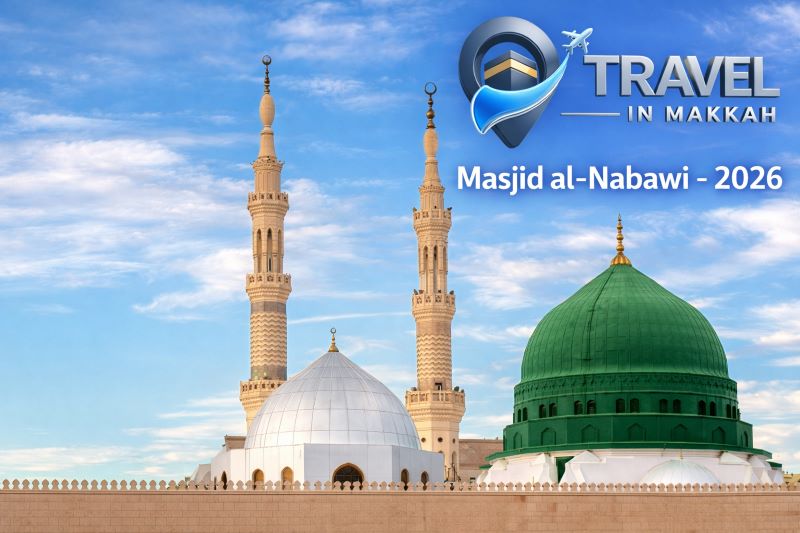
Masjid al-Nabawi – Complete Guide (2026)
The Heart of Madinah
Masjid al-Nabawi (المسجد النبوي), also known as the Prophet’s Mosque, is the second holiest mosque in Islam after Masjid al-Haram in Makkah.
Located in the blessed city of Madinah, it was established by Prophet Muhammad ﷺ after his Hijrah in 622 CE. Today, it stands not only as a place of prayer, but as a living center of Islamic history, knowledge, and spirituality.
For millions of Muslims, visiting Masjid al-Nabawi is a deeply emotional experience — a chance to pray where the Prophet ﷺ prayed and to reconnect with his Sunnah.
Meaning of Masjid al-Nabawi
Literal Meaning
The term “Masjid al-Nabawi” (المسجد النبوي) is derived from two Arabic words:
- Masjid (مسجد) meaning a place of prostration (mosque)
- al-Nabawi (النبوي) meaning related to the Prophet ﷺ
So, the literal meaning is:
“The Mosque of the Prophet”
Islamic Meaning
In Islamic terminology, Masjid al-Nabawi refers to the blessed mosque located in Madinah, established by Prophet Muhammad ﷺ.
It is the second holiest mosque in Islam, after Masjid al-Haram in Makkah, and holds immense spiritual significance. Praying in this mosque carries great reward, as mentioned in authentic hadith.
Historical Background: Built by the Prophet ﷺ
When the Prophet ﷺ arrived in Madinah, one of his first actions was to build a mosque.
- He personally participated in construction
- Used simple materials: mud bricks, palm trunks
- Worked alongside the Muhajirun and Ansar
This mosque became:
- A place of prayer
- A center of learning
- A hub of community life
Expansion Through History
Masjid al-Nabawi expanded over centuries:
- Khulafa Rashidun → modest expansions
- Umayyad era → structural development
- Ottoman period → domes and architecture
- Saudi era → massive modern expansion
Today, it can accommodate over a million worshippers, making it one of the largest mosques in the world.
Qur’anic Connection
While Masjid al-Nabawi is not directly named in the Qur’an, its importance is understood through verses about:
Following the Prophet ﷺ
لَقَدْ كَانَ لَكُمْ فِي رَسُولِ اللَّهِ أُسْوَةٌ حَسَنَةٌ
“Indeed, in the Messenger of Allah you have an excellent example.”
— (Surah Al-Ahzab 33:21)
Respecting His Presence
يَا أَيُّهَا الَّذِينَ آمَنُوا لَا تَرْفَعُوا أَصْوَاتَكُمْ...
“O you who believe, do not raise your voices above the voice of the Prophet…”
— (Surah Al-Hujurat 49:2)
These verses emphasize the respect, love, and اتباع (following) that define a visit to Masjid al-Nabawi.
Authentic Hadith on the Virtues of Masjid al-Nabawi
1. Reward of Prayer
صَلَاةٌ فِي مَسْجِدِي هَذَا خَيْرٌ مِنْ أَلْفِ صَلَاةٍ فِيمَا سِوَاهُ إِلَّا الْمَسْجِدَ الْحَرَامَ
Translation:
“Prayer in my mosque is better than one thousand prayers elsewhere, except Masjid al-Haram.”
— (Sahih al-Bukhari, Sahih Muslim)
2. The Rawdah (Riyazul Jannah)
مَا بَيْنَ بَيْتِي وَمِنْبَرِي رَوْضَةٌ مِنْ رِيَاضِ الْجَنَّةِ
Translation:
“Between my house and my pulpit is a garden from the gardens of Paradise.”
— (Sahih al-Bukhari, Sahih Muslim)
This area is known as Rawdah, one of the most sought-after places for prayer.
Key Areas Inside Masjid al-Nabawi
1. Rawdah (Riyazul Jannah)
- Special prayer area
- Identified by green carpet
- Highly recommended to pray here
2. Prophet’s ﷺ Hujra
- Burial place of:
- Prophet Muhammad ﷺ
- Abu Bakr (RA)
- Umar (RA)
3. Minbar
- Where the Prophet ﷺ delivered sermons
4. Mihrab
- Direction of prayer (Qiblah)
5. Courtyards
- Large shaded areas with umbrellas
- Comfortable space for الصلاة
Spiritual Significance
Masjid al-Nabawi is unique because:
- It contains the grave of the Prophet ﷺ
- It is directly connected to Islamic history
- It multiplies rewards of prayer
Praying here strengthens:
- Iman
- Love for the Prophet ﷺ
- Connection to the Sunnah
How to Visit Masjid al-Nabawi (2026 Guide)
Entry & Access
- Multiple gates available
- Open throughout the day
- Free entry for all
Rawdah Access (Important)
- Requires booking via Nusuk app
- Separate timings for men and women
- Limited time slots
Best Time to Visit
- ✔️ After Fajr
- ✔️ Late night
Avoid:
- Peak hours after prayers
- Friday crowds
What to Do Inside the Mosque
- Perform obligatory and voluntary salah
- Send salawat upon the Prophet ﷺ
- Make sincere dua
- Visit Rawdah (if possible)
Etiquette (Adab) in Masjid al-Nabawi
✔️ Recommended
- Lower your voice
- Dress modestly
- Maintain focus in worship
❌ Avoid
- Loud talking
- Taking unnecessary photos
- Pushing in crowds
- Practicing innovations (bid‘ah)
Common Mistakes to Avoid
- Treating it like a tourist attraction
- Ignoring prayer and focusing on photos
- Misunderstanding Rawdah practices
- Not following proper etiquette
2026 Visitor Updates & Practical Tips
Visiting Masjid al-Nabawi is now more organized to handle large crowds.
What to Expect
- Controlled movement inside the mosque
- Organized Rawdah entry system
- Clear pathways for visitors
Helpful Tips
- Visit during quieter times
- Plan Rawdah visit in advance
- Keep your visit focused on worship
Important Reminder
The value of your visit is not in how long you stay, but in:
- Your sincerity
- Your humility
- Your connection to Allah
Conclusion: A Journey of the Heart
Masjid al-Nabawi is not just a mosque — it is a place where:
- The Prophet ﷺ lived
- Islam was taught
- Faith was strengthened
Visiting it is an opportunity to renew your iman and reconnect with the true spirit of Islam.
visit our home page
Written by
Travel in Makkah
Sharing insights about pilgrimage, spiritual journeys, and sacred travel experiences.