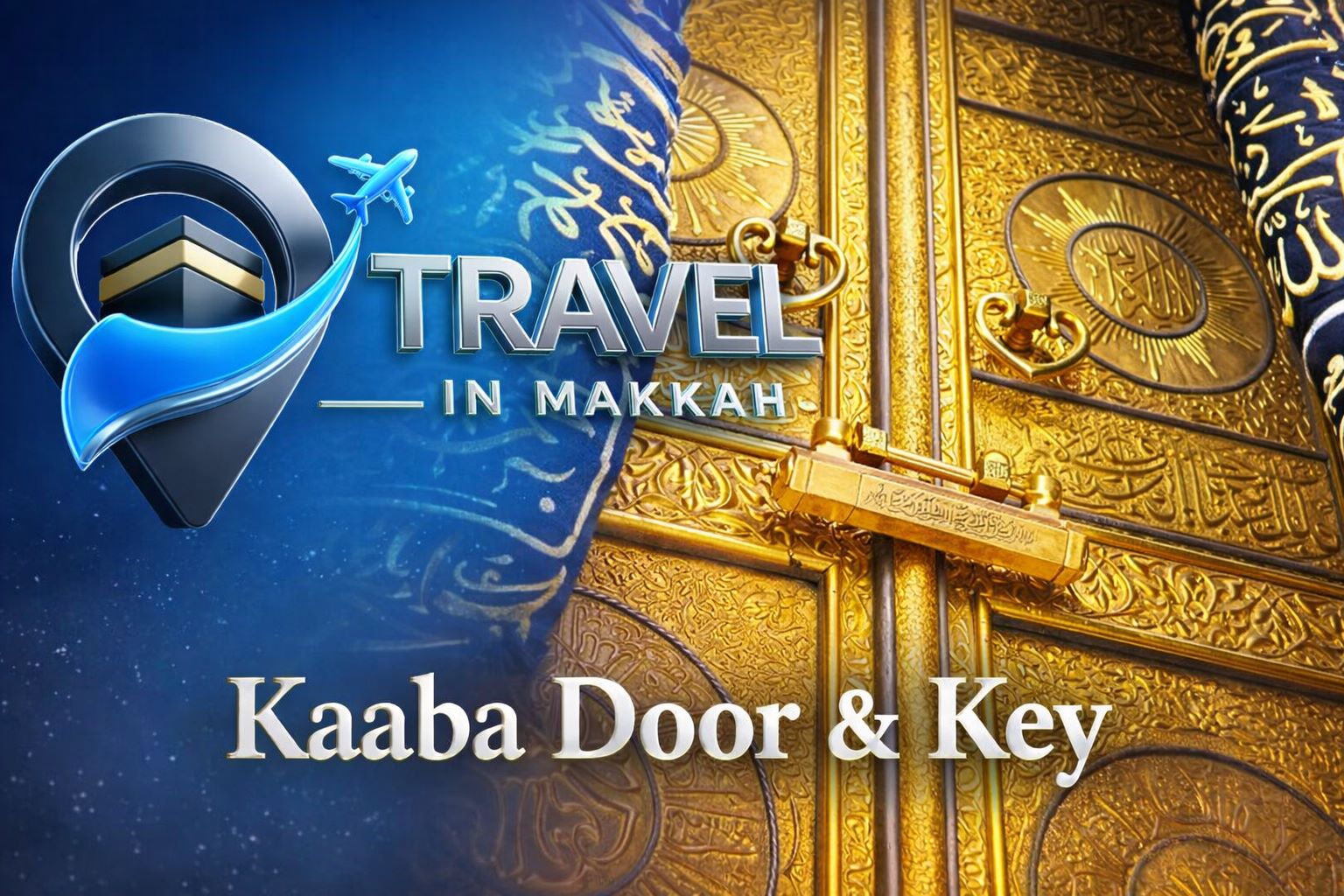
Kaaba Door & Key: Complete History, Custodians & Sacred Legacy
Kaaba Door & Key: History, Custodians & Design Guide
Discover the Kaaba Door & Key history, Banu Shaybah custodians, Quran & Hadith references, and modern design details in this complete guide.
The Kaaba Door & Key are among the most sacred symbols in Islam, representing a divine trust (amanah) that has been preserved for thousands of years. From the time of Prophet Ibrahim (AS) to the modern Saudi era, this responsibility has passed through generations while remaining protected under Allah’s command.
This article provides a complete and authentic overview of the history, custodianship, design, and Islamic significance of the Kaaba Door & Key.
Table of Contents
- Kaaba Door & Key: Complete History, Custodians & Sacred Legacy
- Origins of the Kaaba (Prophet Ibrahim & Ismail AS)
- Pre-Islamic Custodians of the Kaaba
- Kaaba Door & Key During the Conquest of Makkah
- Who Holds the Kaaba Key Today?Role of the Sadin (Key Keeper)
- Evolution of the Kaaba Door & Key
- Kaaba Door Design & Materials (Modern Era)Historical Development
- Current Kaaba Key & LockQuranic Inscription
- Modern Key Keeper
- Historical Kaaba Keys in Museums
- Spiritual Significance
- Conclusion
Origins of the Kaaba (Prophet Ibrahim & Ismail AS)
The origin of the Kaaba begins with Prophet Ibrahim (AS) and his son Prophet Ismail (AS), who built the House of Allah under divine instruction.
Quranic Evidence
وَإِذْ يَرْفَعُ إِبْرَاهِيمُ الْقَوَاعِدَ مِنَ الْبَيْتِ وَإِسْمَاعِيلُ رَبَّنَا تَقَبَّلْ مِنَّا إِنَّكَ أَنتَ السَّمِيعُ الْعَلِيمُ
Translation:
“And [mention] when Ibrahim was raising the foundations of the House with Ismail, [saying], ‘Our Lord, accept from us. Indeed, You are the All-Hearing, All-Knowing.’”
(Qur’an 2:127)
Although the Quran does not explicitly mention the door and key, early Islamic sources suggest that access to the Kaaba was established from its earliest construction.
Pre-Islamic Custodians of the Kaaba
The guardianship of the Kaaba, including its door and key, passed through several groups over time:
- The descendants of Prophet Ismail (AS)
- The Jurhum tribe
- The Khuza’a tribe
- Qusayy ibn Kilab, an ancestor of Prophet Muhammad ﷺ
Qusayy later entrusted this responsibility to Banu Abd al-Dar, establishing a lineage that continued into the time of Islam.
Kaaba Door & Key During the Conquest of Makkah
During the Conquest of Makkah (8 AH / 630 CE), the key of the Kaaba was held by Uthman ibn Talha (RA) from the Banu Shaybah family.
Authentic Hadith
قَالَتْ عَائِشَةُ: لَمَّا نَزَلْنَا بِمَكَّةَ أَمَرَ رَسُولُ اللَّهِ ﷺ أُسَامَةَ بْنَ زَيْدٍ...
Translation:
Narrated Aisha: The Prophet ﷺ entered Makkah, requested the key of the Kaaba, entered it with his companions, stayed inside for some time, and then came out.
(Sahih al-Bukhari 1599)
After purifying the Kaaba from idols, the Prophet ﷺ returned the key to Uthman ibn Talha and declared:
“Take it, O Banu Shaybah, forever. None will take it from you except a tyrant.”
This statement established a permanent trust that continues to this day.
Who Holds the Kaaba Key Today?
The Banu Shaybah family has held the Kaaba Door & Key for nearly 1,500 years without interruption.
Role of the Sadin (Key Keeper)
The Sadin (سادن الكعبة) is responsible for:
- Opening and closing the Kaaba
- Cleaning and washing its interior
- Supervising the Kiswah (covering)
- Receiving honored guests
- Preserving the sanctity of the Kaaba
This position is hereditary and remains exclusive to the Shaybah family.
Evolution of the Kaaba Door & Key
Throughout Islamic history, the design of the Kaaba door and key has changed under different rulers:
- Early Islamic period: Simple locks and wooden doors
- Abbasid & Mamluk era: Gold plating and engraved locks
- Ottoman period: Decorative designs with silver and gold
- Saudi era: Modern reinforced structure with gold covering
Despite these changes, the custodianship has never shifted from Banu Shaybah.
Kaaba Door Design & Materials (Modern Era)
The current Kaaba door is a masterpiece of craftsmanship and symbolism.
- Height: Approximately 3 meters
- Width: حوالي 2.5 meters
- Elevated about 2 meters above ground
- Made from teak wood and reinforced steel
- Covered with حوالي 99 kilograms of pure gold
Historical Development
- Originally simple wood
- Gold-plated during the time of Abdullah ibn Zubayr (RA)
- Enhanced by later Islamic empires
- Current version installed in 1979 (Saudi era)
Current Kaaba Key & Lock
The modern Kaaba key is:
- حوالي 20–40 cm in length
- Made of brass or steel
- Stored in a silk bag decorated with gold
Quranic Inscription
إِنَّ اللَّهَ يَأْمُرُكُمْ أَن تُؤَدُّوا الْأَمَانَاتِ إِلَىٰ أَهْلِهَا
Translation:
“Indeed, Allah commands you to return trusts to their rightful owners.”
(Qur’an 4:58)
This verse perfectly reflects the spiritual meaning behind the Kaaba key.
Modern Key Keeper
The current senior caretaker of the Kaaba is:
Saleh bin Zayn al-Abidin Al-Shaibi
- Serving since 2013
- 109th successor from Qusayy ibn Kilab
Historical Kaaba Keys in Museums
Several historical Kaaba keys are preserved in museums, including:
- Topkapi Palace (Istanbul)
- Islamic museums in Makkah and Cairo
These artifacts highlight the rich legacy and craftsmanship of past Islamic empires.
Spiritual Significance
Quranic Reminder
إِنَّ أَوَّلَ بَيْتٍ وُضِعَ لِلنَّاسِ لَلَّذِي بِبَكَّةَ مُبَارَكًا وَهُدًى لِلْعَالَمِينَ
Translation:
“Indeed, the first House established for mankind was at Bakkah—blessed and a guidance for all worlds.”
(Qur’an 3:96)
Conclusion
The Kaaba Door & Key are powerful symbols of faith, trust, and continuity. From Prophet Ibrahim (AS) to the present day, this sacred responsibility has remained preserved exactly as promised by the Prophet ﷺ.
It stands as a reminder that true honor lies in fulfilling trust—and that Allah protects what He wills.
Visit our home page
Written by
Travel in Makkah
Sharing insights about pilgrimage, spiritual journeys, and sacred travel experiences.