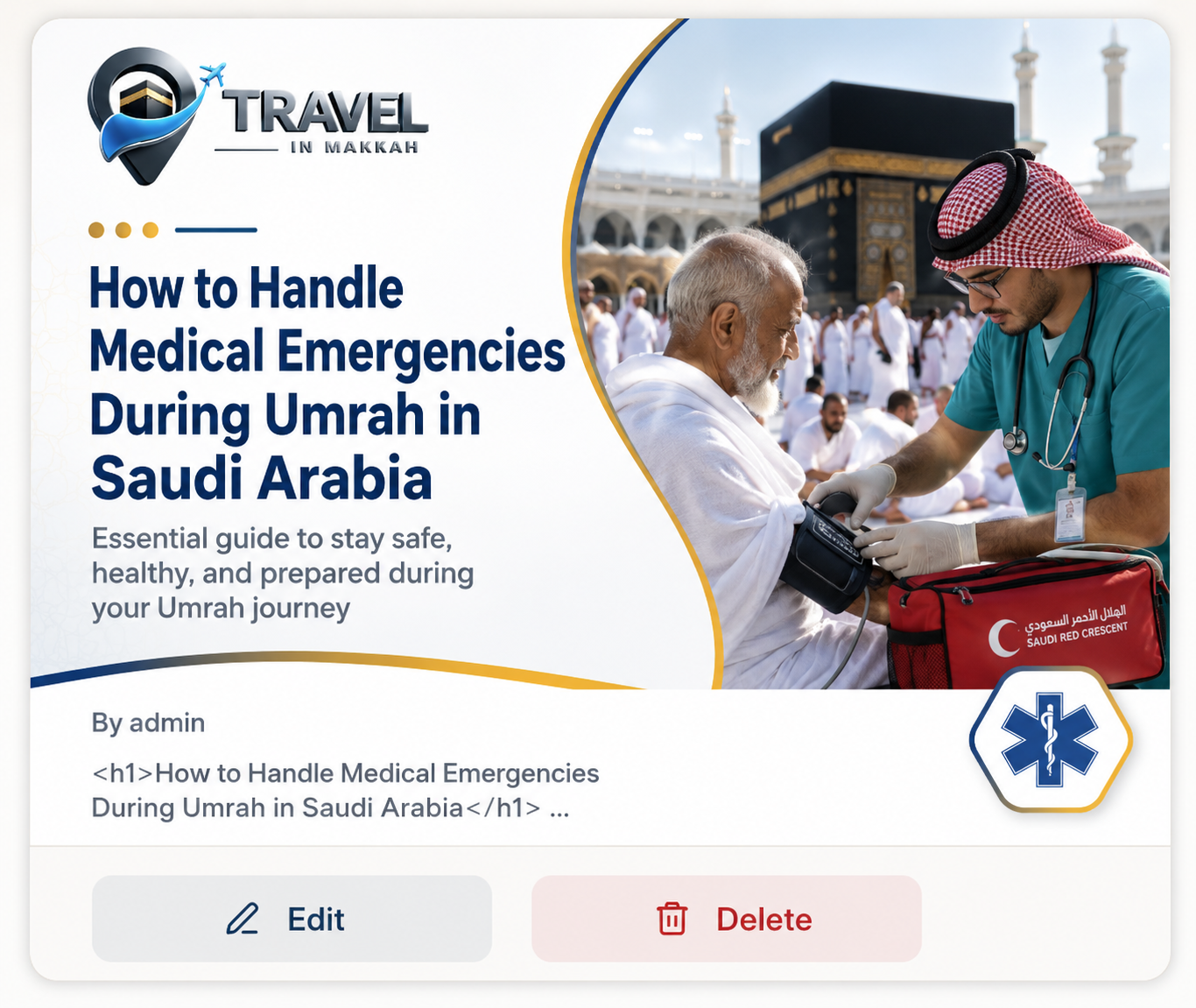
Performing Umrah is a deeply spiritual journey for Muslims around the world. Millions of pilgrims travel to Makkah and Madinah every year to seek blessings, forgiveness, and peace. However, due to large crowds, extreme weather conditions, long walking distances, and physical exhaustion, medical emergencies can happen unexpectedly during the pilgrimage. Being prepared and knowing how to respond can protect your health and ensure a safer and more comfortable Umrah experience.
This guide explains everything pilgrims need to know about handling medical emergencies during Umrah in Saudi Arabia, including preparation before travel, emergency numbers, hospitals, common illnesses, first aid, and practical safety tips.
Why Medical Preparedness Is Important During Umrah
Umrah involves extensive physical activity such as Tawaf around the Kaaba, Sa’i between Safa and Marwah, walking long distances, and spending time in crowded places. Elderly pilgrims, children, and people with existing medical conditions are especially vulnerable to health issues.
Common factors that may lead to emergencies include:
Extreme heat and dehydration
Fatigue and physical exhaustion
Respiratory infections
Food poisoning
Heart-related problems
Diabetes complications
Heatstroke
Injuries caused by crowd movement
Saudi Arabia has excellent healthcare facilities for pilgrims, but understanding how to access emergency help quickly can save lives.
Essential Medical Preparation Before Traveling for Umrah
1. Complete a Health Check-Up
Before traveling, visit your doctor for a full medical examination. This is especially important if you suffer from:
Diabetes
Asthma
Heart disease
High blood pressure
Kidney problems
Mobility issues
Ask your doctor whether you are physically fit for Umrah and request necessary prescriptions.
2. Carry Important Medicines
Always bring enough medication for your entire trip plus extra for emergencies. Keep medicines in original packaging along with prescriptions.
Recommended items include:
Pain relievers
Fever medicine
Allergy tablets
ORS (Oral Rehydration Salts)
Inhalers
Blood pressure medicine
Diabetes medication
Motion sickness tablets
Antiseptic cream
Bandages
Keep medicines in your hand luggage for easy access.
3. Buy Travel and Medical Insurance
Travel insurance with emergency medical coverage is highly recommended. Ensure the policy covers:
Hospital treatment
Emergency evacuation
Ambulance services
Lost medications
Keep digital and printed copies of your insurance information.
4. Take Required Vaccinations
Saudi authorities may require certain vaccinations for pilgrims. Commonly recommended vaccines include:
Meningitis vaccine
Influenza vaccine
COVID-19 vaccine
Pneumonia vaccine (for elderly pilgrims)
Consult official Saudi guidelines before departure.
Emergency Medical Services in Saudi Arabia
Saudi Arabia provides excellent healthcare support for pilgrims during Umrah and Hajj seasons.
Emergency Ambulance Number
The Saudi Red Crescent emergency number is:
997
Call this number immediately for ambulance assistance.
Other useful numbers:
Police: 999
Fire Department: 998
Tourist Assistance: 930
Most operators understand basic English and Arabic.
Common Medical Emergencies During Umrah
1. Heat Exhaustion and Heatstroke
Saudi Arabia’s climate can be extremely hot, especially during daytime.
Symptoms of Heat Exhaustion
Heavy sweating
Weakness
Dizziness
Nausea
Headache
Muscle cramps
Symptoms of Heatstroke
High body temperature
Confusion
Fainting
Dry skin
Rapid heartbeat
What To Do
Move the patient to a shaded or air-conditioned place
Give water slowly
Use cold towels on the body
Seek immediate medical attention if symptoms worsen
Prevention Tips
Drink water regularly
Avoid direct sunlight
Use umbrellas
Wear lightweight clothing
Rest frequently
2. Dehydration
Long hours of walking and hot weather often cause dehydration.
Symptoms
Dry mouth
Extreme thirst
Dark urine
Weakness
Dizziness
Immediate Action
Drink water and ORS
Rest in a cool place
Avoid caffeinated drinks
Always carry a reusable water bottle during Umrah.
3. Respiratory Infections
Crowded conditions increase the spread of infections like flu, cough, and cold.
Symptoms
Fever
Sore throat
Cough
Difficulty breathing
Prevention
Wear a mask in crowded places
Wash hands frequently
Use hand sanitizer
Avoid close contact with sick individuals
If breathing becomes difficult, seek emergency care immediately.
4. Heart Problems
Some pilgrims experience chest pain or heart-related emergencies due to physical strain.
Warning Signs
Chest pain
Shortness of breath
Sweating
Pain in arm or jaw
Sudden weakness
Emergency Response
Call 997 immediately
Help the patient sit comfortably
Keep the person calm
Do not force walking
People with heart conditions should avoid overexertion.
5. Diabetes Emergencies
Diabetic pilgrims may experience low or high blood sugar during Umrah.
Low Blood Sugar Symptoms
Shaking
Sweating
Confusion
Dizziness
What To Do
Give juice or sugary snacks
Monitor blood sugar if possible
Seek medical help if symptoms continue
Always carry diabetic supplies and snacks.
6. Injuries and Falls
Large crowds and slippery surfaces may cause falls.
Common Injuries
Sprained ankles
Cuts
Bruises
Fractures
First Aid Steps
Clean wounds
Apply bandages
Use ice packs for swelling
Visit a nearby clinic if serious
Wear comfortable non-slip footwear to reduce risks.
Hospitals and Medical Facilities Near Haram
Saudi Arabia provides many hospitals and clinics around Masjid al-Haram and Masjid an-Nabawi.
In Makkah
Major hospitals include:
King Abdulaziz Hospital
Ajyad Emergency Hospital
Al Noor Specialist Hospital
In Madinah
Common hospitals include:
King Fahad Hospital
Al Ansar Hospital
Haram Emergency Clinics
Most facilities provide emergency services for pilgrims.
How to Communicate During a Medical Emergency
If you do not speak Arabic, use simple English phrases such as:
“I need a doctor.”
“Call ambulance.”
“Chest pain.”
“Difficulty breathing.”
It is helpful to carry:
Passport copy
Hotel address
Emergency contact information
Medical history card
Many healthcare workers in Saudi Arabia speak English, Urdu, Bengali, and other languages commonly used by pilgrims.
Important Safety Tips for Elderly Pilgrims
Older pilgrims need additional care during Umrah.
Recommendations
Use wheelchairs if necessary
Avoid peak crowded hours
Take frequent rest breaks
Stay hydrated
Travel with companions
Never ignore fatigue or dizziness.
What To Do If Someone Becomes Unconscious
Immediate Steps
Check breathing
Call emergency services (997)
Move crowds away
Lay the person flat
Raise legs slightly
Do not give food or water
If trained, begin CPR until medical teams arrive.
Women’s Health Considerations During Umrah
Female pilgrims should carry:
Personal hygiene products
Pain medication
Necessary prescriptions
Pregnant women should consult doctors before travel and avoid exhausting schedules.
Mental Health and Panic Situations
Large crowds may cause anxiety or panic attacks.
Symptoms
Rapid breathing
Fear
Chest tightness
Dizziness
Management
Move to a quieter area
Take slow breaths
Drink water
Sit and rest
Traveling with family or groups helps reduce stress.
Food Safety During Umrah
Food poisoning can ruin the pilgrimage experience.
Avoid
Unhygienic street food
Expired packaged items
Unsafe water sources
Choose
Reputable restaurants
Fresh meals
Bottled water
Wash hands before eating.
Essential Medical Items To Carry During Umrah
A small emergency health kit should include:
Passport copies
Prescription medicines
Hand sanitizer
Face masks
ORS packets
Bandages
Thermometer
Pain relievers
Glucose snacks
Antiseptic wipes
Keep the kit lightweight and accessible.
Tips for Staying Healthy Throughout Umrah
1. Rest Properly
Do not overexert yourself trying to complete everything quickly.
2. Drink Plenty of Water
Hydration is critical in Saudi weather.
3. Eat Balanced Meals
Healthy food improves energy and immunity.
4. Avoid Crowded Rush Hours
Perform rituals during less crowded periods when possible.
5. Follow Group Instructions
Always stay connected with your group leader.
Using Mobile Apps During Emergencies
Several helpful apps can assist pilgrims:
Saudi Red Crescent App
Nusuk App
Google Maps
Translation Apps
These apps help locate hospitals, directions, and emergency services quickly.
Understanding Saudi Healthcare for Pilgrims
Saudi Arabia invests heavily in healthcare services for Umrah and Hajj pilgrims. Temporary clinics, emergency teams, ambulances, and multilingual medical staff are available across holy sites.
Many emergency services for pilgrims are either free or highly subsidized.
Final Thoughts
Umrah is a beautiful spiritual journey, but staying healthy and prepared is essential for completing the pilgrimage safely. Medical emergencies can happen unexpectedly due to heat, crowds, exhaustion, or existing health conditions. Knowing how to respond quickly, carrying essential medicines, staying hydrated, and understanding Saudi emergency services can make a major difference during critical moments.
Pilgrims should prioritize health just as much as spiritual preparation. Proper planning, awareness, and caution allow you to focus on worship with peace of mind. By following the safety measures and emergency guidelines outlined in this article, you can ensure a safer, healthier, and more fulfilling Umrah experience in Saudi Arabia.
May Allah accept your Umrah and keep all pilgrims safe and healthy throughout their sacred journey.
Written by
admin
Sharing insights about pilgrimage, spiritual journeys, and sacred travel experiences.