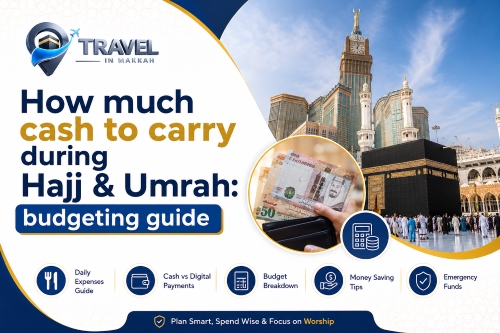
Performing Hajj or Umrah is a dream for millions of Muslims around the world. Along with spiritual preparation, financial planning is one of the most important parts of the journey. Many pilgrims often ask: “How much cash should I carry during Hajj or Umrah?”
The answer depends on several factors including the duration of your stay, accommodation type, shopping plans, transportation, food habits, and personal expenses. Carrying too little money can create difficulties, while carrying too much cash can be risky.
In this detailed budgeting guide, we will explain how much cash you should carry for Hajj and Umrah, where you may need to spend money, safe payment options, and practical tips to manage your expenses wisely.
Why Budget Planning Is Important for Hajj & Umrah
Hajj and Umrah are not ordinary trips. They involve international travel, religious obligations, and several days or weeks of stay in Saudi Arabia. A proper financial plan helps you:
Avoid unnecessary stress
Manage daily expenses comfortably
Prevent overspending
Stay prepared for emergencies
Focus more on worship instead of financial worries
Pilgrims who prepare a realistic budget usually enjoy a smoother and more peaceful journey.
Understanding the Difference Between Hajj & Umrah Expenses
Before deciding how much cash to carry, you need to understand that Hajj and Umrah expenses are different.
Hajj Expenses
Hajj generally costs more because:
It lasts longer
Accommodation prices increase during Hajj season
Transportation becomes expensive
Food and essentials may cost more
Additional services are often required
Pilgrims usually stay between 15 to 40 days during Hajj.
Umrah Expenses
Umrah is comparatively shorter and more flexible. Many pilgrims complete Umrah within 7 to 14 days. Therefore, daily expenses are usually lower.
Average Daily Expenses During Hajj & Umrah
Your daily spending depends on your lifestyle and travel package. Here is an approximate breakdown.
Food Expenses
Food costs can vary greatly.
Budget Meals
SAR 10–20 per meal
Simple local restaurants and fast food
Mid-Range Meals
SAR 25–50 per meal
Better restaurants and hotel dining
Premium Dining
SAR 60–150+ per meal
Luxury restaurants near Haram
Estimated Daily Food Budget
Budget traveler: SAR 40–60
Average traveler: SAR 80–120
Luxury traveler: SAR 150+
Transportation Costs
Transportation is another major expense.
Local Taxi Costs
Short rides: SAR 10–30
Airport transfers: SAR 80–200
Ride-Sharing Apps
Uber and Careem are widely available in Saudi Arabia.
Train and Bus
Haramain Train: SAR 40–200
Public buses are cheaper
Estimated Transportation Budget
Budget traveler: SAR 20–40 daily
Comfortable traveler: SAR 50–100 daily
Shopping & Personal Expenses
Many pilgrims buy:
Dates
Zamzam containers
Prayer mats
Tasbeeh
Perfumes
Gifts for family and friends
Shopping budgets vary widely.
Average Shopping Budget
Minimal shopping: SAR 200–500
Moderate shopping: SAR 500–1500
Heavy shopping: SAR 2000+
SIM Cards & Internet
Staying connected is important.
Popular providers:
STC
Mobily
Zain
SIM Package Costs
SAR 30–100 depending on data package
Emergency Funds
Always keep extra money for unexpected situations.
Possible emergencies:
Medical needs
Lost luggage
Extra hotel nights
Transportation delays
Additional food expenses
Recommended Emergency Cash
Minimum SAR 500–1000
How Much Cash Should You Carry for Umrah?
Here’s a practical estimate for Umrah pilgrims.
Budget Umrah Traveler (7–10 Days)
Expense Estimated Cost
Food SAR 300–500
Transport SAR 150–300
Shopping SAR 200–500
Miscellaneous SAR 100–200
Emergency SAR 500
Total SAR 1250–2000
Mid-Range Umrah Traveler
Expense Estimated Cost
Food SAR 600–1000
Transport SAR 300–600
Shopping SAR 500–1500
Miscellaneous SAR 300
Emergency SAR 1000
Total SAR 2700–4400
Luxury Umrah Traveler
Luxury travelers may carry:
SAR 5000–10000+
Especially if they plan premium shopping and dining.
How Much Cash Should You Carry for Hajj?
Hajj usually requires a bigger budget.
Budget Hajj Traveler
Expense Estimated Cost
Food SAR 1000–1500
Transport SAR 400–700
Shopping SAR 500–1000
Miscellaneous SAR 300–500
Emergency SAR 1000
Total SAR 3200–4700
Mid-Range Hajj Traveler
Expense Estimated Cost
Food SAR 2000–3500
Transport SAR 800–1500
Shopping SAR 1000–3000
Miscellaneous SAR 500–1000
Emergency SAR 1500
Total SAR 5800–10500
Should You Carry All Cash?
The simple answer is: No.
Carrying too much cash is risky.
Instead, divide your money into:
Cash
Debit cards
Credit cards
Digital payment options
Best Payment Methods During Hajj & Umrah
1. Cash
Cash is useful for:
Small shops
Street vendors
Local taxis
Quick purchases
Saudi Riyal (SAR) is the best currency to carry.
2. Debit Cards
International debit cards work widely in Saudi Arabia.
Advantages:
Safer than carrying large cash
Easy ATM withdrawal
Accepted in malls and restaurants
3. Credit Cards
Useful for:
Hotels
Shopping centers
Emergency payments
Make sure international transactions are enabled.
4. Mobile Payments
Saudi Arabia supports:
Apple Pay
Google Pay
Contactless payments
Very convenient in cities like Makkah and Madinah.
How Much Saudi Riyal Should You Carry Initially?
Many experienced pilgrims recommend carrying:
SAR 1000–3000 in cash initially
Rest in cards or bank access
This balance offers both convenience and security.
Currency Exchange Tips
Exchange Before Traveling
Rates are often better in your home country.
Avoid Airport Exchange Counters
Airport exchange rates are usually expensive.
Compare Rates
Always compare multiple exchange providers.
ATM Availability in Saudi Arabia
ATMs are easily available in:
Makkah
Madinah
Jeddah
You can withdraw Saudi Riyal anytime using international cards.
Budgeting Tips for Hajj & Umrah
1. Plan Daily Spending
Set a daily limit to avoid overspending.
2. Avoid Luxury Shopping Early
Shop at the end of your trip so you understand your remaining budget.
3. Keep Small Notes
Small denominations are useful for taxis and local purchases.
4. Separate Your Cash
Do not keep all money in one place.
Use:
Money belts
Hotel safe
Hidden wallet sections
5. Track Expenses
Use mobile apps or notes to monitor spending.
Common Mistakes Pilgrims Make
Carrying Too Much Cash
This increases theft risk.
Ignoring Emergency Funds
Unexpected costs are common.
Overspending on Shopping
Many pilgrims spend excessively on gifts.
Depending on One Payment Method
Always keep backup options.
Is Saudi Arabia Expensive for Pilgrims?
Saudi Arabia can be affordable or expensive depending on your lifestyle.
Affordable Options Exist
Budget restaurants
Shared transportation
Affordable shopping areas
Haram Areas Are Expensive
Hotels and restaurants near Haram are usually costly.
Money Safety Tips During Hajj & Umrah
Crowded places require extra caution.
Important Safety Tips
Avoid showing large amounts of cash
Use anti-theft bags
Keep copies of cards and passport
Inform your bank before travel
Use hotel safes
Best Budget Strategy for Families
Families should:
Create a combined budget
Allocate emergency funds separately
Use shared expenses for food and transport
Children may increase:
Food costs
Transportation expenses
Shopping expenses
Budgeting for Elderly Pilgrims
Elderly pilgrims may need:
Extra transport
Wheelchair services
Medical expenses
Comfortable meals
Always keep additional emergency funds.
How to Save Money During Umrah & Hajj
Choose Budget-Friendly Hotels
Hotels slightly away from Haram are cheaper.
Eat Local Food
Local restaurants can save significant money.
Use Group Transportation
Shared transport reduces costs.
Avoid Peak Shopping Areas
Prices near Haram are often higher.
Final Recommended Cash Amount
Recommended for Umrah
Carry SAR 1500–4000 depending on your plan
Recommended for Hajj
Carry SAR 4000–10000 depending on your package and lifestyle
Remember:
Keep part cash
Keep part in cards
Maintain emergency reserves
Final Thoughts
Hajj and Umrah are journeys of faith, patience, and spiritual purification. Financial preparation plays a major role in making your pilgrimage smooth and stress-free.
The ideal amount of cash depends on your travel style, shopping habits, family size, and duration of stay. Instead of carrying excessive cash, maintain a balanced approach using cash, cards, and digital payments.
Most importantly, spend wisely and focus on the spiritual purpose of your journey. Proper budgeting allows you to worship peacefully without financial anxiety.
May Allah accept your Hajj and Umrah and make your journey easy, safe, and blessed. Ameen.
Written by
admin
Sharing insights about pilgrimage, spiritual journeys, and sacred travel experiences.