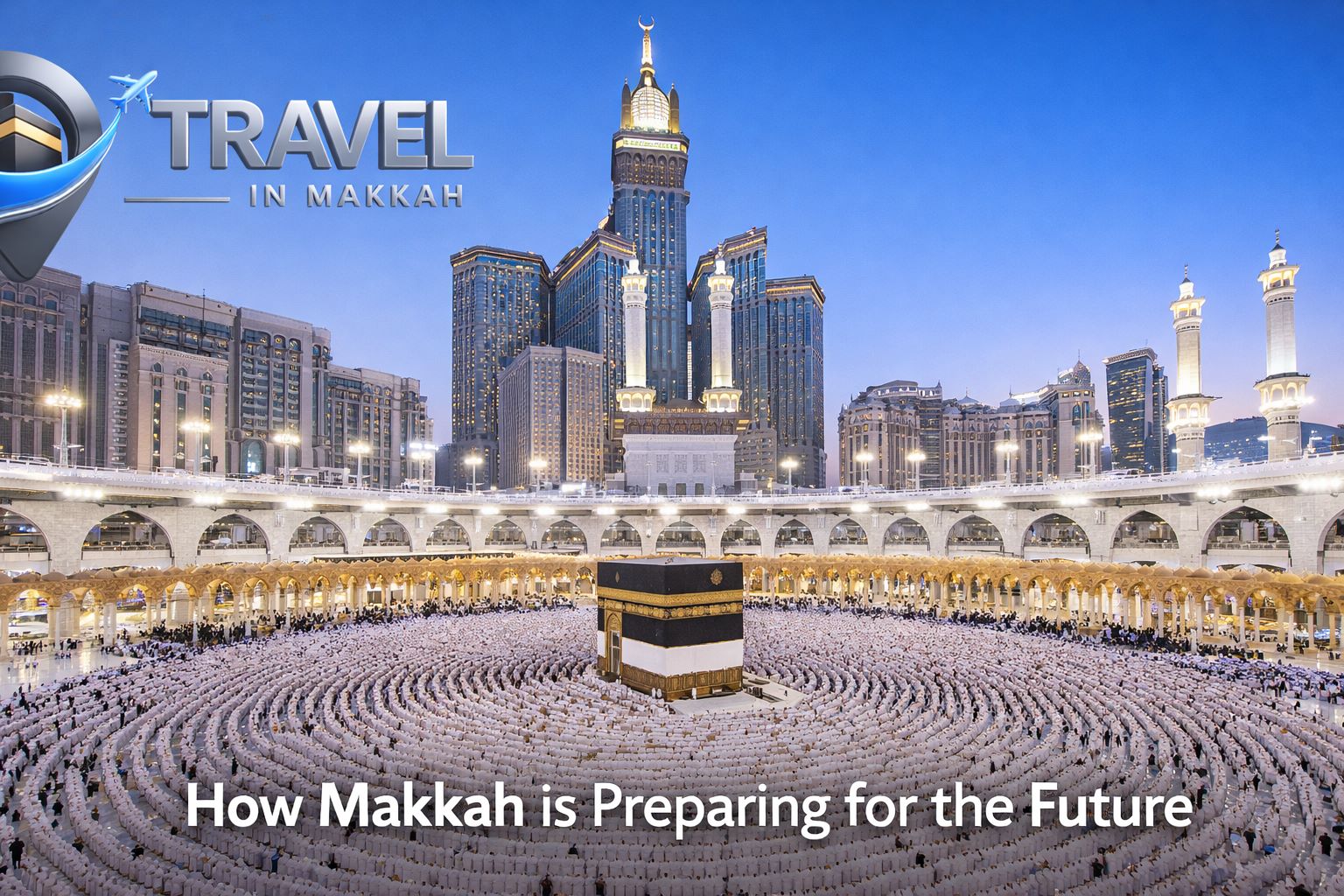
How Makkah is Preparing for the Future
Makkah is entering a new era of transformation. As millions of Muslims travel to the holy city every year, Saudi Arabia is preparing Makkah for the future on a massive scale. Under Saudi Vision 2030, the goal is to accommodate up to 30 million pilgrims annually, compared to around 8–10 million today.
This transformation is not only about expansion. It is about creating a balance between modern infrastructure, advanced technology, and the preservation of Makkah’s spiritual identity.
Major Development Projects in Makkah
Makkah is currently witnessing some of the largest urban development projects in the world. These projects aim to improve accessibility, safety, and the overall experience for pilgrims.
One of the most important developments is the 105-kilometer network of ring roads connecting different parts of the city. These roads link entry points, neighborhoods, and transport systems, helping reduce congestion and improve movement across Makkah.
The city has also introduced smart pedestrian crossings, redesigned traffic systems, and large-scale parking facilities. These improvements have already increased traffic safety by more than 80 percent.
In the future, Makkah aims to support around 10 million residents, accommodate up to 3 million worshippers at Masjid al-Haram at once, and expand hotel capacity to over 1 million rooms. This shows how the city is preparing for long-term growth.
King Salman Gate & RUA AlHaram Project
One of the most ambitious projects shaping Makkah’s future is the King Salman Gate, part of the RUA AlHaram project.
This development is not just an entrance but a complete urban gateway designed to improve access to Masjid al-Haram. It includes hotels, residential areas, commercial spaces, cultural zones, and large prayer facilities.
The main goal is to create a seamless journey where pilgrims can easily move from their accommodation to the Haram using integrated transport systems.
Expansion of Masjid al-Haram
Masjid al-Haram remains the center of all development efforts in Makkah.
Ongoing expansions aim to increase capacity, improve comfort, and ensure better crowd management during peak times like Hajj and Ramadan. New structures, shaded areas, and improved facilities allow millions of pilgrims to perform their عبادات more peacefully.
These expansions are essential to meet the growing number of visitors expected in the coming years.
Transport & Infrastructure Upgrades
Transportation is one of the biggest challenges in Makkah, and it is being addressed through major infrastructure upgrades.
The Makkah Public Transport Program includes metro lines, bus rapid transit systems, and smart parking facilities for over 36,000 vehicles. These systems connect key areas such as airports, hotels, and the Haram.
Projects like King Abdulaziz Road integrate smart technology to improve travel efficiency and reduce congestion, especially during peak pilgrimage seasons.
Role of Saudi Vision 2030
Saudi Vision 2030 plays a central role in transforming Makkah.
The plan focuses on diversifying the economy, improving infrastructure, and enhancing the pilgrimage experience. Makkah is being developed not only as a religious destination but also as a global hub for spiritual tourism.
These developments are expected to create jobs, attract investment, and support the increasing number of pilgrims visiting the city every year.
Makkah Route Initiative: A Game Changer
The Makkah Route Initiative is another key development improving the pilgrimage experience.
This program allows pilgrims to complete immigration and travel procedures in their home countries before arriving in Saudi Arabia. Upon arrival, they can avoid long queues and are transported directly to their accommodation.
This initiative is especially beneficial for pilgrims from countries like Bangladesh, Pakistan, and Indonesia, making their journey smoother and more comfortable.
Technology & Smart City Innovations
Makkah is also becoming a smart city by adopting advanced technology.
AI-based systems are being used for crowd management, helping predict movement and reduce overcrowding. Mobile apps provide real-time updates on prayer times, navigation, and transport services.
Smart transport systems, integrated payments, and digital platforms are making the pilgrimage experience faster, safer, and more organized.
Challenges and Concerns
Despite the rapid development, there are important concerns.
Many historical sites and old neighborhoods are being demolished to make space for new projects. This has raised concerns about the loss of cultural heritage and the displacement of local residents.
Balancing modernization with the preservation of Makkah’s spiritual and historical identity remains a major challenge.
The Future Impact
The future of Makkah is both promising and complex.
Pilgrims will benefit from safer, faster, and more comfortable experiences. At the same time, the city will see economic growth, increased tourism, and new opportunities for businesses.
However, the long-term success of these developments depends on maintaining the balance between growth and the sacred nature of Makkah.
Final Thoughts
Makkah is not just expanding — it is evolving.
With massive infrastructure projects, advanced technology, and global initiatives, the city is preparing to welcome millions more pilgrims in the future.
The challenge now is to ensure that progress enhances the experience without compromising the spiritual essence that makes Makkah unique.
Visit our home page
Written by
Travel in Makkah
Sharing insights about pilgrimage, spiritual journeys, and sacred travel experiences.