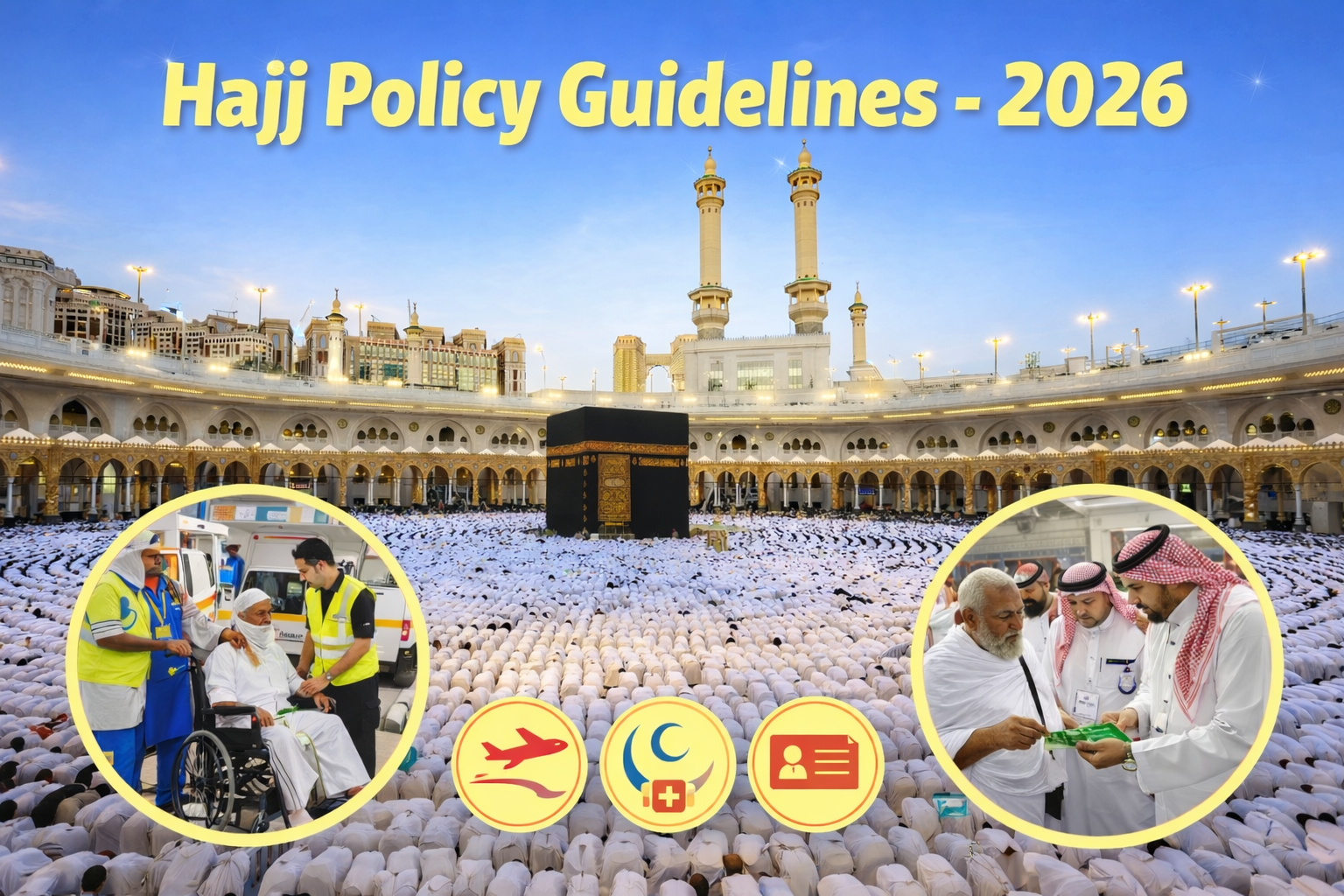
Hajj Policy Guidelines – 2026
Hajj is one of the five pillars of Islam and a once-in-a-lifetime obligation for Muslims who are physically and financially able to perform it. Every year, the Kingdom of Saudi Arabia introduces updated policies to ensure that the pilgrimage remains safe, organized, and spiritually focused.
Below is a clear and simple guide to the latest Hajj policies, including permits, visas, health requirements, important restrictions, and essential reminders for pilgrims.
Table of Contents
- Hajj Policy Guidelines – 2026
- What Are the New Hajj Rules?Mandatory Hajj Permit
- Age Restrictions
- Visa Regulations
- Entry Restrictions to Makkah
- Health and Safety Measures
- Digital Application Process
- Priority for First-Time Pilgrims
- Things Not to Do During HajjAvoid Arguments and Disputes
- Do Not Carry Prohibited Items
- Respect Ihram Restrictions
- Follow Rituals Correctly
- Respect Local Laws and Culture
- Maintain Cleanliness and Environmental Responsibility
- Miqat of Hajj and Umrah
- Hajj 2026 Travel Checklist
- Required Documents for Hajj
- Global Hajj Quota Overview
- Country-Specific Quotas
- How Are Quotas Decided?
- What Are the 4 Requirements for Hajj?
- How Many People Perform Hajj?
- How to Apply for Hajj
- Frequently Asked QuestionsWhat Are the New Laws?
- What Is the Total Quota?
- How Much Does Hajj Cost?
- How Many Times Can I Perform Hajj?
- Is Perfume Allowed During Hajj?
- Conclusion / Final Guidance
What Are the New Hajj Rules?
To manage the large number of pilgrims and maintain safety in the holy cities, several important regulations are in place.
Mandatory Hajj Permit
No one is allowed to perform Hajj without an official permit issued through approved channels such as the Nusuk platform. A valid permit is required to enter the holy sites and complete the pilgrimage legally.
Attempting to perform Hajj without authorization can result in heavy fines. Those who assist unauthorized pilgrims may also face strict penalties. These measures are designed to prevent overcrowding and ensure safety for everyone.
Age Restrictions
For safety and crowd control, children below a certain age (under 12 years) are not permitted to perform Hajj. The pilgrimage involves intense physical movement, long hours, and large crowds, which may not be suitable for young children.
Visa Regulations
Pilgrims must obtain a valid Hajj visa specifically issued for pilgrimage purposes. These visas are:
- Single-entry only
- Valid strictly for Hajj
- Not transferable to tourism or other visits
Overstaying a Hajj visa or violating its terms can lead to deportation, heavy fines, and possible travel bans. Pilgrims should strictly follow the visa duration and departure schedule.
Entry Restrictions to Makkah
Entry into Mecca during the Hajj season is tightly controlled. Only the following individuals are allowed entry:
- Pilgrims holding valid Hajj permits
- Residents of Makkah with proof of residence
- Authorized workers serving in the holy sites
Security checkpoints verify permits before allowing access to the city.
Health and Safety Measures
Health preparation is a key requirement for Hajj.
Pilgrims must receive mandatory vaccinations, including:
- Meningitis
- Seasonal influenza
- COVID-19 (if required by current health guidelines)
Proof of vaccination is required during the visa application process.
Pilgrims are also advised to:
- Stay hydrated
- Avoid heat exhaustion
- Follow medical guidance during extreme weather
- Wear masks in crowded areas if advised
Ignoring health regulations may result in denial of entry or other penalties.
Digital Application Process
All Hajj applications must be submitted through the official Nusuk platform. This centralized system ensures transparency, prevents fraud, and simplifies the process for pilgrims worldwide.
Priority for First-Time Pilgrims
To give more Muslims the opportunity to fulfill this obligation, priority is often given to those performing Hajj for the first time. Individuals who have previously performed Hajj may face limitations or additional conditions.
Things Not to Do During Hajj
Hajj is not only a physical journey but a spiritual one. Discipline, patience, and respect are essential.
Avoid Arguments and Disputes
Allah says in the Qur’an:
“There should be no obscenity, nor wickedness, nor arguing during Hajj.” (Surah Al-Baqarah 2:197)
Pilgrims must avoid arguments, offensive language, and conflicts. Hajj is a time for humility and self-control.
Do Not Carry Prohibited Items
Items strictly forbidden include:
- Weapons or sharp objects
- Alcohol or illegal substances
- Environmentally harmful materials
Violations may result in fines or legal action.
Respect Ihram Restrictions
When in Ihram, pilgrims must avoid:
- Cutting hair or nails
- Using perfume or scented products
- Marital relations
These restrictions remind pilgrims to focus fully on worship and submission to Allah.
Follow Rituals Correctly
Pilgrims should learn the proper method of performing:
- Tawaf around the Kaaba
- Sa’i between Safa and Marwah
- Throwing pebbles at Jamarat
Performing rituals incorrectly may require compensation (such as offering a sacrifice). Attending guidance sessions before Hajj is highly recommended.
Respect Local Laws and Culture
Saudi Arabia has its own legal and cultural regulations. Certain areas may restrict photography. Public behavior should reflect modesty and respect.
Failure to follow local rules can result in fines or confiscation of items.
Maintain Cleanliness and Environmental Responsibility
Sustainability is an important focus. Pilgrims must:
- Dispose of waste properly
- Avoid littering
- Minimize single-use plastics
Cleanliness is part of faith, and protecting the holy sites is everyone’s responsibility.
Miqat of Hajj and Umrah
Miqat refers to the designated boundary points where pilgrims must enter into the state of Ihram before proceeding toward Makkah. Pilgrims traveling from different regions have specific Miqat locations assigned to them. Crossing Miqat without entering Ihram requires a penalty sacrifice.
Understanding your Miqat before travel is essential to ensure your Hajj begins correctly and in accordance with Islamic law.
Hajj 2026 Travel Checklist
Preparing for Hajj or Umrah is not like preparing for an ordinary trip. This is a sacred journey that requires spiritual readiness, proper planning, and careful organization. Being unprepared can make the experience physically exhausting and emotionally stressful. A well-organized checklist helps you focus on worship instead of worrying about missing documents or essential items.
Before traveling, make sure you understand the rulings of Ihram and Miqat. If you need guidance about Miqat boundaries and where to enter Ihram, read our detailed guide here:
https://travelinmakkah.com/miqat-of-hajj-and-umrah/
For a complete packing and preparation checklist, visit:
https://travelinmakkah.com/checklist-for-hajj-and-umrah/
Required Documents for Hajj
Proper documentation is the foundation of a smooth journey. Without the correct paperwork, you may not be allowed to travel or enter Saudi Arabia.
Here are the essential documents you must prepare:
- A passport valid for at least six months from your travel date
- An approved Hajj visa issued through the official Nusuk platform or authorized agent
- Vaccination certificates (COVID-19, meningitis, and any other required vaccines such as yellow fever if applicable)
- Proof of financial ability to cover Hajj expenses
- Confirmed Hajj package booking and accommodation details
Always keep both printed and digital copies of your documents. Store copies separately from the originals as a safety measure.
For a detailed explanation of required documents, visit:
https://travelinmakkah.com/what-document-need-for-hajj-or-umrah/
Global Hajj Quota Overview
Hajj is one of the largest annual religious gatherings in the world. To maintain safety and organization, the Kingdom of Saudi Arabia assigns a fixed quota to each country based on its Muslim population.
For 2026, approximately 1.8 million pilgrims are expected to perform Hajj. Quotas are distributed country by country to ensure balanced participation and crowd management.
Country-Specific Quotas
Here are some of the major country allocations:
- Indonesia: 221,000 pilgrims
- Pakistan: 179,210+ pilgrims
- India: 175,025 pilgrims
- Bangladesh: 127,198 pilgrims
- Nigeria: 95,000 pilgrims
- Iran: 87,550 pilgrims
United States
The U.S. quota is approximately 9,500 pilgrims. Registration often fills quickly, so early application is strongly recommended.
United Kingdom
The UK has been allocated around 12,000+ pilgrims. Due to high demand, early registration is essential.
India
India’s quota is divided between:
- Government scheme (around 70%)
- Private tour operators (around 30%)
Pakistan
Pakistan’s allocation is shared between government and private schemes, with additional slots sometimes granted depending on arrangements.
How Are Quotas Decided?
The general formula allows roughly one pilgrim per 1,000 Muslims in each country. However, final numbers may depend on:
- Bilateral agreements
- Infrastructure capacity
- Health regulations
- Administrative readiness
Pilgrims must register through the official Nusuk Hajj portal or licensed operators.
What Are the 4 Requirements for Hajj?
Hajj becomes obligatory only when these four conditions are met:
- Being Muslim – Hajj is required only for Muslims.
- Reaching Puberty – The individual must be mature.
- Mental Soundness – The person must be of sound mind.
- Financial and Physical Ability – One must afford the journey and be physically capable of completing it.
If any of these conditions are not fulfilled, Hajj is not obligatory.
How Many People Perform Hajj?
Saudi authorities are preparing to host around 1.8 million pilgrims. Due to the lunar calendar, Hajj dates shift every year. In the coming years, the pilgrimage season will gradually move toward cooler months.
How to Apply for Hajj
Applications must be submitted through:
- The official Nusuk online platform
- Licensed Hajj travel agents
Registration usually happens in phases. Early applicants have a higher chance of securing a place.
Frequently Asked Questions
What Are the New Laws?
Key rules include mandatory vaccination, digital visa processing, environmental guidelines, and strict permit enforcement.
What Is the Total Quota?
Approximately 1.8 million pilgrims globally, distributed country-wise.
How Much Does Hajj Cost?
Hajj packages generally range between $5,000 and $12,000 depending on country, services, and accommodation type.
How Many Times Can I Perform Hajj?
While Hajj is obligatory only once, some countries prioritize first-time pilgrims. Repeat pilgrims may face waiting periods.
Is Perfume Allowed During Hajj?
No. During Ihram, wearing perfume or scented products is strictly prohibited.
Read More: Explore everything you need for your sacred journey at Travel in Makkah. Start from our homepage to get a complete overview, then visit our Shop page to find essential travel items for Hajj and Umrah. Learn more about our mission and services on the About page, and read helpful guides and updates on our Blog to prepare yourself better. When you're ready, you can easily book your journey through our booking page and begin your spiritual experience with confidence.
Written by
Travel in Makkah
Sharing insights about pilgrimage, spiritual journeys, and sacred travel experiences.