
Guide to Mina: What Happens There and How to Navigate the Camp During Hajj
Introduction
Mina is one of the most important places a pilgrim will experience during Hajj. For many first-time pilgrims, Mina can feel confusing at first. There are thousands of tents, busy walking routes, group schedules, camp numbers, signs, buses, bathrooms, food points, and crowds moving toward the Jamarat.
That is why understanding Mina before you arrive can make your Hajj much calmer and easier.
This Guide to Mina: what happens there and how to navigate the camp explains Mina in a simple, practical way. You will learn what happens in Mina when pilgrims stay there, how the tent system works, how to avoid getting lost, what to pack, and how to move safely between your camp and the Jamarat.
Mina is not a luxury stop. It is a place of patience, simplicity, worship, and obedience to Allah. If you prepare well, your time in Mina can become one of the most powerful parts of your Hajj journey.
What Is Mina in Hajj?
Mina is a sacred Hajj site located near Makkah. The Saudi Ministry of Hajj and Umrah describes Mina as a small valley that houses the Jamarat and Al-Khaif Mosque. It is one of the key locations where pilgrims stay and complete important Hajj rituals.
During Hajj, Mina becomes a large tent city. Pilgrims from around the world stay in organized camps according to their Hajj package, country, operator, and assigned location.
Mina is closely connected to several major Hajj movements:
Mina to Arafat
Arafat to Muzdalifah
Muzdalifah back to Mina
Mina to Jamarat
Mina to Makkah for Tawaf-related rites
Because of this, Mina is not just a place to sleep. It is a central part of the Hajj journey.
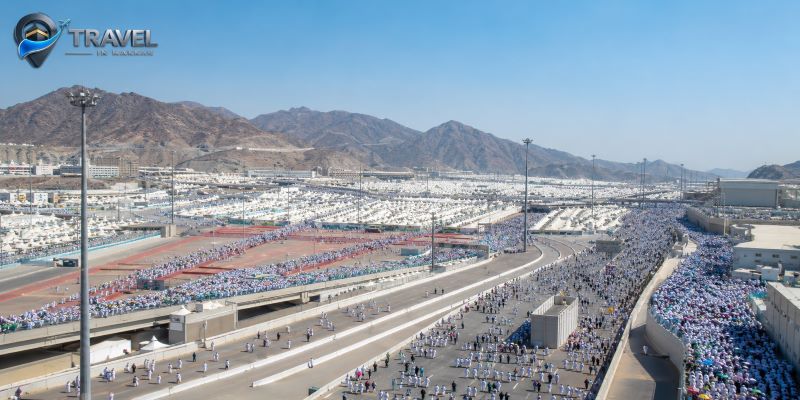
Why Is Mina Called the Tent City?
Mina is often called the “Tent City” because pilgrims stay there in large, organized tent camps during Hajj. These tents are arranged in zones, streets, and camp sections.
Your camp may have a number, gate, street, zone, and operator name. These details are very important because many tents look similar. If you walk out without knowing your camp details, it can become difficult to find your way back.
The facilities in Mina depend on your Hajj package. Some camps are basic and crowded, while premium packages may offer better cooling, bedding, food service, and easier access routes. But even in better camps, pilgrims should expect a simple and shared environment.
Mina teaches every pilgrim a lesson: Hajj is not about comfort. It is about submission, patience, and عبادة.
What Happens in Mina During Hajj?
Pilgrims stay in Mina on specific Hajj days. The exact movement schedule may vary by package and official crowd-control arrangements, but the general Hajj timeline is well known.
8 Dhul Hijjah: Arrival in Mina
The 8th of Dhul Hijjah is often called the Day of Tarwiyah. On this day, pilgrims in Ihram usually go to Mina.
In Mina, pilgrims settle into their tents, pray, recite Talbiyah, make dhikr, rest, and prepare for the Day of Arafat. For first-time pilgrims, this is the day to understand the camp layout, find the bathrooms, save the camp location, meet the group leader, and learn the movement plan for Arafat.
This day may look simple, but it is very important. A calm and organized start in Mina can make the next days easier.
9 Dhul Hijjah: Leaving Mina for Arafat
On the 9th of Dhul Hijjah, pilgrims leave Mina and travel to Arafat. The Day of Arafat is the most important day of Hajj.
Your group will usually arrange transport or walking movement depending on your package and official plan. Do not leave alone. Follow your group schedule carefully because roads, buses, and routes are controlled during Hajj.
Before leaving Mina, keep your essentials with you. Make sure you have your ID, phone, water, medicine, and group contact information.
10 Dhul Hijjah: Returning to Mina After Muzdalifah
After spending the night in Muzdalifah, pilgrims return to Mina on the 10th of Dhul Hijjah. This is a very busy and important day.
On this day, pilgrims usually perform the stoning of Jamrat Al-Aqabah, the largest Jamarah. Then they proceed with other rites such as sacrifice arrangements, shaving or trimming the hair, and later Tawaf Al-Ifadah according to their Hajj plan.
Nusuk’s Hajj journey guide mentions returning to Mina and participating in the stoning of the Jamarat as part of the Hajj rites. It also explains that pilgrims pelt the three Jamarat on the 11th, 12th, and optionally the 13th of Dhul Hijjah.
The 10th of Dhul Hijjah can feel physically demanding. Pilgrims may be tired after Arafat and Muzdalifah. Stay patient, drink water, and follow your group leader’s instructions.
11–12 Dhul Hijjah: Days of Tashreeq in Mina
The 11th and 12th of Dhul Hijjah are known as part of the Days of Tashreeq. During these days, pilgrims remain in Mina and perform the stoning ritual at the three Jamarat.
The three Jamarat are:
Jamrat Al-Sughra, the small Jamarah
Jamrat Al-Wusta, the middle Jamarah
Jamrat Al-Aqabah, the large Jamarah
Pilgrims throw seven pebbles at each Jamarah during the required days. Nusuk describes the three Jamarat as Jamrat Al-Aqabah, Jamrat Al-Wusta, and Jamrat Al-Sughra, and notes the pelting on the 11th, 12th, and optionally 13th of Dhul Hijjah.
Your group may have a specific time slot or a recommended time for Jamarat. Do not ignore this. Crowd control is a major part of Hajj safety.
13 Dhul Hijjah: Optional Extended Stay
Some pilgrims leave Mina after completing the required rites on the 12th of Dhul Hijjah. Others stay until the 13th and perform stoning again before leaving.
If your group stays until the 13th, follow their schedule. Do not make personal decisions without understanding your Hajj package plan and the religious requirements.
Understanding the Mina Camp System
Mina camps are usually organized by country, Hajj company, package type, and zone. Your camp may include separate areas for men and women, shared sleeping space, bathrooms, food areas, and group meeting points.
Inside Mina, everything can look similar, especially at night. This is why you must treat your camp details like your passport.
Keep these details saved:
Camp number
Gate number
Street name or number
Zone or sector
Tent number, if available
Group leader phone number
Company/operator name
Nearest landmark
Google Maps pin if available
Photo of your camp entrance
Do this as soon as you arrive. Do not wait until you are lost.
What Facilities Can You Expect in Mina?
Facilities vary depending on package, country, and operator. However, many Mina camps include basic sleeping space, cooling or air-conditioning systems, shared bathrooms, meal distribution, drinking water points, prayer areas, and group support.
Some premium camps may have better bedding, more space, better food, closer locations, and smoother services. Basic camps may feel more crowded and simple.
You should prepare mentally before arriving. Mina is not like a hotel. It is a shared Hajj camp. Expect noise, queues, limited space, and delays. If you expect luxury, you may become frustrated. If you expect simplicity, Mina becomes easier.
How to Navigate Mina Camp Safely
Mina navigation is one of the biggest challenges for first-time pilgrims. The good news is that you can avoid many problems with a few simple habits.
Save Your Camp Location Immediately
When you first reach your camp, save the location on your phone. Use Google Maps or another map app if available. Also, take screenshots because the internet service may be weak during peak times.
Take photos of your camp gate, nearby signs, street number, and any visible landmarks. If your camp has a printed card, keep it with you at all times.
Carry Your Hajj ID and Camp Card
Always carry your Hajj ID, permit, wristband, hotel card, and camp card. If you get lost, officials or volunteers can guide you better when they see your details.
Saudi authorities continue to emphasize the importance of official Hajj permits and authorized channels because valid permits connect pilgrims to proper services and organized movement during Hajj.
Use the Buddy System
Do not walk alone, especially at night or during busy movement times. Move with your group, roommate, family member, or assigned companion.
This is especially important for elderly pilgrims, women, and first-time visitors.
Fix a Meeting Point
Before leaving the camp, agree on a meeting point. This could be the camp gate, a numbered sign, a bridge entrance, or a clearly visible landmark.
If someone gets separated, they should know exactly where to return.
Do Not Trust Memory Alone
Many pilgrims think, “I will remember the way.” But Mina can be confusing. Similar tents, crowded streets, heat, tiredness, and a weak phone battery can make simple directions difficult.
Take photos. Save pins. Write details on paper. Keep backup information.
How to Go from Mina to Jamarat
Jamarat is one of the main reasons pilgrims return to Mina. The Jamarat complex is the place where pilgrims perform the symbolic stoning ritual.
The ritual is connected to the story of Prophet Ibrahim عليه السلام and his rejection of Shaytan’s temptation. It is a powerful reminder that a believer must reject evil, obey Allah, and remain firm in faith.
During the Days of Tashreeq, pilgrims throw seven pebbles at each of the three Jamarat. The stoning ritual is a major Hajj rite and must be done according to the correct schedule and method.
Follow Your Group Timing
Do not go to Jamarat whenever you feel like it. Your group may have a planned time based on crowd management.
Saudi Hajj movement plans include managing pilgrims’ movement to the Jamarat site, access to metro services, and transport between the holy sites.
Crowd control is there for safety. Follow your guide.
Walk Light
When going to Jamarat, carry only what you need:
Hajj ID
Pebbles
Water
Phone
Power bank, if needed
Small medicine pouch
Light snack
Tissues
Avoid heavy bags. You may walk a long distance, and crowded movement becomes harder with extra weight.
Stay Calm During Crowds
Do not push. Do not stop suddenly in walking lanes. Do not walk against the crowd. Keep moving calmly with the flow.
If you feel tired, move to a safe side area when possible. If you feel sick, tell your group leader or ask officials for help.
What to Pack for Mina Camp
Packing smart is very important for Mina. You do not need a large suitcase inside the tent. You need a small, practical Mina bag.
Mina Bag Checklist
Carry these essentials:
Hajj ID and permit
Camp card
Phone
Power bank
Charging cable
Reusable water bottle
Light snacks
Personal medicine
Unscented wipes
Tissues
Small towel
Prayer mat
Extra Ihram cloth or modest clothing
Comfortable sandals
Small pouch for money and valuables
Basic hygiene items
Plastic bag for dirty clothes
Face mask if needed
Keep the bag light. Heavy luggage can make movement difficult and create problems inside crowded tents.
What Not to Bring to Mina
Avoid unnecessary items such as expensive jewelry, large suitcases, too many clothes, heavy electronics, strong perfume, fragile items, and anything you cannot safely manage in a shared tent.
Mina is a place for essentials, not luxury.
Food and Water in Mina
Food arrangements depend on your Hajj package. Some groups provide set meals. Others may provide meal boxes. Timing can vary due to crowd movement and logistics.
Do not depend only on scheduled meals. Keep light snacks such as dates, biscuits, nuts, or energy bars. Drink water regularly, especially in hot weather.
Avoid overeating heavy food. Hajj involves walking, heat, and limited bathroom access. Light and simple meals are usually better.
Bathroom and Hygiene Tips in Mina
Shared bathrooms are one of the most challenging parts of Mina. There may be queues, especially before prayer times and before group movement.
Use the bathroom before peak times when possible. Carry tissues, unscented wipes, a small towel, and personal hygiene items.
If you are still in Ihram, avoid scented soap and scented wipes.
Be patient. Everyone is going through the same test. Good manners in Mina are part of your Hajj.
Sleeping and Resting in Mina
Sleeping in Mina is usually simple. You may have limited space. People may enter and leave the tent at different times. There may be noise, lights, movement, and announcements.
Try to sleep whenever you get the chance. Do not wait for perfect conditions.
Helpful items include a small travel pillow, eye mask, earplugs, and a light blanket or sheet if allowed by your package.
Keep your valuables close. Place your phone, ID, and medicine where you can easily reach them.
Safety Tips for Mina
Mina is safe when pilgrims follow instructions, but it can become stressful if they are careless.
Avoid Getting Lost
Always carry your camp card. Save your location. Do not leave alone. Take photos of signs. Stay with your group.
Avoid Heat Exhaustion
Drink water often. Rest when possible. Use shade. Avoid unnecessary walking in peak heat. If you feel dizzy, weak, or confused, seek help quickly.
Avoid Crowd Pressure
Do not push or rush. Do not stop in the middle of walking paths. Keep elderly pilgrims close. Let faster groups pass if needed.
Protect Your Valuables
Keep your passport, permit, phone, and money secure. Do not leave important items unattended in public areas.
Follow Official Instructions
During Hajj, routes may change. Roads may close. Movement times may shift. Always follow official signs, security staff, and your group leader.
Women’s Tips for Staying in Mina
Women should prepare for Mina with extra attention to privacy, comfort, and safety.
Choose clothing that is modest but practical. Keep a hijab and an abaya easy to wear quickly. Keep hygiene items in a small private pouch.
Women should move with their group and avoid going far alone. Save the female guide’s number if your group has one.
If menstruation begins in Mina, do not panic. A menstruating woman may still stay in Mina, make dua, recite dhikr, and follow the Hajj movements according to her situation. Tawaf has separate rules, so she should speak to a trusted scholar, guide, or female group leader.
Mina can feel crowded, but with planning and patience, women can manage it safely and confidently.
Tips for Elderly Pilgrims in Mina
Elderly pilgrims should avoid unnecessary walking. Keep medicine close. Drink water regularly. Use wheelchair support if it is part of the package or officially arranged.
Family members or group companions should check on elderly pilgrims often. Make sure they know the camp location and carry identification at all times.
If an elderly pilgrim feels weak, dizzy, or confused, seek medical help early. Do not wait until the condition becomes serious.
Common Mistakes Pilgrims Make in Mina
Mistake 1: Not Saving Camp Details
This is one of the biggest mistakes. Many pilgrims leave the tent without knowing the camp number or gate. Always save and photograph your camp information.
Mistake 2: Going to Jamarat Alone
Going alone can cause stress and separation. Follow your group’s schedule and movement plan.
Mistake 3: Carrying Too Much
A heavy bag makes walking difficult and sleeping space crowded. Pack only essentials.
Mistake 4: Ignoring Hydration
Heat and walking can quickly exhaust the body. Drink water throughout the day.
Mistake 5: Losing Patience
Queues, delays, noise, and discomfort are normal in Mina. Sabr is part of Hajj.
Mistake 6: Not Asking for Help
If you are lost, sick, or confused, ask officials, volunteers, or your group leader. Do not keep walking randomly.
Spiritual Lessons of Mina
Mina is not just a camp. It is a place of spiritual training.
In Mina, you learn patience because comfort is limited. You learn humility because everyone lives simply. You learn discipline because you must follow group movement and official timing. You learn obedience because the rituals are done according to Allah’s command, not personal preference.
The Jamarat reminds pilgrims to reject Shaytan’s whispers and remain firm in faith. It is not just throwing stones. It is a symbol of rejecting evil, arrogance, disobedience, and temptation.
Mina teaches that Hajj is not a vacation. It is a journey of surrender.
Quick Mina Survival Checklist
Before and during your stay in Mina, remember this checklist:
Save your camp location
Take photos of signs
Carry your Hajj ID
Keep your camp card with you
Stay with your group
Drink water often
Pack light
Follow Jamarat timing
Use the buddy system
Keep your phone charged
Carry essential medicine
Be patient with crowds
Ask for help if lost
Focus on dua and dhikr
This simple checklist can save you from many problems.
FAQs About Mina During Hajj
What happens in Mina during Hajj?
Pilgrims stay in Mina, pray, rest, prepare for Arafat, return after Muzdalifah, perform the Jamarat stoning ritual, and spend the Days of Tashreeq there.
How many days do pilgrims stay in Mina?
Pilgrims usually stay in Mina on the 8th of Dhul Hijjah and return from the 10th to the 12th. Some pilgrims also stay until the 13th of Dhul Hijjah.
What is Mina famous for?
Mina is famous for its tent city, the Jamarat, and its role in the Hajj journey. The Saudi Ministry of Hajj and Umrah also identifies Mina as the valley that houses the Jamarat and Al-Khaif Mosque.
Is Mina far from Makkah?
Mina is close to Makkah, but travel time can vary greatly during Hajj because of crowds, route control, transport schedules, and walking distance from your camp.
What should I carry to Mina?
Carry your Hajj ID, permit, camp card, phone, power bank, water, medicine, tissues, unscented wipes, prayer mat, light snacks, and essential personal items.
What should I do if I get lost in Mina?
Stay calm. Do not walk randomly. Call your group leader, share your location, show your camp card to officials, and return to your agreed meeting point if possible.
Can women stay in Mina during menstruation?
Yes. Women can stay in Mina during menstruation and continue dhikr, dua, and other Hajj movements according to their situation. Tawaf-related matters should be checked with a scholar or trusted Hajj guide.
Do all Mina camps have the same facilities?
No. Mina camp facilities vary depending on package, operator, country arrangement, and location. Some camps are basic, while premium packages may offer better services.
Conclusion
Mina is one of the most important and memorable parts of Hajj. It is where pilgrims experience the reality of simplicity, patience, crowd movement, shared living, and key rituals such as the Jamarat.
The best way to manage Mina is to prepare before you arrive. Understand your camp system, save your location, carry your ID, pack light, follow your group, and stay patient.
This Guide to Mina: what happens there and how to navigate the camp gives you the practical knowledge needed to feel more confident during Hajj. Mina may be crowded and challenging, but it is also deeply meaningful.
Go there with preparation, humility, and remembrance of Allah.
May Allah make your Hajj easy, safe, and accepted.
Arabic Dua:
اللَّهُمَّ تَقَبَّلْ مِنَّا
Meaning:
O Allah, accept it from us.
Visit our home page.
Written by
admin
Sharing insights about pilgrimage, spiritual journeys, and sacred travel experiences.