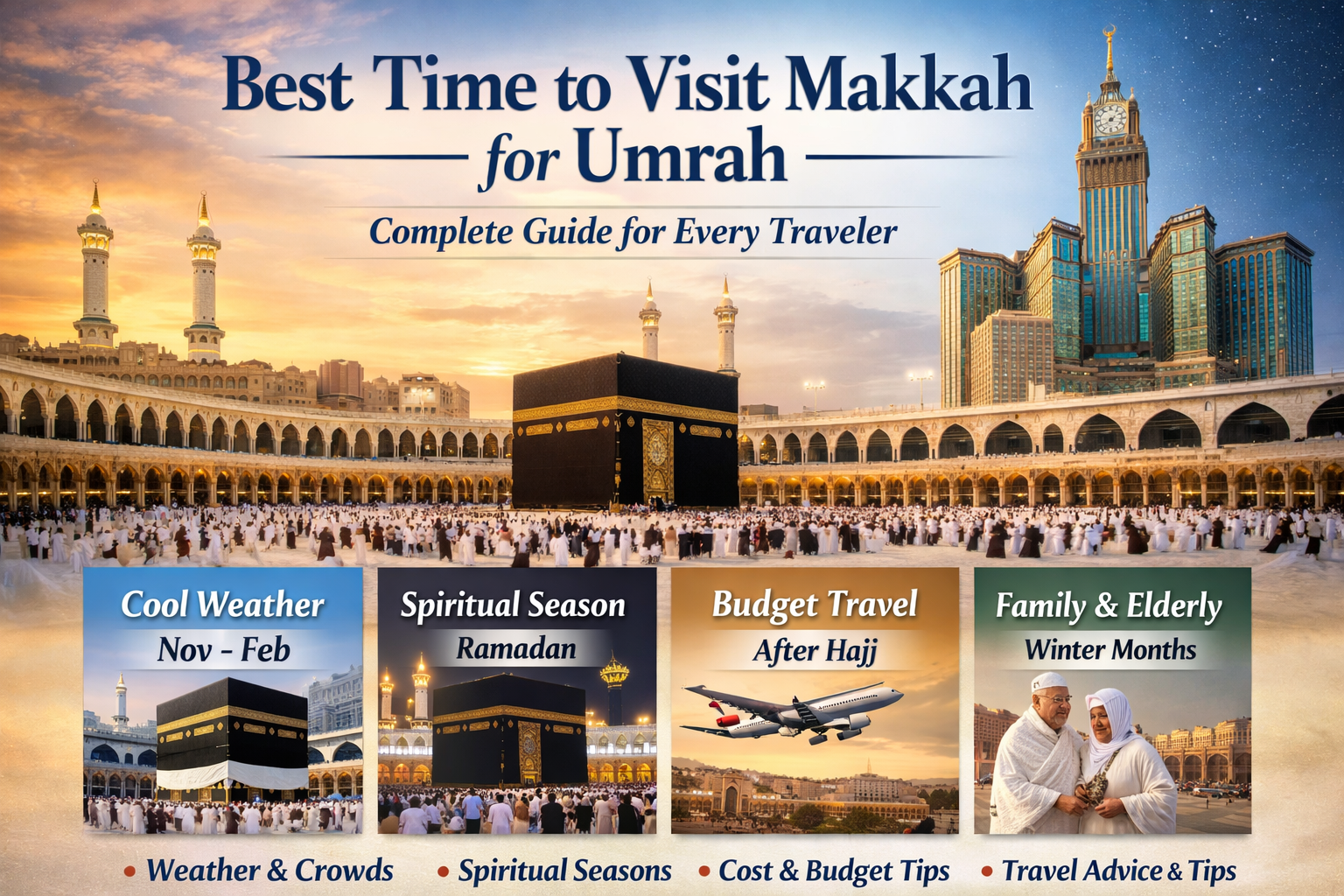
Best Time to Visit Makkah for Umrah: Complete Guide for Every Traveler
Introduction
Makkah is the holiest city in Islam and a destination that holds deep spiritual significance for Muslims around the world. Performing Umrah is a sacred act of worship that can be undertaken at any time of the year, unlike Hajj which is restricted to specific dates.
Although Umrah is not time-bound, selecting the best time to visit Makkah can greatly influence your experience. Factors such as weather conditions, crowd levels, travel costs, and spiritual atmosphere all play a vital role in planning a smooth and meaningful journey.
This guide provides a comprehensive overview to help you determine the best time to perform Umrah based on your personal preferences and travel needs.
Best Time to Visit Makkah for Umrah (Quick Overview)
If you are looking for a quick answer:
- Best weather: November to February
- Best spiritual time: Ramadan
- Best budget-friendly time: After Hajj (Muharram and Safar)
Each of these periods offers distinct advantages, depending on whether you prioritize comfort, cost, or spiritual benefits.
Weather in Makkah Throughout the Year
Understanding the climate in Makkah is essential when planning your Umrah journey. The city has a desert climate, with significant temperature variations across seasons.
Winter (November to February) – Ideal Conditions
Winter is widely regarded as the best time to visit Makkah for Umrah. Temperatures typically range from 18°C to 30°C, providing comfortable conditions for performing rituals such as Tawaf and Sa’i.
Pilgrims can spend longer hours in the Haram without experiencing heat exhaustion. This makes winter particularly suitable for elderly individuals and families traveling with children.
Summer (May to September) – High Temperatures
Summer in Makkah can be extremely hot, with temperatures often exceeding 40°C. These conditions can make performing Umrah physically demanding, especially during daytime hours.
However, summer is also one of the most affordable times to travel. Due to lower demand, flights and accommodation prices tend to decrease significantly.
Travelers who choose this period should consider performing rituals at night, staying hydrated, and minimizing outdoor exposure during peak heat hours.
Spring and Autumn (March–April, October) – Moderate Option
Spring and autumn offer moderate weather conditions and balanced crowd levels. These months are ideal for travelers seeking a compromise between affordability and comfort.
Temperatures are manageable, and the number of pilgrims is generally lower compared to peak seasons.
Best Time Based on Crowd Levels
Crowd levels can significantly impact your Umrah experience. While some pilgrims prefer a vibrant and energetic atmosphere, others may seek a quieter environment.
Peak Season
Peak periods include:
- Ramadan
- School holidays
- Hajj season
During these times, Makkah experiences a high influx of pilgrims. The spiritual atmosphere is strong, but congestion can be challenging.
Advantages:
- Enhanced spiritual environment
- Opportunity to pray with large congregations
Disadvantages:
- Overcrowding
- Higher costs
- Limited accommodation availability
Off-Peak Season
Off-peak periods typically occur after Hajj, particularly during Muharram and Safar, as well as certain mid-year months.
Advantages:
- Fewer crowds
- Easier access to the Kaaba
- Lower travel expenses
Disadvantages:
- Weather may be warmer depending on the month
For many travelers, this is the most practical and comfortable time to perform Umrah.
Cheapest Time to Perform Umrah
Budget-conscious travelers can benefit from planning their trip during low-demand periods.
Recommended Budget Months:
- Muharram
- Safar
- Period immediately after Hajj
During these months, you can expect reduced hotel rates, discounted flights, and affordable Umrah packages.
Periods to Avoid:
- Ramadan
- December holidays
- School vacation periods
Booking early and comparing travel packages can help further reduce expenses.
Best Time for Spiritual Experience
For many pilgrims, the primary goal of Umrah is spiritual fulfillment.
Umrah During Ramadan
Performing Umrah during Ramadan is considered highly rewarding. It is widely believed that the reward of Umrah in Ramadan is equivalent to performing Hajj with the Prophet Muhammad (PBUH).
The spiritual atmosphere during this month is unique, with continuous prayers, recitation of the Quran, and nightly congregational prayers.
Last Ten Nights of Ramadan
The last ten nights of Ramadan hold special significance, as they include Laylat al-Qadr. Many pilgrims aim to perform Umrah during this period to maximize their spiritual rewards.
However, this time also brings extremely high crowd levels and increased costs.
Best Time for Families and Elderly Travelers
Traveling with family members or elderly individuals requires additional planning.
Recommended Period:
- Winter months (November to February)
Periods to Avoid:
- Peak Ramadan days
- Extreme summer months
Practical Tips:
- Choose accommodation close to Masjid al-Haram
- Allow sufficient rest between rituals
- Use assistance services if needed
Ensuring comfort and safety will enhance the overall experience.
Month-by-Month Umrah Guide
Below is a general overview of what to expect throughout the year:
- January: Cool and comfortable, ideal for Umrah
- February: Slightly less crowded, favorable conditions
- March–April: Moderate weather
- May–June: Rising temperatures, fewer crowds
- July–September: Very hot, lowest travel costs
- October: Cooling temperatures, balanced conditions
- November–December: Increasing demand and crowd levels
Travel Tips for Visiting Makkah
Proper planning can make a significant difference in your Umrah journey.
Book in Advance
Early booking ensures better prices and availability, especially during high-demand seasons.
Select Accommodation Carefully
Staying near Masjid al-Haram reduces travel time and physical strain.
Stay Hydrated
Carry water at all times, particularly during warmer months.
Perform Umrah During Off-Peak Hours
Nighttime or early morning hours are generally less crowded and more comfortable.
Frequently Asked Questions
What is the best month for Umrah?
The months between November and February are generally considered the best due to favorable weather conditions.
Is Ramadan the best time for Umrah?
Ramadan offers exceptional spiritual rewards, but it is also the most crowded and expensive time.
When is Umrah the most affordable?
The period immediately after Hajj, particularly Muharram and Safar, is usually the most cost-effective.
Can Umrah be performed at any time?
Yes, Umrah can be performed throughout the year without restriction.
Conclusion
Determining the best time to visit Makkah for Umrah depends on your individual priorities.
If you value comfort, the winter months provide the most suitable conditions. If your focus is spiritual reward, performing Umrah during Ramadan is highly significant. For those seeking affordability, the period after Hajj offers the best opportunities.
Regardless of when you choose to travel, visiting Makkah for Umrah is a profound and life-changing experience. With careful planning and the right timing, your journey can be both spiritually enriching and physically comfortable.
Written by
Admin
Sharing insights about pilgrimage, spiritual journeys, and sacred travel experiences.