8th Dhul-Hijjah (Day of Tarwiyah) – Complete Guide (2026)
Introduction: What is the 8th of Dhul-Hijjah?
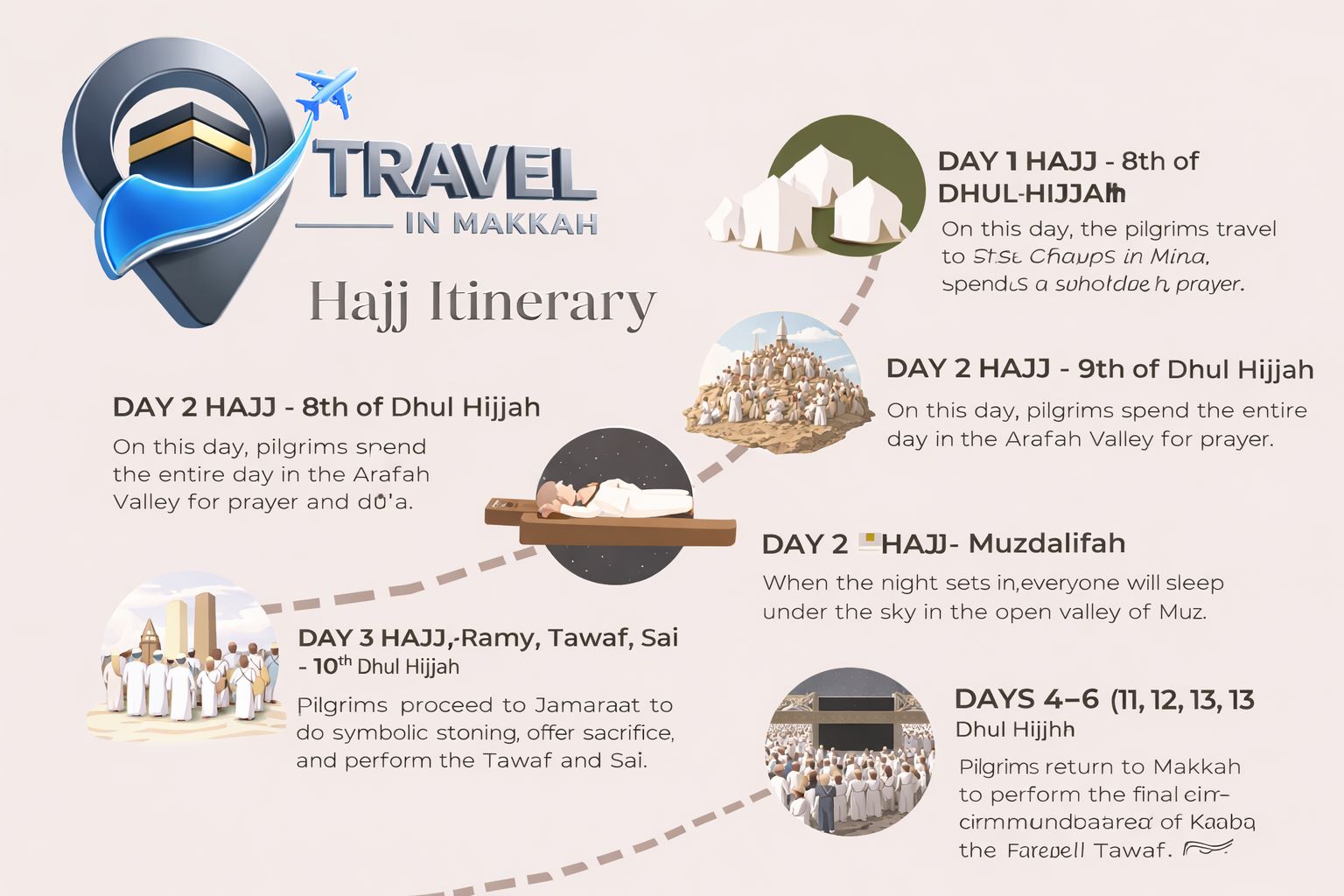
The 8th of Dhul-Hijjah, known as Yawm al-Tarwiyah (Day of Tarwiyah), marks the official beginning of Hajj rituals. It is often referred to as Hajj Day 1, when pilgrims leave Makkah and proceed to Mina in a state of Ihram, preparing for the عظیم day of Arafah.
In 2026 (1447 AH), the 8th of Dhul-Hijjah is expected to fall around May 25, 2026.
This day is not merely a logistical transition — it is a spiritual preparation, where pilgrims renew their intention, detach from worldly distractions, and begin the sacred journey toward Allah.
Meaning of “Tarwiyah” (Yawm al-Tarwiyah)
The word Tarwiyah (تروية) comes from the Arabic root رَوَى (rawā), meaning “to quench thirst” or “to provide water.”
Historical Context
In earlier times:
- Pilgrims would store water on this day
- Prepare for the long journey from Mina to Arafah
- Ensure survival in the harsh desert environment
Thus, the day became known as Yawm al-Tarwiyah — the Day of Preparation.
Spiritual Meaning
Beyond its physical meaning, Tarwiyah symbolizes:
- Preparing the heart before the greatest day (Arafah)
- Entering a state of focus, patience, and submission
- Transitioning from routine worship to deep spiritual حضور (presence)
Significance of the 8th Dhul-Hijjah
The 8th of Dhul-Hijjah is the gateway to Hajj.
1. Beginning of the Hajj Journey
This is the first day when:
- Pilgrims actively begin Hajj rites
- The journey shifts from Makkah to Mina
2. Spiritual Preparation
It prepares pilgrims for:
- The عظیم standing on Arafah
- Deep repentance and dua
3. Following the Sunnah
The Prophet ﷺ:
- Traveled to Mina on this day
- Stayed overnight
- Performed all prayers there
Thus, observing this day correctly is part of completing Hajj according to Sunnah.
Qur’anic Perspective on Hajj
Allah سبحانه وتعالى says:
وَأَذِّنْ فِي النَّاسِ بِالْحَجِّ يَأْتُوكَ رِجَالًا وَعَلَىٰ كُلِّ ضَامِرٍ يَأْتِينَ مِنْ كُلِّ فَجٍّ عَمِيقٍ
Translation:
“And proclaim to the people the Hajj; they will come to you on foot and on every lean camel; they will come from every distant pass.”
— (Surah Al-Hajj 22:27)
This verse reflects:
- The global gathering of pilgrims
- The عظیم unity of the Ummah
- The beginning of this journey, which includes Tarwiyah
Authentic Hadith About the Day of Tarwiyah
1. Beginning of Hajj Actions
Narrated by Ibn ‘Abbas (رضي الله عنه):
The Prophet ﷺ ordered the companions to enter into Ihram for Hajj on the Day of Tarwiyah.
— (Sahih al-Bukhari)
2. The Prophet’s Stay in Mina
The Prophet ﷺ went to Mina and prayed:
- Dhuhr
- Asr
- Maghrib
- Isha
- Fajr
All at their proper times, shortened (qasr) but not combined.
— (Sahih al-Bukhari & Sahih Muslim)
This establishes the Sunnah method of spending the 8th Dhul-Hijjah.
What Do Pilgrims Do on 8th Dhul-Hijjah? (Step-by-Step Guide)
1. Entering Ihram (If Not Already)
- Perform ghusl (purification)
- Pray 2 rak‘ah (optional)
- Make intention for Hajj:
لَبَّيْكَ اللَّهُمَّ حَجًّا
“Here I am, O Allah, for Hajj.”
2. Reciting Talbiyah
لَبَّيْكَ اللَّهُمَّ لَبَّيْكَ، لَبَّيْكَ لَا شَرِيكَ لَكَ لَبَّيْكَ...
Pilgrims continuously recite Talbiyah:
- On the way to Mina
- Throughout the day
3. Travel from Makkah to Mina
- Preferably after sunrise
- Calm, patient movement
- Avoid rushing
4. Staying in Mina (The Tent City)
Pilgrims spend the day and night in Mina:
- A place of simplicity and equality
- Millions live together in identical tents
5. Performing the Five Daily Prayers
In Mina:
- Dhuhr, Asr, Isha → shortened (2 rak‘ah)
- Maghrib → 3 rak‘ah
- Fajr → 2 rak‘ah
Important:
- No combining (jam‘)
- Only shortening (qasr)
6. Night in Mina
Pilgrims:
- Engage in dhikr
- Read Qur’an
- Prepare mentally for Arafah
The Importance of Mina in Hajj
Mina is more than a location — it is a symbol of submission and equality.
- Known as the City of Tents
- Associated with the trials of Prophet Ibrahim (AS)
- A place where pilgrims learn:
- Patience
- Simplicity
- Unity
Spiritually, Mina represents:
- A pause before the عظیم moment of Arafah
- A reminder of the Day of Judgment
What Should Non-Pilgrims Do on This Day?
Although not part of Hajj physically, non-pilgrims can still benefit greatly.
1. Increase Dhikr
- Allahu Akbar
- Alhamdulillah
- La ilaha illallah
2. Prepare for Arafah
- Make a dua list
- Plan fasting for the next day
3. Fasting (Scholarly Views)
- Some scholars recommend fasting on the 8th
- Others do not emphasize it strongly
✔️ Best approach:
Focus more on Arafah fasting (9th Dhul-Hijjah)
Common Mistakes to Avoid
For Pilgrims
- Entering Ihram late
- Using perfume or violating Ihram rules
- Combining prayers incorrectly
- Treating Mina as rest instead of worship
For Non-Pilgrims
- Ignoring the first days of Dhul-Hijjah
- Confusing Tarwiyah with Arafah
- Not preparing spiritually
Connection Between Tarwiyah and Arafah
The 8th Dhul-Hijjah is preparation, while the 9th Dhul-Hijjah is transformation.
Tarwiyah helps pilgrims:
- Build mental focus
- Detach from distractions
- Prepare for the greatest day of forgiveness
It is a transition:
- From preparation → to standing before Allah (Arafah)
visit our home page
Written by
Travel in Makkah
Sharing insights about pilgrimage, spiritual journeys, and sacred travel experiences.